What is agentic AI? Follow the evidence from an answer to an action
Inspect sources, tool calls, artifacts, and human decision points to assess real execution.

An answer can sound like a plan, and “done” can sound like a result. To tell whether a system actually executed a task, inspect what happened outside the conversation: which sources it read, which tools it used, what it produced, and how the result changed its next step.
Agentic AI generally describes systems that organize actions around a goal. They use context to choose steps, invoke permitted tools, and continue, adjust, or stop in response to results. IBM’s explanation places goals, decisions, and action at the center. For teams choosing a system, a checkable execution chain makes that definition useful.
Separate the parts of an execution
The goal defines the desired outcome. Context supplies the basis for decisions. Tools interact with external state. Feedback indicates whether an action worked. The model contributes reasoning and generation; the environment and tools read pages, process files, or call services.
Consider asking for a downloadable explanation based on specified sources. This is a suggested task, not a reported experiment. Check that the sources were read, a file was created, the file opens, and its conclusions match the material. A message announcing the file covers only the conversation.
A long visible plan is optional. A simple task may need one call; a complex task may involve repeated checks. Runtime choices based on results matter more than the number of plan items.
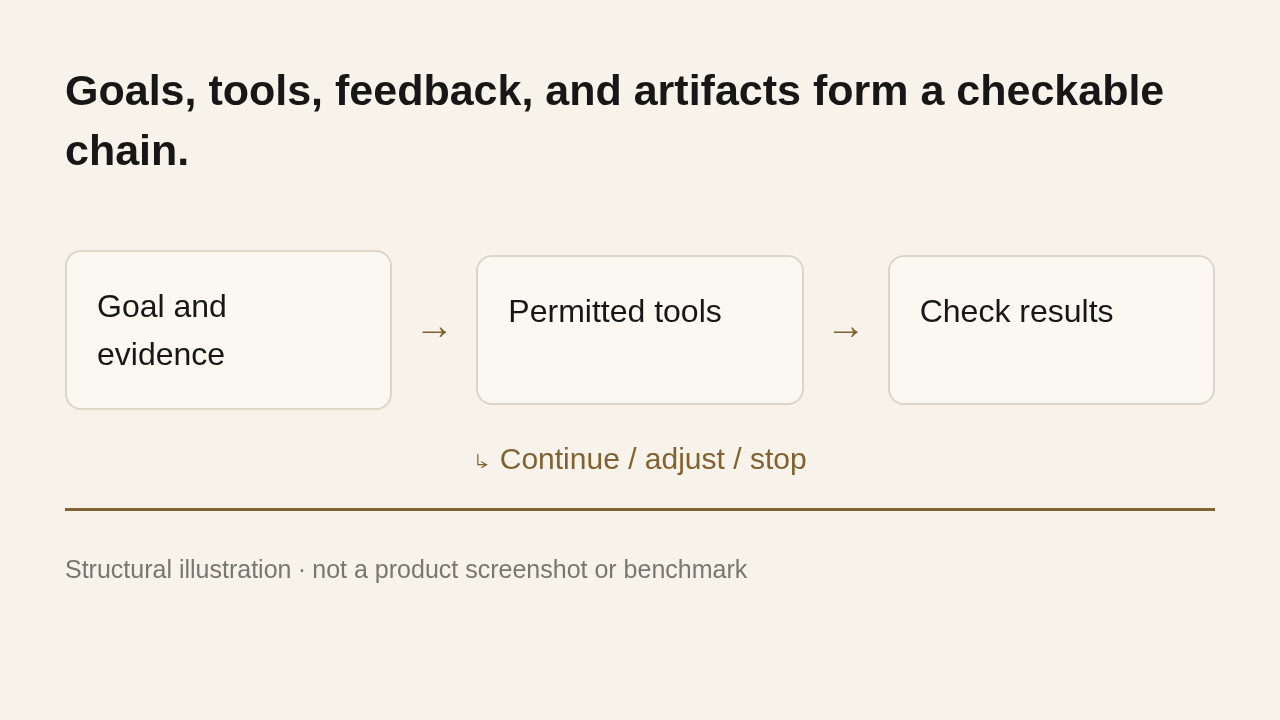
Tool results provide the next decision
Pages can require sign-in, files can be missing, APIs can return partial data, and commands can fail. The system should recognize those outcomes and respond appropriately.
That may mean using another authorized source, repairing a malformed file, or returning a specific information gap to a person. Repeating a failed action without new evidence does not improve autonomy. Verification must also match the deliverable: a successful command does not prove correct content, and HTTP 200 does not prove the response is the intended page.
Compare answers, automation, and agents
A generative answer turns inputs into content. Fixed automation follows configured triggers and paths. An agentic system can choose tools and subsequent actions during execution, within its authorization. Products can combine all three.
A fixed process may call a model, and an agent may follow strict steps. Ask which choices happen at runtime, who permits them, and how results are checked. Predictable work may benefit from a fixed process; variable material and exceptions can justify more runtime judgment.
Multiple agents are optional. A single agent can use several tools. Several named roles can still implement a fixed script. Saved context and history also do not establish that model weights update or that the system learns by itself.
Inspect the work inside Buda
The Buda workspace brings together chat, Drive, Terminal, browsers, and Git. Chat records goals and feedback; expandable tool calls expose inputs and outputs; Drive provides saved artifacts. Actual tools depend on configuration and the environment.
For research, inspect sources and the saved file. For a site check, inspect page reads and conclusions. For code changes, inspect the diff and relevant validation. A Git commit records a change; whether production serves it needs another check.
Integrations connect external applications with their own permissions. Connecting an application does not authorize every action. Define the data the agent may read, the changes it may propose, and actions requiring confirmation. Read access should not silently become permission to send messages or update business records.
Agree on stopping points
Specify inputs, allowed actions, deliverables, and decisions reserved for people. For example:
Use the supplied material to prepare an explanation, retain sources for key conclusions, and save a readable file. List missing evidence. Before sending externally or changing an authoritative record, show the exact content and impact for confirmation.
This instruction also needs matching tool permissions. People should be able to redirect the task. When access, conflicting sources, or unrecoverable errors prevent progress, the agent should return completed work and the remaining gap.
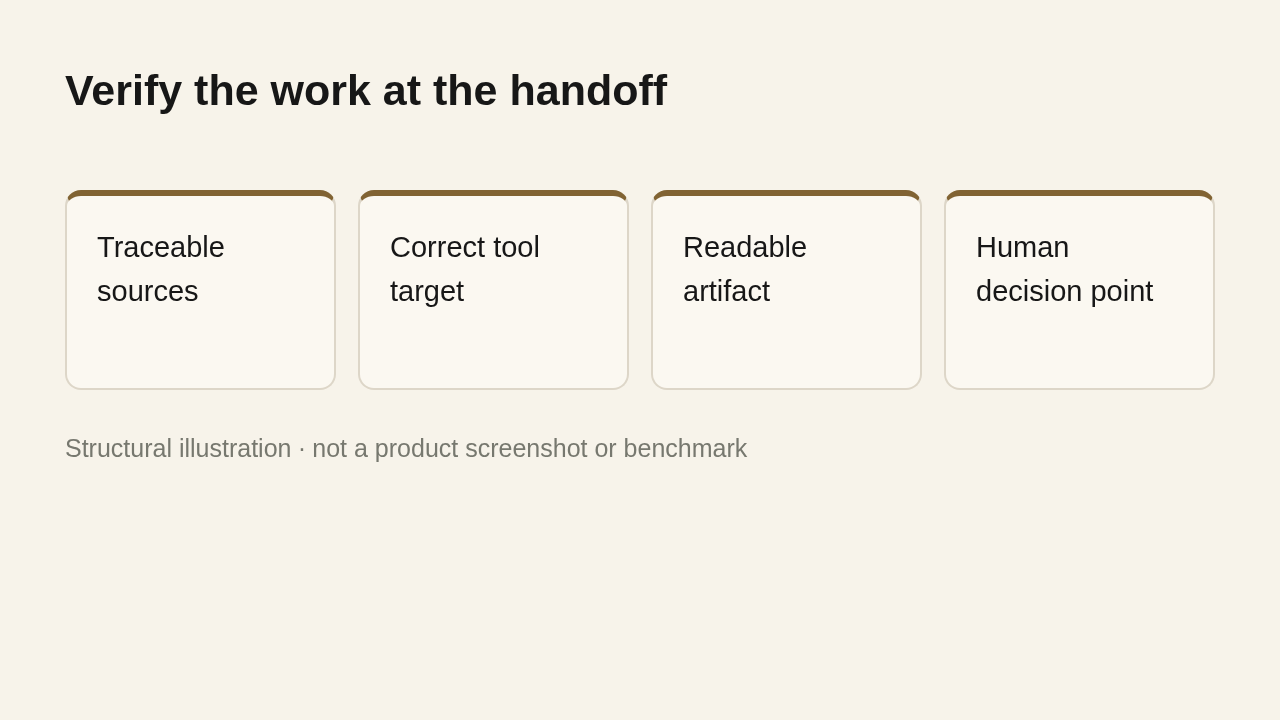
Accept the artifact first, then inspect the process: can the file be opened, are claims supported, did tools target the right objects, and were human decisions respected? Start with one bounded manual cycle before scheduling repeated execution.
Agentic AI and team design covers the organizational question; assistant capabilities and limitations helps set boundaries. For your first task, write down its evidence, permitted actions, deliverable, and human decision point. Those four items make execution easier to assess.