Blog
Latest articles and updates from Buda

OpenAI Agents SDK: an approval needs a real pause
Connect paused tools, trusted state and destination results to make consequential actions reviewable.

Gemini 4 Carbon: long-running work needs a chain of evidence
Separate benchmark claims, phased access and the evidence needed to accept long-running engineering work.

AI Claims Intake: Build an Evidence File for Licensed Review
Keep incident facts, document versions and open questions traceable before a coverage decision.

AI Return Triage: Check the Order, Policy, and Missing Evidence
Prepare a case-by-case review queue with traceable conditions and questions for the operations owner.

Supplier Documents Are Not Qualification: Build an Evidence Shortlist
Check certificate scope, dated commitments, and missing proof against approved requirements before an RFQ.

“Please Review This Contract” Is Not a Legal Intake Brief
Separate missing facts, attachment versions, and business dates so legal operations can route a request responsibly.

A Contract Redline Can Hide in the Definition: Build a Clause Deviation Table
Read liability bases, exceptions, and cross-references together before counsel decides which changes to accept.

Matching Invoice Totals Are Not Enough: Build a PO Exception Review
Allocate each invoice line once, preserve missing approvals, and reconcile the review queue before anyone pays.

Build an Interview Kit That Connects Every Question to Job Evidence
Give the panel shared questions, observable anchors, and a clear record of what remains unverified.

A December Contract Expiry Can Require an October Renewal Decision
Trace the notice clause, calculation rule, and delivery evidence before turning a contract date into a reminder.

Three Days Without a Reply: Is It Actually Time to Follow Up?
Check the latest conversation, customer timing and stop requests before preparing the next message.

A Lead Scored 90. What Evidence Is Missing?
Separate rule matches from unknown inputs so sales can choose the next useful question.

An RFP Has 80 Questions. Start with Evidence, Not a Sales Pitch
Turn approved product material into traceable answers and an owner-specific clarification queue without inventing commitments.

How to Choose an AI Agent Schedule: Cron, Interval, or Once
Start with the decision deadline, then set the run limit, delivery destination, and review rule.

A Full Content Calendar Is Not a Publishable Plan
Check source readiness, editorial capacity and review dependencies before turning approved topics into dates.

Three supplier totals do not make a comparable quote
Check quantities, scope, freight, tax and validity before ranking prices or choosing a supplier.

A checked onboarding list does not mean a new hire can start
Separate scheduling and applications from completion evidence so HR, IT and managers can resolve the actual dependencies.

Gemini 4 Argon Arrives in Buda with Three Thinking Levels
Tune reasoning effort inside an existing Agent, from lightweight preparation to demanding analysis with inspectable outputs.

Before connecting an agent, inventory what it can read, change and do as you
Record the actual account, resource scope, allowed actions and revocation owner before granting access.

CRM and operations disagree? Review field conflicts before syncing
Preserve both values, definitions and authority rules so owners can judge a proposed change without automatic overwrites.

Repeated support questions? Build a help-center update queue first
Turn ticket clusters into sourced revisions, existing-page impacts and open decisions for knowledge owners.

Same name, same contact? Ask your agent for evidence before merging CRM records
Keep source IDs, field conflicts and contrary evidence in a review queue instead of shortening the database blindly.

Your automation ran on time. Did it report the right day?
Separate the launch time, source calendar and business date before accepting a daily report.

The agent says “working on it.” What evidence shows real progress?
Compare tool activity with the next inspectable artifact to distinguish progress, missing inputs and repetition.

Your agent remembers an outdated decision. Repair the memory index without erasing history.
Propose changes before editing; preserve sources and route unresolved conflicts to an accountable owner.

Can colleagues use your first business agent? Accept three kinds of output first.
Preserve critical errors, rework and retests before deciding whether to expand, narrow or redesign the pilot.

Fluent support replies still need a line-by-line quality review
Use blocking defects, answer coverage and versioned evidence instead of an average quality score.

A strange weekly report? Check the data before explaining the business
Separate missing inputs, changed definitions and verified deviations before assigning an investigation.

AI copy still sounds generic? Build an editorial feedback loop for brand voice
Turn accepted examples and precise edits into reusable writing rules, then test them on material the agent has not seen.

Cloud or Connector? Put the task where its dependencies actually live
Choose an execution environment by files, tools, network access and availability—not by a blanket preference for local or cloud.

Three agents finished their tasks. How do you turn them into one deliverable?
Align source keys, units and versions before a writer turns parallel work into a report.

Gemini 4 Argon continuation: why another “continue” prompt is the wrong request
Keep the original request intact, distinguish usage counters, and bound long-generation costs.

Before escalating a ticket, turn “it does not work” into a reproducible problem
Give engineering the expected result, observed behavior and evidence needed for the next check.

The sales call is summarized. Why is nobody doing the next step?
Turn customer statements into accountable follow-up without turning suggestions into promises.

One Product Update, Three Channels: Rewrite the Message Without Changing the Facts
Give each audience a different path through the same confirmed capabilities and limits.

Hiring and Funding Are Signals, Not Buying Intent: Prepare a Better Sales Brief
Separate public changes from business hypotheses before choosing how to open a conversation.

Turn a team SOP into a Skill—and test when it should not run
Use positive prompts, near-miss requests and missing-input cases to make a recurring method inspectable.

Which policy should a support agent trust when two sources disagree?
Separate applicability from document recency, and give reviewers the evidence behind each proposed reply.

Buda vs Make AI Agents: build a business scenario or manage an ongoing agent workspace?
Use task routing, tool contracts, failure tests, and artifact handoff to choose an operating model.

Buda vs Gemini agent: integrate enterprise systems or create a separate execution workspace?
Compare context preparation, agent identity, inspectable outputs, and the cost of returning accepted work.

Buda vs Grok Bot: one account-wide computer or separate agent workspaces?
Compare the sharing unit for files, sessions, and role offboarding.

Introducing Claude Haiku 5.5: stronger capabilities and 90% lower short-prompt prices
Adjustable effort and stronger computer-use results give frequent, bounded tasks another option.

Buda vs Zoo Code: portable coding modes or persistent team workflows?
Separate portable modes from credential-bearing exports and team acceptance.

Buda vs Pi: customize the harness or operate an agent workspace?
Compare responsibility for extensions, execution boundaries, and reviewable artifacts.

Buda vs DeepSeek Harness: installing plugins is not the same as handing off work
Track configuration changes separately from evidence and business acceptance.

Introducing Gemini 4 Argon: test long workflows with evidence, not output length
Build task-specific acceptance around sources, equivalence and exceptions.

Buda vs Oh My Pi: a richer debugging session still needs a handoff
Separate runtime debugging, live collaboration and asynchronous acceptance.

Buda vs Deep Agents Code: who owns the runtime, and who accepts the work?
Compare the maintenance and review work behind the two approaches.

Buda vs Command Code: learn coding preferences or manage a team's workflows?
Inspect scope, examples, and rule versions before promoting learned preferences into shared standards.

Buda vs MiMo Code: resume a long task from project memory or a persistent workspace?
Test checkpoints, source withdrawal, and unfinished checks to see whether interrupted work truly resumes.

OpenAI Dots: where should teams draw the line for an always-on agent?
Separate read-only discovery, action approval, and result review before delegating continuing work.

Sonnet 5.5 can turn earnings materials into slides. How should teams review the files?
Use source, calculation, and narrative gates to decide whether a polished deliverable is ready for business use.

Why Sonnet 5.5 scored lower at Max than Xhigh—and how to choose effort
Include scope, stopping rules, and rework when calibrating an agent, not just reasoning depth.

Migrating to Claude Sonnet 5.5: fix rejected settings and missing progress updates
Check request compatibility, response rendering, and tool-loop state before switching production traffic.

Buda vs Junie: Should an Agent Own a Repository Task or an Ongoing Business Role?
Compare assignment scope, planning artifacts, and review cadence before choosing an Agent workspace.

Buda vs Crush: Who Owns the Terminal Setup and the Team Deliverable?
Compare local model and tool configuration with a persistent managed workspace for work beyond a repository.

Claude Sonnet 5.5: Faster Everyday Work, with Opus for Sustained Judgment
Choose by task boundaries, iteration time, and accepted results—not a single benchmark ranking.

Claude Opus 5.5 Is Now Available in Buda
Run research, code review, and knowledge tasks in a persistent workspace, with evidence and reviewable outputs.

Buda vs Amp: Continue a Development Thread or Run an Ongoing Business Responsibility?
Test continuity at three moments: closing the laptop, handing work to a colleague, and running the task again next week.

Buda vs Warp: Optimize the Software Factory or Connect the Work Across Departments?
Separate the acceptance criteria for mergeable code from those for business deliverables before choosing an agent platform.

Agentic Commerce Optimization: How to Get Picked by AI Shopping Agents
More than half of US shoppers now use AI to shop. A weekly routine to get your products recommended by ChatGPT, Gemini, Meta Muse and Rufus.

Buda vs Continue: Where Should the Work Go After the Code Change?
Follow one customer issue from the accepted patch to documentation and reply.

Buda vs Goose: Run the Agent Yourself, or Give the Team a Workspace?
Test the second run: can a new owner find the evidence and finish the task?

Claude Opus 5.5 vs GPT-6 Astra: Which Fits Long-Running Agent Work?
Compare task economics, context, computer use, coding, safeguards, and review burden without treating one benchmark as a verdict.

Claude Opus 5.5 Crosses Fewer Boundaries, but Still Needs Human Review
Vendor evaluations show stronger boundaries and prompt-injection resistance, not permission to remove controls.

Claude Opus 5.5’s 1M Context Window Is Not Agent Memory
A large context helps one run, while durable memory requires files, records, retrieval, and explicit handoff.

Claude Opus 5.5 Pricing: Why $4/$20 Is Not the Cost of an Agent Task
Token prices are only one layer; effort, cache, retries, tools, and review determine the cost of completed work.

Claude Opus 5.5 Migration Guide: Five Changes That Can Break Agent Workflows
The migration changes thinking, tool calls, computer use, and history handling before it changes your accepted results.

Buda vs Qwen Code: Open Developer Agent or Managed Company Workspace?
Choose between an open, provider-flexible developer Agent framework and a managed workspace built around durable company roles.

Buda vs Factory Droid: Software Factory or Cross-Functional Agent Operations?
Choose by system of record: software delivery in Factory, or persistent Agent roles across the company in Buda.

Meta Muse Topped the App Store. The Bigger Shift Is from Chat to Action
Its rapid rise points to a new expectation: AI should keep working, cross apps, and pause before consequential actions.

Buda vs Zed: An Agent-Native Editor or a Workspace for Company Operations?
Compare Zed and Buda by Agent architecture, parallel work, systems of record, and the boundary between code and business review.

Buda vs Roo Code: After the Extension Shutdown, What Should the Workflow Become?
A migration guide for Roo Code users: direct IDE successors, workflow inventory, failure tests, and when Buda is relevant.

Buda vs Kilo Code: A Coding Agent Platform or a Company Agent Workspace?
Compare Kilo Code and Buda by coding surfaces, parallel Agents, triggers, review, and where company workflows should live.

Buda vs Aider: Who Owns the Work After the Code Change?
Compare Aider and Buda by the coding loop, Git traceability, team handoffs, and the review boundary after a code change.

Buda vs Claude.ai: One Claude Across Devices, or a Workspace for an Agent Team?
Compare Claude.ai and Buda by role design, shared context, recurring execution, and the review boundary for team work.

Buda vs WorkBuddy: Desktop AI Worker or Cloud Agent Workspace?
Compare Tencent WorkBuddy and Buda by where work runs, how teams retain context, and how people review consequential outputs.

Buda vs Tencent Yuanqi: Publish an Agent, or Run a Team Workflow?
Tencent Yuanqi is strong for no-code Agent creation and Tencent-channel distribution. Buda is for persistent team operations with shared context and review.

Buda vs Coze Space: Does the Work Continue Tomorrow?
Compare AI office deliverables with persistent team Agent operations across context, ownership, recurrence, permissions, and human review.

Buda vs Hermes Agent: Who Owns the Learning Loop?
Compare an adaptive self-hosted agent with a managed team workspace for reusable procedures, shared context, permissions, and review.

Buda vs Amazon Q Developer in 2026: Route the Work Before You Migrate
Map Amazon Q Developer’s current surfaces, Kiro transition, and the workloads that may need a persistent cross-functional Agent workspace.

Buda vs Agent Zero: Who Should Own the Agent Runtime?
Compare a self-hosted agent workbench with a managed multi-agent workspace across deployment, host access, context, maintenance, and review.

Buda vs OpenHands: Engineering Agents or Cross-Functional Agent Workspace?
Compare agentic software delivery and engineering control planes with persistent Agents for shared, reviewable company operations.

Buda vs Gemini Spark: Personal Agent or Team Agent Workspace?
Compare personal Google automation with persistent team Agents, shared context, permissions, and reviewable business artifacts.

AI Agent Tools: The Stack Agents Need to Finish Real Work
A practical guide to the execution, context, reusable procedures, permissions, and review layers behind useful AI agents.

Buda vs Cursor: Coding Agent Platform or Cross-Functional Agent Workspace?
Cursor centers software delivery. Buda gives different business agents persistent context, tools, files, and visible review.

Buda vs Gemini CLI: Terminal Agent or Persistent Multi-Agent Workspace?
Gemini CLI is a capable, stateful terminal agent. Buda changes the continuity unit from a project to a team workspace.

GPT-6 Astra Is More Aligned, but Harder to Monitor
What Astra’s safety evidence changes about permissions, review gates, and accepted agent output.

GPT-6 Astra’s 1.05M Context Window Is Not Memory
A practical architecture for context windows, Codex retrieval, persistent files, and decision records.

Buda vs OpenCode: Price the Ownership Before Choosing the Features
OpenCode gives builders an open coding harness. Buda provides a managed workspace for persistent cross-functional agent work.

Buda vs Windsurf: Command Center or Persistent Functional Agents?
Windsurf coordinates local and cloud development agents. Buda extends review across business functions and operational artifacts.

Buda vs Kiro: A Software Spec Is Not a Team Operating Runbook
Kiro structures software delivery across IDE, CLI, Web, and Mobile. Buda carries work across business roles and review.

Buda vs GitHub Copilot: Repository Delivery or Cross-Functional Agent Operations?
GitHub Copilot organizes AI work around software delivery. Buda organizes persistent agents around broader team outcomes.

Buda vs Cline: Where Coding Autonomy Hands Off to Team Operations
Cline keeps coding actions close to developer approval. Buda carries verified results into persistent, cross-functional team operations.

A ChatGPT Alternative for Recurring Team Operations, Not Just Projects
A ChatGPT Project keeps context for collaborative work. Buda is the alternative when recurring operations need dedicated agents, schedules, tools, and reviewable outputs.

Buda vs Codex: Governing Parallel Coding Work Across a Team
Codex can parallelize software tasks. Buda adds the control plane for assigning, verifying, and handing those results across a team.

Buda vs Claude Code: What Happens After the Code Is Done?
Claude Code can finish the repository task. Buda coordinates the release work that begins when code crosses into the rest of the company.

GPT-6 Astra Is Now Available in Buda
Paid Buda workspaces can use Astra with four reasoning levels and a 5.0x Credit multiplier.

GPT-6 Astra Pricing Explained: Why $10/$50 Is Not the Cost of a Finished Task
Cache writes, long-input surcharges, processing modes, retries, tools, and review determine what accepted Agent work actually costs.

Gemini 3.8 Flash Is Now Available in Buda
Gemini 3.8 Flash brings long-horizon Agent work to every Buda plan at a displayed 0.2x Credit multiplier.

GPT-6 Astra vs Claude Fable 5.1: Which Model Fits Long-Running Agent Work?
Fable leads the independent intelligence index; Astra leads several tool-heavy tasks. The right choice depends on workload, harness, cache, and review cost.

AI Agents for CRM Automation: 7 Workflows That Keep Sales Data Current
Automate assignment, follow-up, notes, and CRM hygiene while people retain control of stages, amounts, and outbound messages.

GPT-6 Astra Is Here: What Changed, Who Can Access It, and What Teams Should Test First
The rollout is limited at launch. Focus first on computer use, long tasks, cost, and review boundaries.

OpenClaw 2.0 Upgrade Guide: What Changed and the Rollback Risk
The practical boundary is SQLite session storage, verified backups, and a deliberate downgrade path.

Claude Fable 5.1: What Changed, Migration Risks, and When to Upgrade
A practical test plan for tool forcing, thinking blocks, cache economics, and safe rollout.

American Workers Are Pushing Back on AI. Companies Are Learning That Training Is Not Enough
Trust grows when employees can shape real workflows, make mistakes safely, and see what the company will protect.

The Less People Use AI, the More They Fear Losing Their Jobs: What 1,686 People Revealed
The sharpest anxiety appears among people who see AI changing work but have not yet built a repeatable practice.

AI Spending Is Heading for $2.5 Trillion. Only 34% of Executives Know Who Owns the Decisions
AI budgets are scaling faster than the leadership systems that define decisions, review, and accountability.

Employees Are Outgrowing Their Companies on AI
Workers are integrating AI faster than companies can turn individual skill into shared, governed execution.

Create a Daily AI News Report with One Sentence
Turn one natural-language instruction into a scheduled Agent workflow that gathers, filters, and reports the news.

AI Saves Workers 11 Hours a Week. Why Isn't the Company Faster?
AI output gets faster while context, review, and rework keep the organization from moving with it.

The AI-First Company Starts by Removing Work, Not Adding Tools
Question requirements, remove unnecessary steps, and automate only the work that still creates value.

PPT Master on Buda: Create Editable PowerPoint Decks with an AI Agent
Plan the audience and visual system first, then export a native PPTX teammates can keep editing.

Gemini 3.7 Flash Is Now Available on Buda
A stronger agentic workhorse for coding, web development, and multi-step tool execution.

Microsoft Work Trend Index: What Advanced AI Teams in the Philippines Do Differently
Microsoft's 2026 Work Trend Index findings from the Philippines show how advanced teams share Agents, redesign workflows, and preserve human judgment.

ChatGPT at Work: From Asking Questions to Completing Tasks
OpenAI's global usage data shows a shift from answers to deliverables. Learn how managed Agents turn that behavior into reliable work.

Airbnb's AI Product Strategy: Ship Faster, Keep Humans in Control
Airbnb reports faster product delivery and lower support costs. Its results show how to build managed AI agent workflows without outsourcing judgment.

YouTube Video to Script: How to Use Whisper and Buda
Turn a YouTube video into a transcript and ready-to-edit talking script with Whisper and the buda-youtube-to-script Skill in Buda AI.

GPT-5.6 Luna Pricing: 0.07x Credit Multiplier on Buda
GPT-5.6 Luna pricing on Buda now shows a 0.07x credit multiplier. Learn how Credits work, when to use Luna, and which AI models are new.

Introducing Buda Connector: Give Your AI Agents a Computer They Can Actually Use
Buda Connector lets AI Agents work on your computer or server with the real files, tools, browsers, and project environments your team already uses.

Claude Opus 5 Is Now Available on Buda
Claude Opus 5 is now available on Buda as a subscription-only model for deep reasoning, difficult reviews, and high-stakes agent work.

AI Competitor Analysis: Stop Missing Pricing Changes
Use AI competitor analysis to track pricing, features, reviews, and market changes faster—without hallucinations, missed updates, or hours of manual research.

Claude Opus 5 Review: Is It Worth the Cost—or Just Burning Tokens?
Claude Opus 5 review: Compare pricing, benchmarks, coding results, and real-world tests, including token use, scope creep, and reliability issues.

AI Content Calendar: How to Build One (Step-by-Step Guide)
Learn how to build an AI content calendar in 7 steps. Automate topic research, drafting, repurposing, and reporting while keeping human approval.

Claude Opus 5 vs Fable 5: Which Model Is Actually Worth the Cost?
Claude Opus 5 vs Fable 5: compare coding, agents, reasoning, pricing, and real user pain points to choose the right Claude model—and avoid overspending.

Kimi K3 vs Fable 5: Which AI Model Is Actually Worth Paying For?
Kimi K3 vs Fable 5: compare coding benchmarks, agent performance, pricing, frontend generation, and real-world workflows. Find which AI model is better for developers, teams, and AI agents.

Claude Opus 5 vs GPT-5.6 Sol: Coding, AI Agents, Costs, and Hidden Trade-Offs
Compare Claude Opus 5 vs GPT-5.6 Sol using benchmark data, coding tests, API costs, and agent trade-offs to choose the right model for real work.

Automated Content Creation: How to Scale Content Without Hiring More Writers
Automated content creation helps teams produce blogs, social posts, videos, and marketing assets faster with AI workflows. Learn how to automate content production, repurpose ideas, and scale output without sacrificing quality.

Claude Opus 5 vs Opus 4.8: Which Wins in Real Work?
Compare Claude Opus 5 vs Opus 4.8 across real-world performance, benchmarks, pricing, and reliability—then choose the right model before you switch.

Kimi K3 vs GPT-5.6: Pricing, Coding, and Agent Tests
Compare Kimi K3 vs GPT-5.6 across pricing, coding benchmarks, multimodal performance, and real SaaS agent tests to see why GPT-5.6 is the better overall choice.

Local AI Agent: Run AI Tasks on Your PC, Workstation, or Server
Learn how a local AI agent can run tasks on your PC, workstation, or server using local files, internal tools, and existing work environments.

AI and Older Workers: Can Experience Extend a Career?
New research covered by CNBC suggests AI may shorten some older workers’ careers while helping others work longer. The dividing line is whether experience becomes a reviewable AI workflow.

GPT-5.6 Sol vs Terra vs Luna: Which Model Is Actually Worth the Cost?
Compare GPT-5.6 Sol vs Terra vs Luna on pricing, coding, speed, reasoning, and AI agents. Learn which model to use—and when to escalate.

How to Create Social Media Content That Actually Converts
Learn how to create social media content that drives leads—not just views. Build a repeatable strategy using audience research, AI, automation, content pillars, and measurable workflows.

GPT-5.6 Sol vs Claude Opus 4.8: Speed, Cost, and Coding Tested
Compare GPT-5.6 Sol vs Claude Opus 4.8 across coding benchmarks, speed, pricing, context limits, reliability, and real-world AI agent use cases.

How to Create a Content Calendar for Social Media
Learn how to create a social media content calendar that connects goals, content pillars, approvals, publishing, and performance—without rigid planning or last-minute chaos.

AI Content Repurposing: Turn One Video Into 10+ Content Assets
Learn how AI content repurposing turns one video, podcast, or article into 10+ platform-ready assets while preserving brand voice and human expertise.

Brand Asset Design: Why Your Team Still Uses the Wrong Log
APITable is an Incredibly Simple and Powerful Work Management Tool, enabling everyone to effortlessly collaborate in organizing goals, projects, and data.

Best AI Website Builders in 2026: What Actually Works After Launch
Compare the best AI website builders in 2026, including Wix, Framer, Durable, and Hostinger. See what holds up after launch, not just at first generation.

Best AI Agent Integration Platforms 2026: Reliability Compared
Compare the best AI agent integration platforms for 2026, from developer-first middleware to workflow builders and agent frameworks — evaluated on real production reliability, not just feature lists.

AI Agent Integration Done Right: A Framework to Avoid Costly Failures
Learn how AI agent integration actually works in production. A practical framework covering architecture, API vs MCP, common failures, and how to avoid costly mistakes.

Social Media Content Marketing: Plan, Produce, and Prove It Works
Learn how to plan a social media content marketing strategy, choose the right tools, produce content efficiently, and prove it actually drives results.

Best Tools for Content Creation and Social Media Management That Actually Save Time (2026)
Compare the best tools for content creation and social media management in 2026, from design and video apps to scheduling platforms, so your team stops switching tabs and starts saving real time.

Grok Build Codebase Upload: Why AI Coding Agents Need Data Boundaries
Grok Build was reported to upload entire codebases to cloud storage. The lesson for enterprises is not to ban AI coding agents, but to define file boundaries, tool permissions, audit logs, and human review.

Microsoft CEO Satya Nadella's AI Warning: Companies May Be Paying Twice
Microsoft CEO Satya Nadella warned that companies using AI may pay once in money and again in proprietary knowledge. The real issue is AI data exhaust: prompts, tool use, corrections, approvals, and business judgment.

Claude Cowork Data Shows AI Agents Are Taking Over Office Busywork First
Anthropic's 1.2M Claude Cowork session analysis shows the biggest AI agent use case is not coding, but business operations, documents, reports, checklists, and other office busywork.

Financial Reporting Automation with Buda: What It Can Do
Explore how Buda supports financial reporting automation through transaction classification, cash flow forecasting, variance analysis, exception detection, and report drafting.

How to Automate Expense Reports with AI Agents: A Practical Guide to Buda
Learn how to automate expense reports with Buda AI Agents, from receipt processing and policy checks to approvals, human review, and finance workflows.

How to Create an Automated Report with AI Agents
Learn how to automate recurring reports with Buda AI agents using natural-language prompts, scheduled tasks, live data, review steps, and automatic delivery.

How to Turn Videos into Ready-to-Use Talking Scripts with AI
Turn any video into a ready-to-record talking script with AI. Learn how to transcribe, fact-check, match your voice, add visual cues, and automate the workflow.

PowerPoint Automation: Why Editability Matters Most
Discover why editable PowerPoint automation delivers more ROI, reduces rebuild work, preserves charts and templates, and cuts reporting and proposal time.

Automated Client Reporting: Save Hours Without Losing Human Insight
Learn how to automate client reporting, reduce manual errors, save hours each week, and deliver clearer reports with AI, templates, and human review.

Automated SEO Reports: How to Save Time and Prove SEO ROI
Learn how to automate SEO reports, save up to 156 hours a year, connect rankings to leads and revenue, and build accurate, review-ready workflows with Buda.

How to Automate Lead Generation With AI: 2026 Step-by-Step Guide
Learn how to automate lead generation with AI using a practical 2026 workflow for research, scoring, outreach, follow-ups, and sales handoff.

Best Social Media Automation Tools in 2026: 13 Top Picks for Scheduling, Teams, and AI Workflows
Separate free scheduling, content preparation and approvals before choosing tools for multiple accounts and platforms.

Best Lead Enrichment Tools in 2026: Real-World Comparison and How to Choose
Compare the best lead enrichment tools in 2026, including Clay, Apollo.io, Hunter, Clearbit, and People Data Labs. Explore features, limitations, workflows, and how to choose the right solution for your sales team.

GPT-5.6 Is Now Available on Buda
GPT-5.6 Sol, Terra, and Luna are now available on Buda, with Sol as premium and Terra/Luna available on Free.

What Happened to Codex? GPT-5.6, ChatGPT Work, and Buda
Codex is not gone. OpenAI is merging the Codex app into the new ChatGPT desktop app. Here is what GPT-5.6 and ChatGPT Work mean for AI agent workflows.

AI Startups Are Seniorizing Entry-Level Work
Fortune's report on AI startups hiring fewer entry-level workers points to a deeper shift: the first rung of the career ladder is being redesigned around agents and human judgment.

AI Layoffs Are Really Role Recalculations
TechCrunch's 2026 AI layoff list shows a deeper shift: companies are not only cutting jobs, they are recalculating which parts of work become agent execution and which stay human judgment.

Botpress Alternatives: 6 Best Tools for 2026
Compare 6 practical Botpress alternatives for AI chatbots, RAG workflows, social messaging, automation, and self-hosted conversational forms.

Manus Alternatives: 7 Tools Compared
Compare 7 Manus alternatives for research, coding, workflow automation, visual projects, business agents, and local AI control. Find the best tool for your workflow.

Why AI in Finance Starts with Exception Checking, Not an AI CFO
Discover why the first real application of AI in finance isn't replacing the CFO, but building an Approval-First anomaly detection workspace for accounts receivable.

Best Zapier Alternatives in 2026: Cheaper, Smarter, and Better for AI Workflows
Looking for a Zapier alternative? Compare Make, n8n, Gumloop, Composio, Buda, and more by cost, workflow complexity, AI automation, and team fit.

Best Marketing Automation Platforms: Stop Paying for Features You Don’t Use
Best marketing automation platforms compared by use case, cost, CRM fit, ecommerce, and AI workflows—plus real cases showing what to automate first.

How to build an SEO AI agent
Learn what an SEO AI agent is, how it works, and how to build safe workflows for keyword research, audits, content refreshes, and reporting.

Agentic AI vs LLM: Use the Right AI Before It Breaks Your Workflow
Agentic AI vs LLM explained: learn when to use LLMs for answers, when agentic AI should act, and how to avoid costly workflow failures.

Best n8n Alternatives in 2026: 6 Tools Compared
Compare the best n8n alternatives in 2026 for visual automation, open-source workflows, developer APIs, self-hosting, and AI agent workspaces

Agentic AI vs AI Agents: Why Most AI-Agent Projects Fail in Production
Agentic AI vs AI agents explained with real business cases, production risks, ROI metrics, and a practical framework for building safer AI-agent workflows.

Best LangChain Alternatives: 2026 Guide
Compare the best LangChain alternatives in 2026 for RAG, agents, lightweight LLM apps, structured outputs, team workspaces, and enterprise AI workflows.

Best AI Workflow Automation Tools Compared for 2026
Compare the best AI workflow automation tools for 2026, including n8n, Zapier, Make, Gumloop, and Relevance AI. See strengths, limits, real workflow results, cost factors, and how to choose the right tool for your team.

Claude Sonnet 5 Is Now Available on Buda
Claude Sonnet 5 is now available on Buda as a premium model for stronger everyday agent reasoning, coding, and review workflows.

The Agentic Enterprise: Why Siloed SaaS Agents Need a Unified Workspace
As ServiceNow, Salesforce, and SAP launch their own AI agents, companies face a new crisis: Agent Silos. Discover why the Agentic Enterprise requires a unified Team Agent Workspace.

When Airtable Meets Codex: The Evolution of the AI-Native Database
Discover how AI agents are transforming spreadsheets from passive data-entry UIs into collaborative, approval-first workspaces for autonomous execution.

PwC AI Jobs Barometer: The Rise of the Two-Track Workforce
PwC's 2026 Global AI Jobs Barometer reveals a growing divide between AI-empowered reviewers and procedural executors. Learn how to adapt.

Best AI Agent Platforms in 2026: Tools for Real Business Workflows
Compare the best AI agent platforms in 2026 for real business workflows. Review n8n, Make, Zapier, Relevance AI, Lindy AI, CrewAI, and Buda by features, use cases, safety, and production readiness.

8 Best Agentic AI Platforms Tested for 2026
Compare the best agentic AI platforms in 2026, including LangGraph, CrewAI, Pydantic AI, n8n, Relevance AI, Lindy, Calk AI, and Claude Code. See which tools fit developers, teams, and real workflows.

Best Agent Management Platforms: 2026 Complete Review Guide
Compare platforms by ownership, shared context, execution visibility and recovery rather than agent counts alone.

Darktrace Warns of Shadow AI: Why Banning AI Tools is the Wrong Enterprise Strategy
Darktrace recently highlighted the security risks of "Shadow AI". Learn why employees secretly using AI is dangerous, and how Approval-First Agent Workflows offer a secure solution.

How to Choose the Right Model for Your AI Agents
Learn how to choose the right model for your AI agents by task, risk, latency, privacy, tool reliability, cost, routing, and real workflow evals.

Best AI Workflow Automation Tools Tested in 2026
Compare 7 AI workflow automation tools for real business workflows. See where Zapier, Make, n8n, Pipedream, ActivePieces, OpenClaw, and Buda fit best.

Best Enterprise AI Platforms in 2026: 6 Tools Compared
Compare the best enterprise AI platforms in 2026, including Microsoft 365 Copilot, ChatGPT Enterprise, OpenClaw, Glean, Databricks, and Buda. See which tool fits your workflow, governance needs, and business use case.

Best AI Task Automation Tools in 2026: Real ROI, Real Workflows, No Hype
Compare the best AI task automation tools in 2026, including Zapier, Make, n8n, Gumloop, Vellum, Lindy, and Buda, with real ROI case studies.

Best AI Sales Agent: Why Most AI SDRs Fail and What Actually Works
Find the best AI sales agent for inbound, outbound, enrichment, and CRM workflows. Compare tools, real results, risks, and human-in-the-loop use cases.

Best AI Agent Builder: Low-Code Tools for Building Real AI Workers
Looking for the best AI agent builder? Compare low-code tools for building real AI workers with workflows, tools, memory, approvals, and reliable deployment.

OpenAI Says Non-Developers Are Using Codex: Why Non-Coders Must Learn to Manage Agents
OpenAI’s latest economic research reveals rapid Codex adoption among non-developers. Legal, finance, and recruiting teams are using AI agents to cross technical boundaries.

Gemini 3.5 Flash Adds Computer Use: Why AI Agents Must Learn to Click Buttons
Google adds computer use to Gemini 3.5 Flash, shifting AI agents from chatbots to digital interns that can operate browsers and desktops.

Claude Code Auto Mode Safety Shows AI Agents Need Brakes, Not Just More Autonomy
Claude Code 2.1.183 blocks destructive git and infrastructure commands in auto mode, showing why AI agents need permissions, approvals, audit, and human control.

Sakana Fugu Shows Why AI Competition Is Moving From Single Models to Orchestration
Sakana Fugu packages multi-model orchestration as an OpenAI-compatible API, raising new questions about routing, cost, transparency, and AI vendor lock-in.

Codex Record & Replay Turns Software Workflows Into Reusable AI Skills
OpenAI Codex Record & Replay lets teams show a workflow once, then reuse it as an inspectable AI skill.

Best AI Agent for Automating Tasks: 8 Tools Compared With Real Workflow Results
Choose agents for uncertain inputs and fixed automation for stable rules, then verify data transformations before writing back.

AWS Summit New York 2026: What Bedrock AgentCore, AWS Context, and Kiro iOS Mean for AI Agents
A clear guide to AWS Summit New York 2026 AI agent announcements, including Bedrock AgentCore, AWS Context, and Kiro iOS.

Microsoft Agent 365: Why Enterprise AI Needs Intelligence and Trust
Microsoft's Intelligence + Trust framing shows why enterprise AI needs agent control planes, visibility, governance, and cost management.

Codex CLI 0.140.0 Shows AI Agents Need an Operations Layer
Codex CLI 0.140.0 adds usage views, imports, deletion, credentials, and mentions—signals that AI agents now need operational control.

Agent Harness Is the Next Layer After Claude Code and Codex
Databricks Omnigent shows why agent work is moving from single tools to meta-harnesses for control, collaboration, and human review.

AI Agent Workspace: Why Standalone Agents Fail in Real Workflows
Separate member access, Agent context and connected-tool permissions, then verify sensitive actions with explicit evidence.

No Code AI Agent Platforms: What Actually Works Beyond the Demo
Evaluate builders by connected tools, persistent context, failure recovery and the work a human must approve.

Langflow CVE-2026-5027: Why AI Workflow Security Now Matters
Langflow's exploited path traversal flaw shows why AI workflow tools need sandboxing, permissions, logs, and human review before production use.

Cheaper AI Models Are Back: Why Model Routing Matters
As AI moves into real workflows, teams need model routing to balance cost, quality, speed, and human review across agent work.

Claude Fable 5 Pricing: API Cost, Buda Credits, and When It Pays Off
Fable 5 costs $10/$50 per MTok upstream and carries a 3.3x Buda multiplier. Estimate the cost of accepted work, not one prompt.

Claude Fable 5.1 Is Now Available in Buda
Buda now uses Fable 5.1 for difficult Agent work, with paid access and four reasoning levels.

Introducing Buda Desktop: connect your local computer to your AI workspace
Buda Desktop brings the agent workspace closer to your local machine, with local computer connection, desktop access, official downloads, and automatic updates.

Apple WWDC 2026: Why AI Agents Are Moving Into Personal Context and App Actions
Apple Intelligence shows that useful AI needs context, app actions, and controlled execution.

Collaborative Codex for Teams: How to Make AI Agents Work Together
Codex, Cursor, and Claude are powerful alone. Teams need shared agents, context, review, and handoff.

Agentic AI Workforce: What Works, What Fails, and How to Build One Safely
Define responsibilities, evidence and escalation so multiple agents produce work that people can inspect and accept.

Best AI Email Assistant: What Actually Saves Time Beyond Writing Replies
Compare reply writing with inbox triage, important-message detection and reviewed actions across connected mail accounts.
GPT-5.3 Codex is retired. Use GPT-5.4 Mini for coding workflows.
Buda has removed GPT-5.3 Codex from the model selector and added GPT-5.4 Mini as the practical replacement for fast coding work.

Anthropic Says AI Is Starting to Build AI: Why Agent Management Becomes the New Bottleneck
When agents accelerate AI development, human judgment, review, and control become the scarce layer.

AI Virtual Assistant for HR: Workflows, Review and Data Boundaries
Prepare job descriptions, candidate evidence and employee-request drafts while HR retains hiring and policy decisions.
Microsoft Agent Control Specification: Why Agent Approvals Are Becoming Enterprise AI Infrastructure
Agent governance is moving from prompts to policy, approvals, and audit.
OpenAI Codex Sites: Why AI Agents Are Moving from Code Generation to Workbench Creation
Codex Sites shows AI agents moving from code output to generated workspaces.
OpenAI Codex and Gartner: Why Enterprise Coding Agents Are Moving from Demo to Standard
Why enterprise coding agents are moving from demos to governed standards.
NVIDIA GTC Taipei 2026: Why Every Company Will Become an AI Agent Company
NVIDIA GTC Taipei 2026 showed that agents are becoming enterprise infrastructure. Buda explains why every AI agent company needs human-led agent management.
Microsoft, Claude Code, and Copilot CLI: Why AI Coding Tools Are Becoming Enterprise Infrastructure
Reports that Microsoft is moving engineers from Claude Code to GitHub Copilot CLI show a bigger trend: AI coding agents are becoming governed enterprise infrastructure.
Claude Opus 4.8 Is Now Available on Buda
Claude Opus 4.8 is now available on Buda as a subscription-only premium model for demanding agent work.
Claude Opus 4.8 and Agent Management: Why the Best Model Is No Longer the Whole Story
Claude Opus 4.8 improves coding, agentic tasks, browser use, and dynamic workflows. The bigger shift is from choosing models to managing agents.
What Is the Dynamic Workflow Claude Code Is Talking About?
A practical explainer of Claude Code dynamic workflows: what dynamic workflow means, why it matters for AI agents, and where human review still fits.
Introducing the new Agent Workbench UI
Meet Buda's new Agent Workbench UI: fixed Agent Chat, Side Panel, Bottom Panel, and Projects for durable AI agent work.
AI Adoption Is Becoming Workflow Adoption: What Claude’s Enterprise Push Shows
Anthropic’s Claude announcements show a larger shift: enterprise AI adoption is moving from chat windows into connected workflows with approval.
GitHub Copilot Semantic Issue Search: Why Agent Work Starts with Better Triage
GitHub Copilot Chat now supports semantic issue search. The real shift is that AI agents can start by understanding the work queue.

Hugging Face Agent Glossary: Why the Agent Era Needs Shared Language
Hugging Face published an AI agent glossary. The real signal is that agent work now needs precise shared language, not more vague autonomy claims.
GitHub Copilot Spaces API GA: Why Shared Context Is Becoming the New Agent Interface
GitHub Copilot Spaces API is generally available. The signal is clear: AI agents need reusable shared context, not repeated prompts.
Gemini 3.5 Flash and OpenAI Codex Context Update: What Developers Actually Need
Gemini 3.5 Flash and Codex are not peers. One is a fast model, the other is a coding agent experience. The real issue is workflow routing.
Google I/O 2026 AI Features: How Gemini 3.5 Flash Reshapes AI Agent Execution
Google I/O 2026 made Gemini 3.5 Flash a practical signal for AI agents: faster execution, clearer model routing, and more efficient workflows.
Gemini 3.5 Flash on Buda: Google I/O Model Update for Fast AI Agents
Gemini 3.5 Flash is now available on Buda after Google I/O 2026. Learn why this fast, cost-efficient model matters for high-volume AI agents.
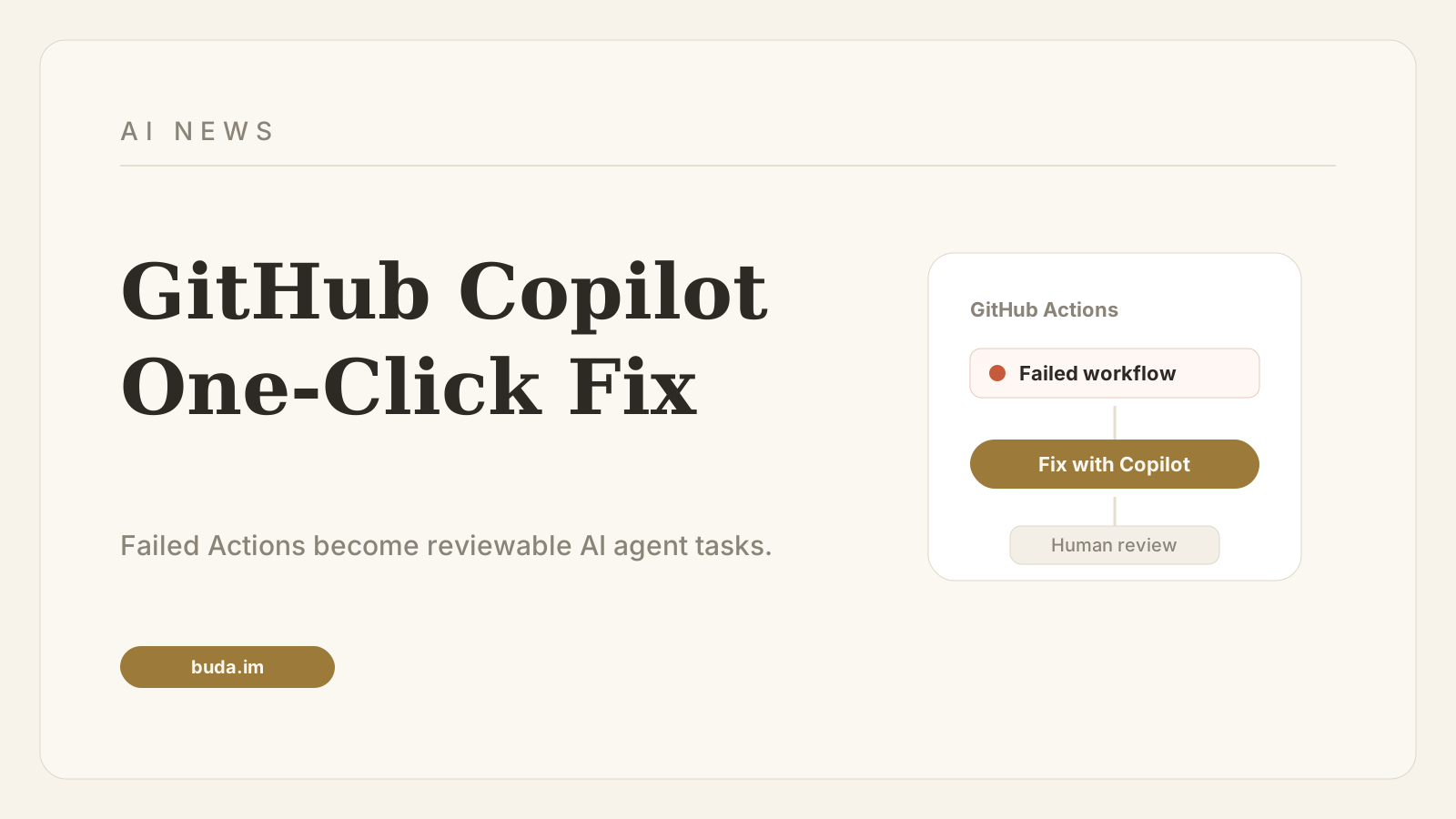
GitHub Copilot One-Click Fix for Failed Actions: The New AI Agent Workflow
GitHub Copilot can now fix failed GitHub Actions with one click. Here is what it means for CI automation, Copilot cloud agent, and human code review.
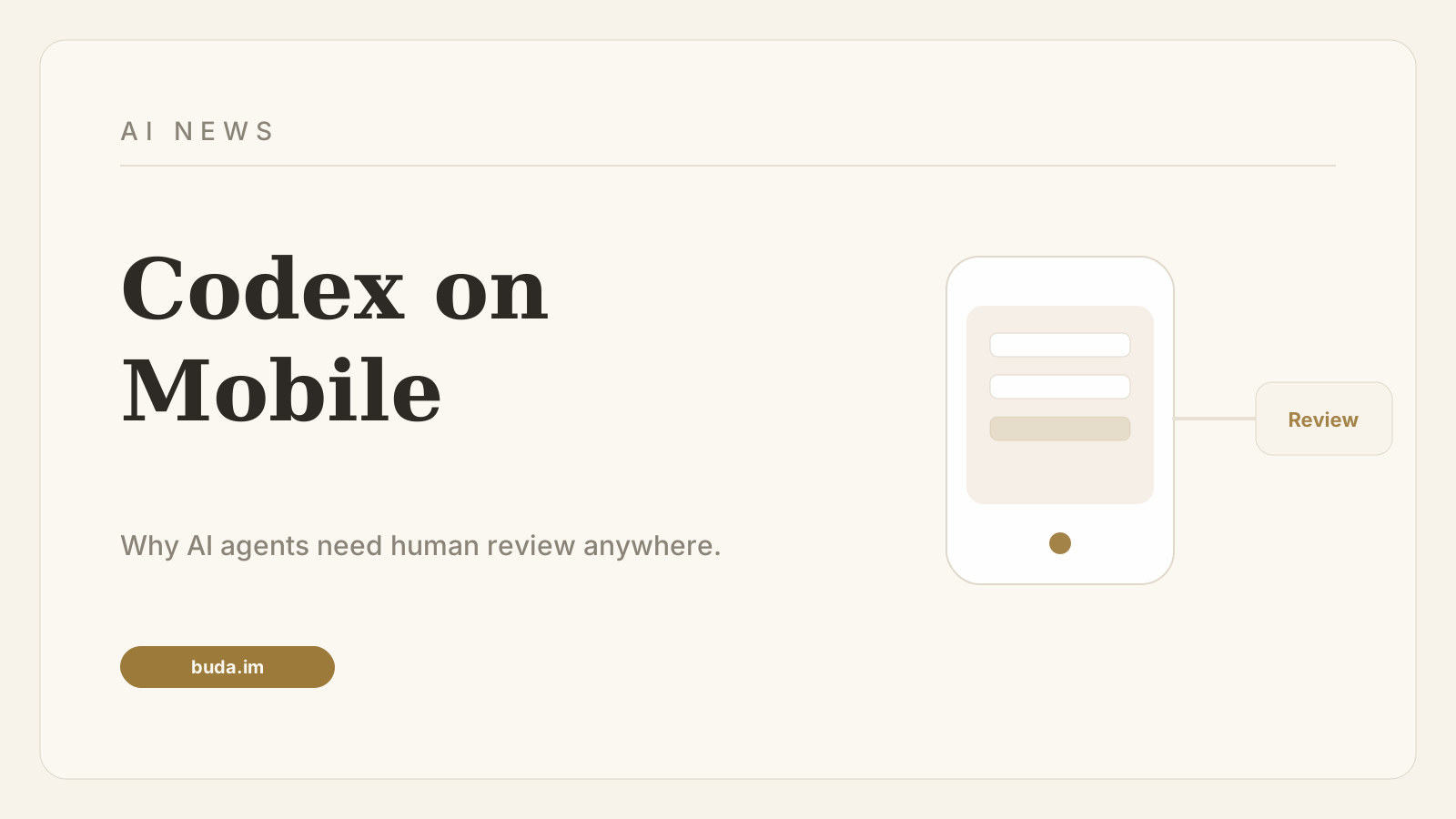
OpenAI Codex on Mobile: Why AI Agents Need Human Review Anywhere
OpenAI bringing Codex to mobile shows a new agent workflow: AI executes in the background while humans review, redirect, and approve from anywhere.
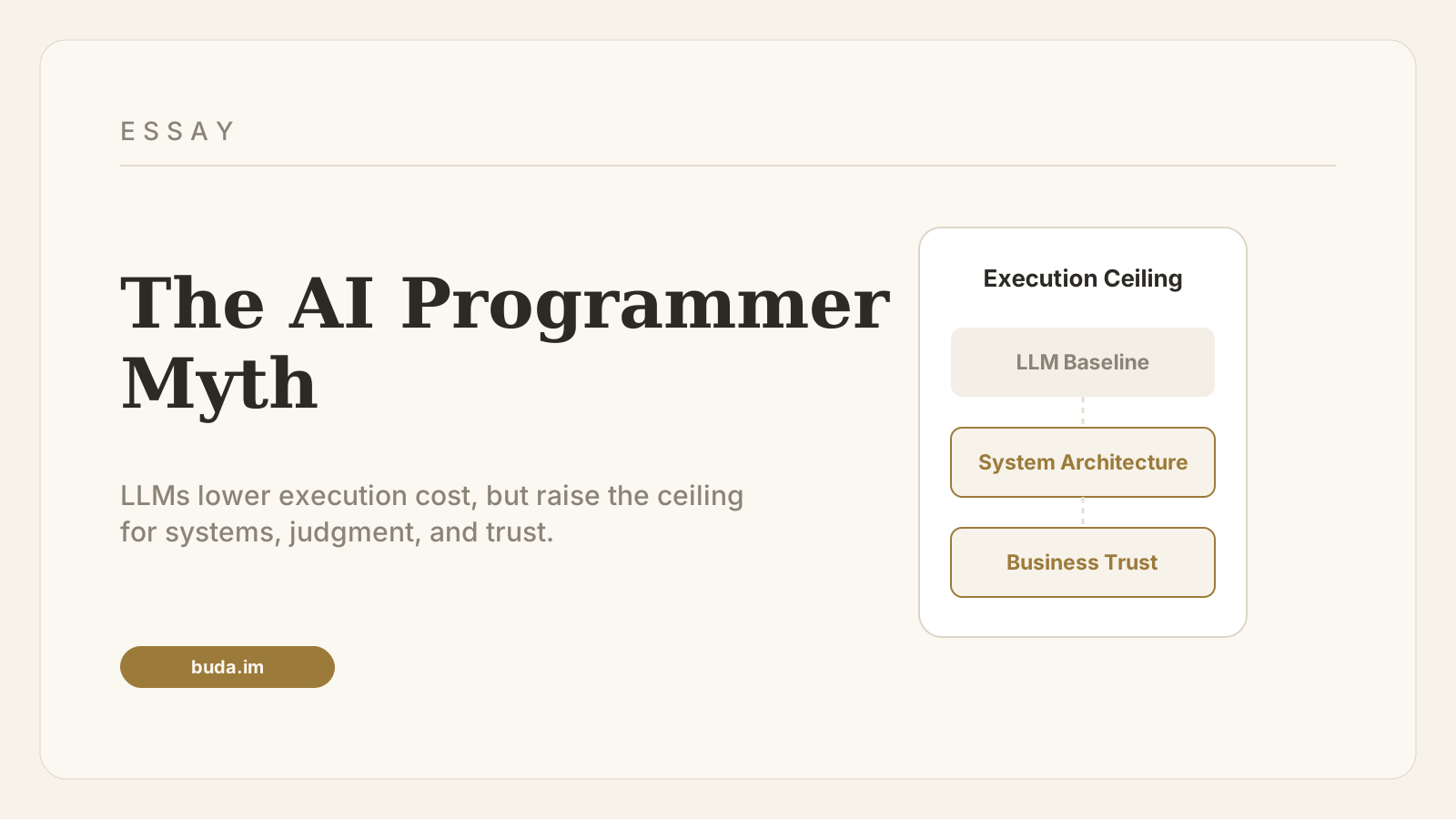
The AI Programmer Myth
LLMs lower the cost of execution, but they cannot replace system judgment or business trust. Learn how to move from executor to agent manager.
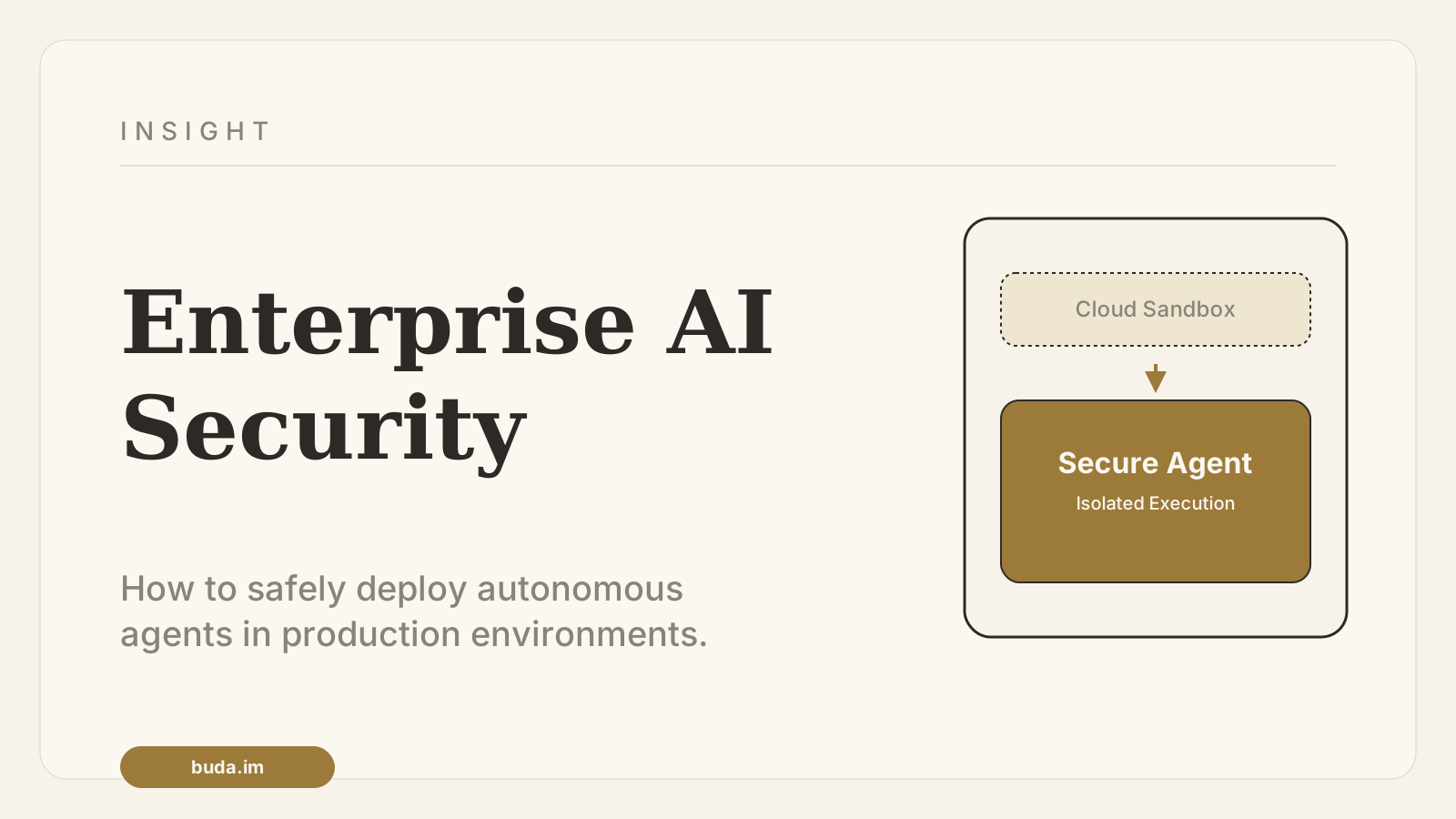
Enterprise AI Security: How to Safely Deploy Agents in Production
Discover the hidden risks of open-source AI skills and learn how isolated cloud sandboxes protect your enterprise data while deploying autonomous AI agents.
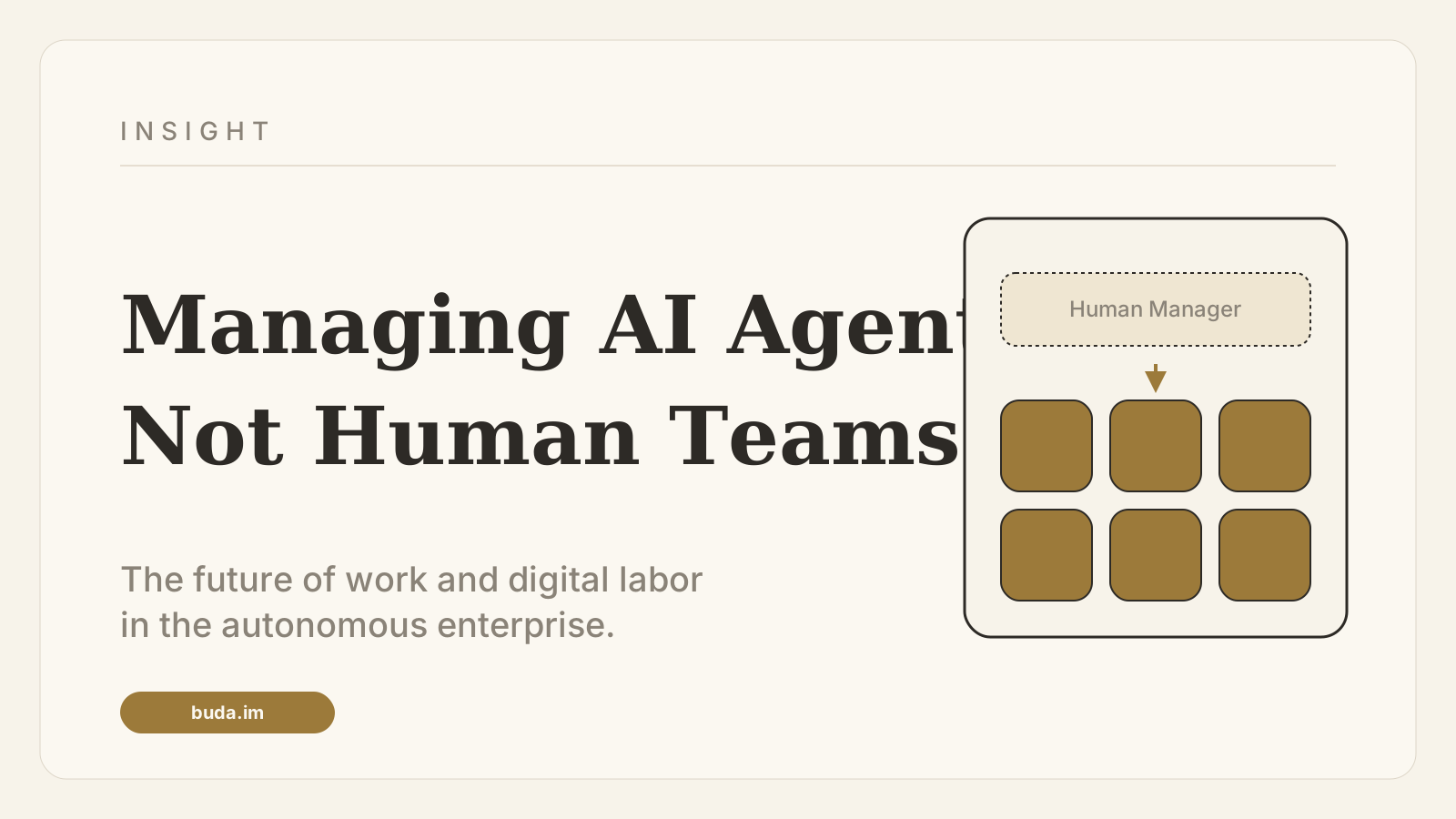
Future of Work: Managing AI Agents Instead of Human Teams
How the corporate organizational structure is shifting from managing headcounts to managing digital labor, flattening hierarchies and redefining leadership in the Agent Era.

Claude Sonnet 4.6, GPT-5.4 & GPT-5.3 Codex — Now Free on Buda
Use Claude Sonnet 4.6, GPT-5.4, and GPT-5.3 Codex free on Buda. No upgrade, no credit card — just sign up and pick the model.
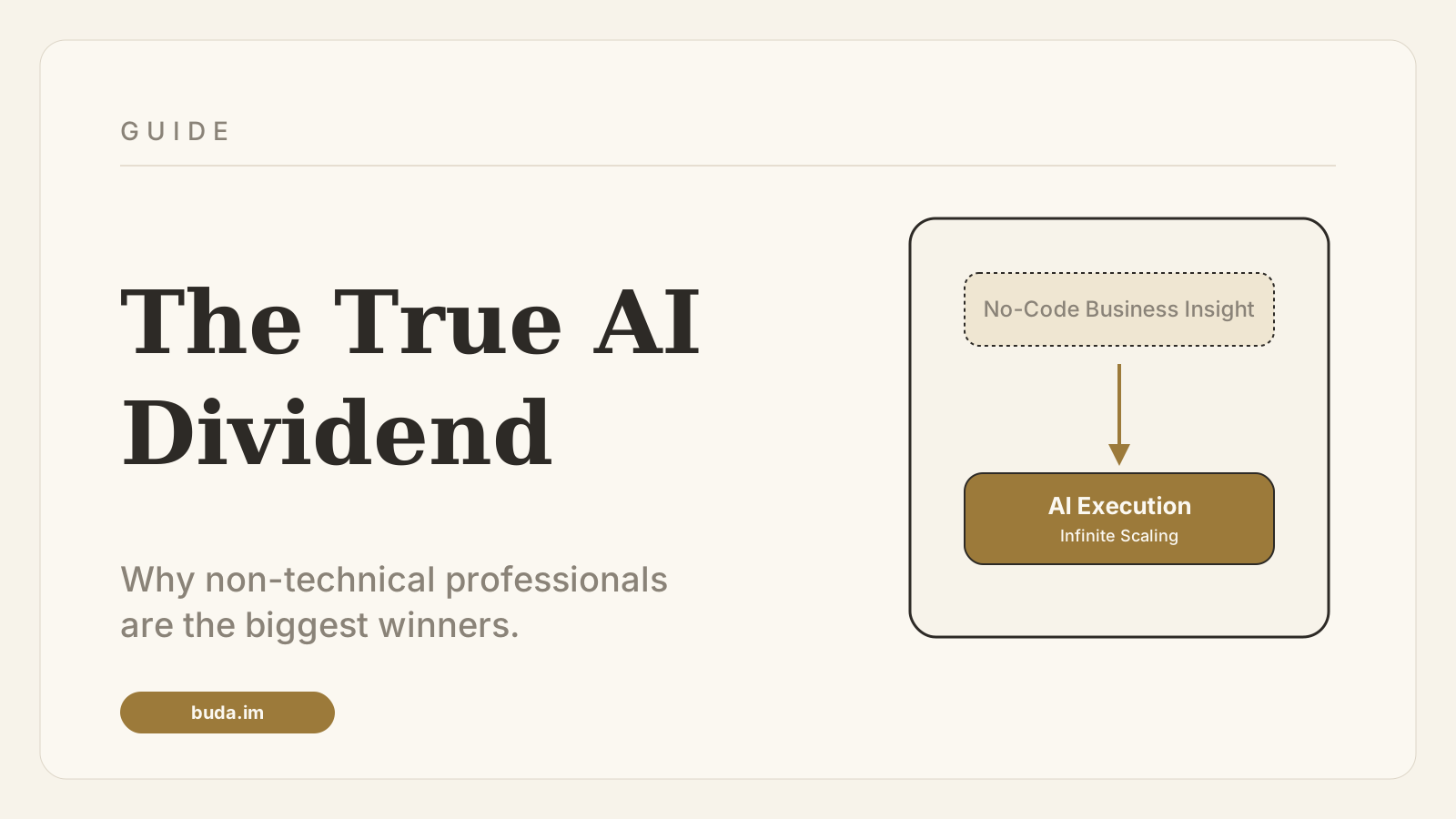
The True AI Dividend: Why Non-Technical Professionals Are the Biggest Winners
Discover how AI is breaking out of the engineering department. Learn how sales, HR, and finance professionals are using AI agents to build their own professional moats.
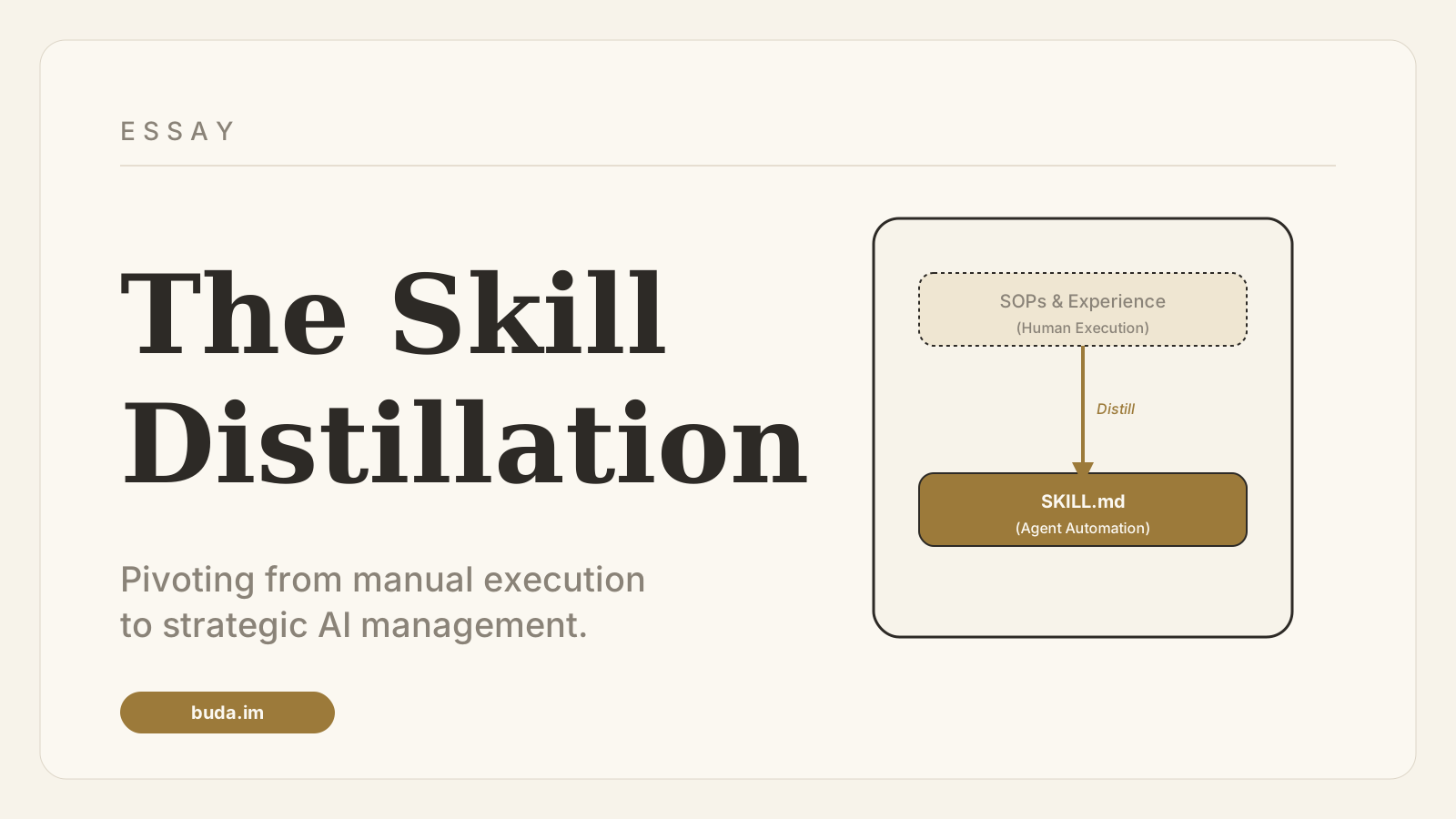
The Ultimate Guide to Skill Distillation: Future-Proofing Your Career in the AI Era
Learn how to distill your manual SOPs into AI skills. Discover the step-by-step guide to skill distillation and how to pivot from an executor to a strategic Commander.
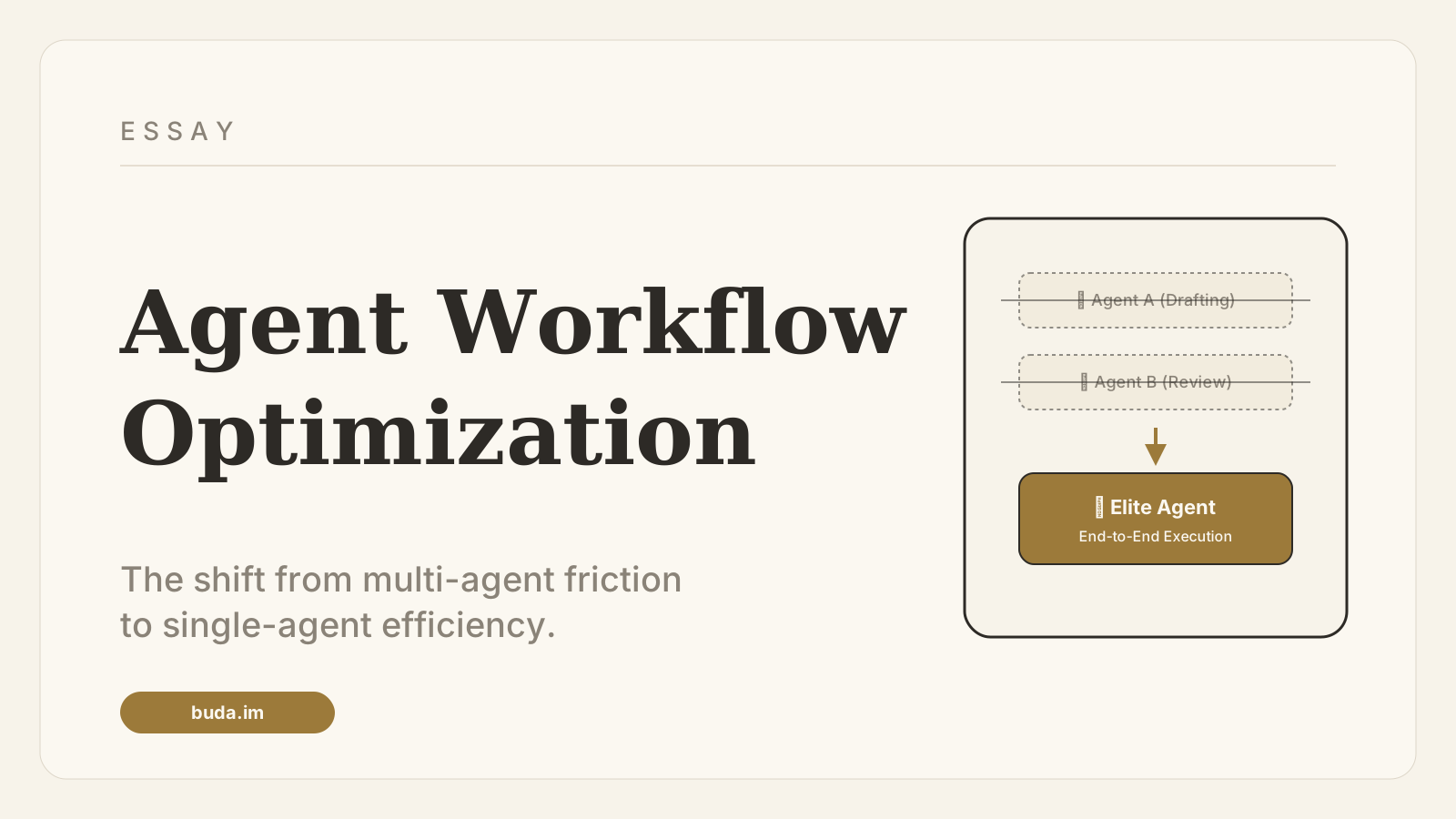
Agent Workflow Optimization: The Shift from Multi-Agent to Single-Agent Systems
As foundational models evolve, complex multi-agent pipelines are becoming obsolete. Discover why streamlining to single-agent workflows is the new optimization strategy.
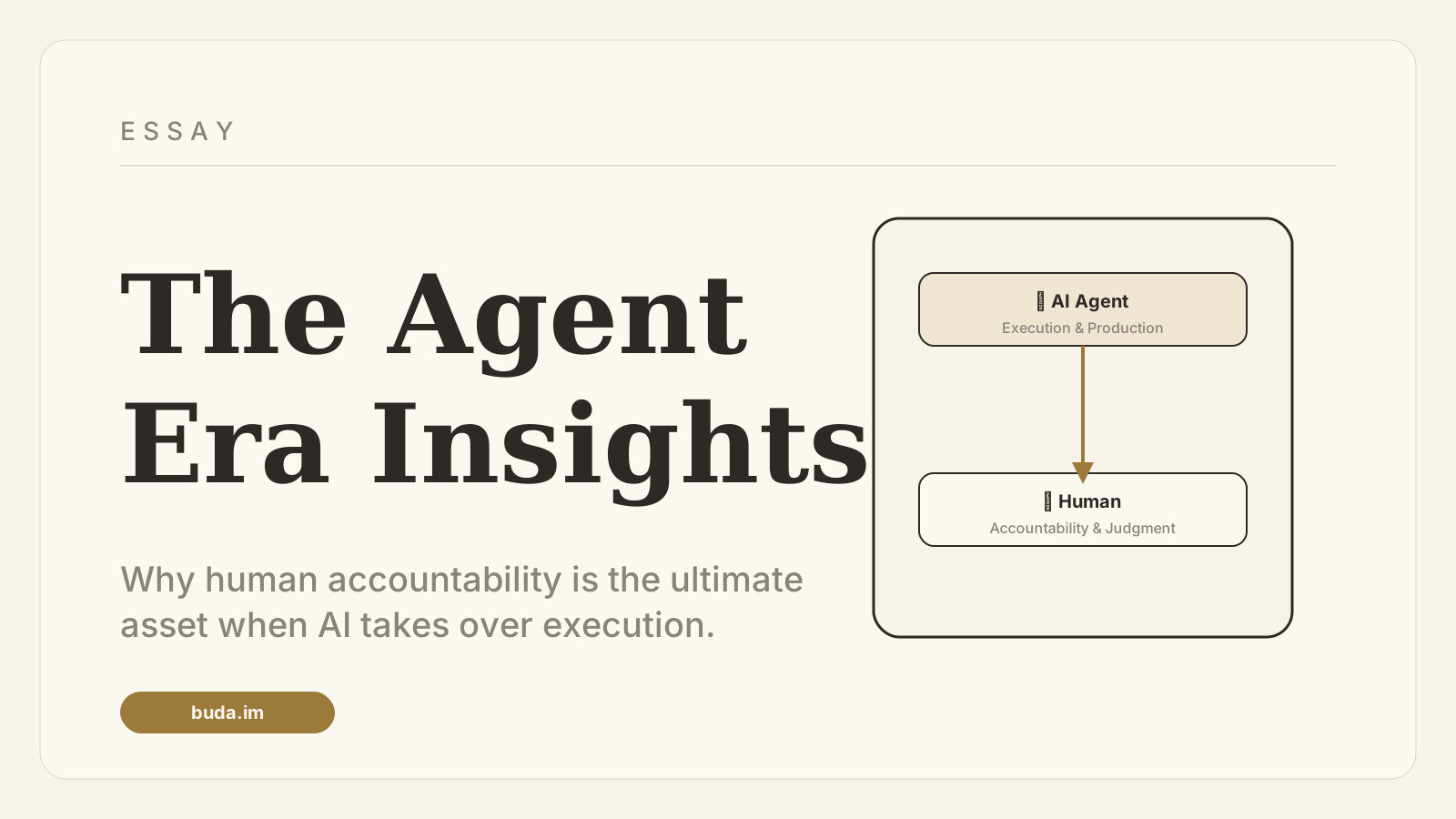
Insights on the Agent Era: The Commoditization of Execution and the Rise of the One-Person Company
As AI agents automate enterprise workflows, pure execution becomes a commodity. Explore the future of corporate structures and why human accountability is the ultimate asset.
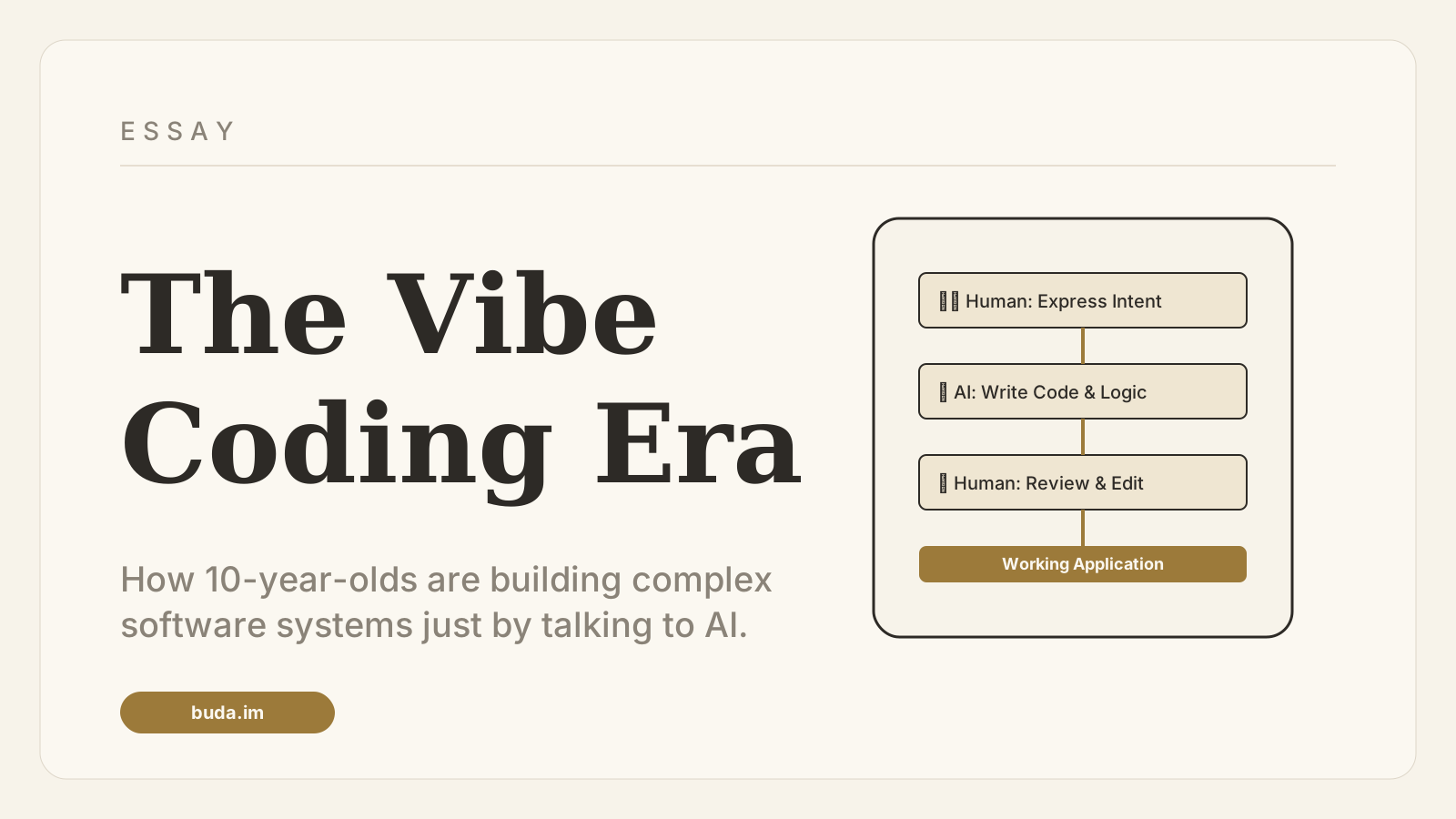
The Vibe Coding Era: How a 10-Year-Old Became a Full-Stack Developer Through Conversation
Learning to code used to mean battling syntax. Today, it means chatting with an AI. Discover how Vibe Coding eliminates technical barriers and empowers human creativity.
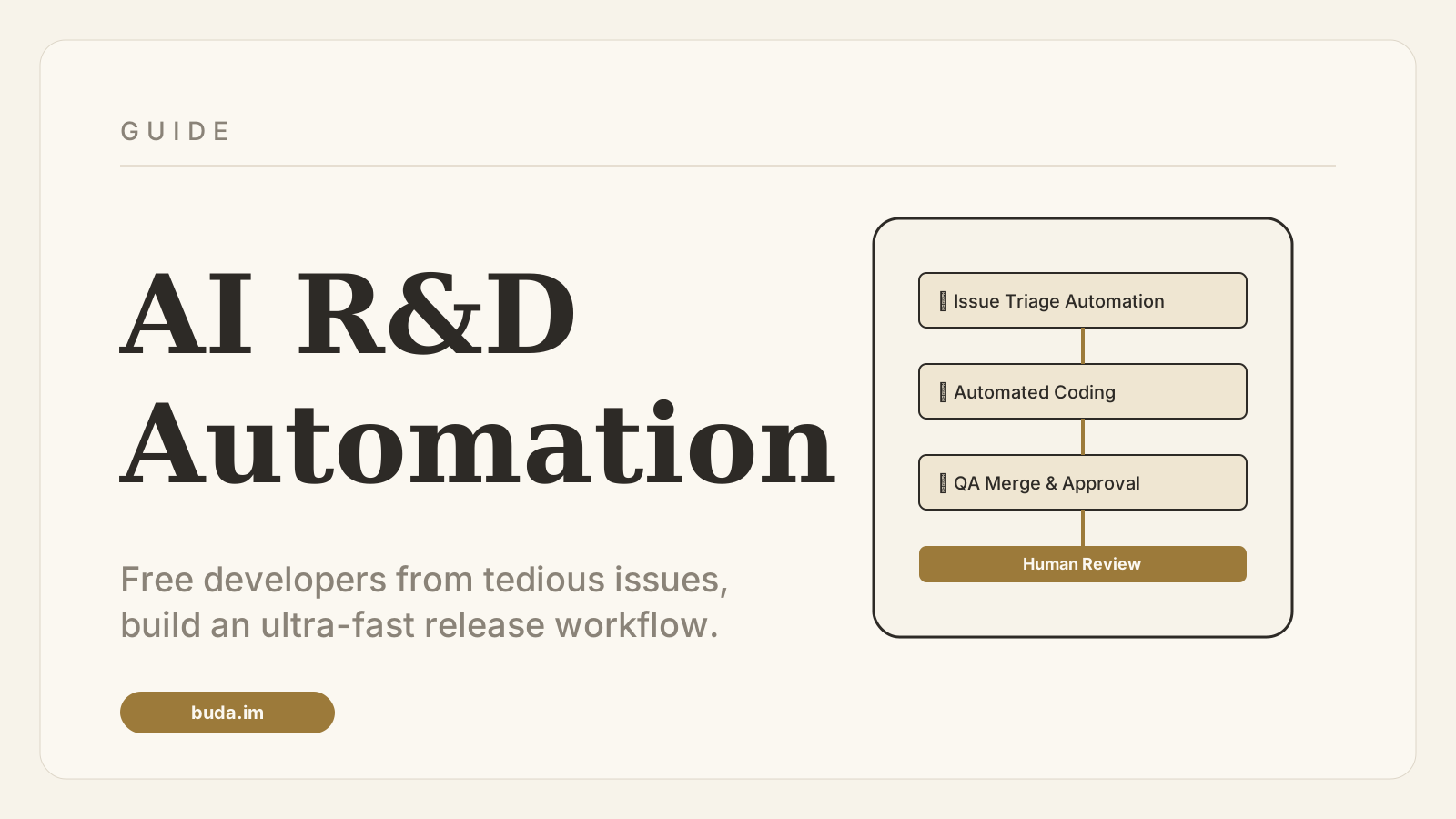
The Ultimate Guide to AI R&D Automation: Rapid Issue Triage and Automated Coding with Agents
Developers used to spend 70% of their time writing PRDs and communicating. Discover how Buda agents automate issue distribution and code fixes to achieve daily deployments.
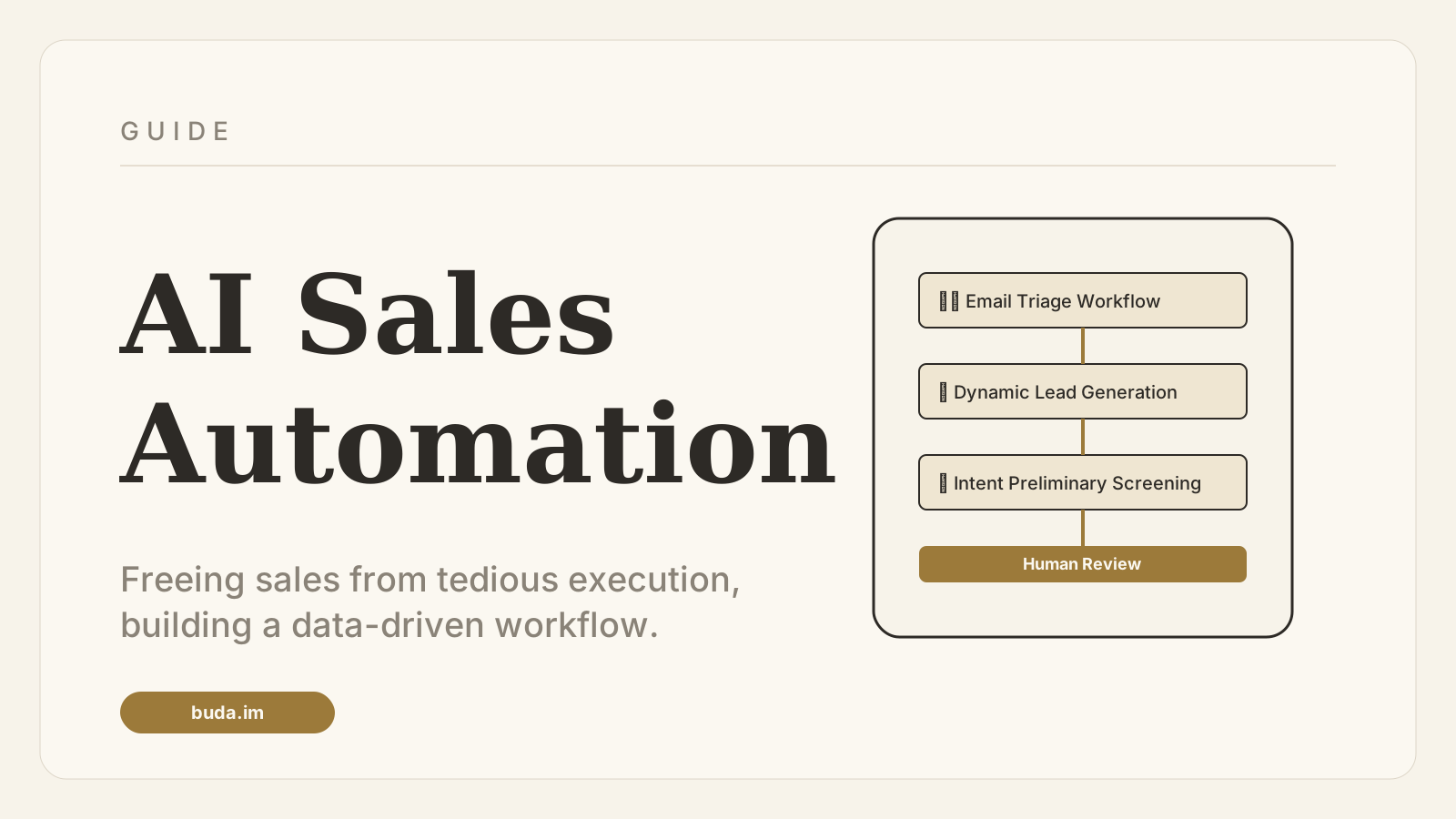
The Ultimate Guide to AI Sales Automation: Lead Generation and CRM Auto-Archiving with Agents
Discover how Buda AI agents take over tedious initial outreach, email triage, and lead generation to reshape a data-driven sales workflow and double sales efficiency.
April 2026 Model Update: DeepSeek V4, Claude Opus 4.7, GPT-5.5
Buda adds DeepSeek V4 Flash, DeepSeek V4 Pro, Claude Opus 4.7, and GPT-5.5. More AI models, better value, same credit system.
Introducing Single Agent Layout and Company Space Layout
We designed Company Space Layout for background automation. Users showed us they wanted something else entirely — and we listened, even though it costs us.
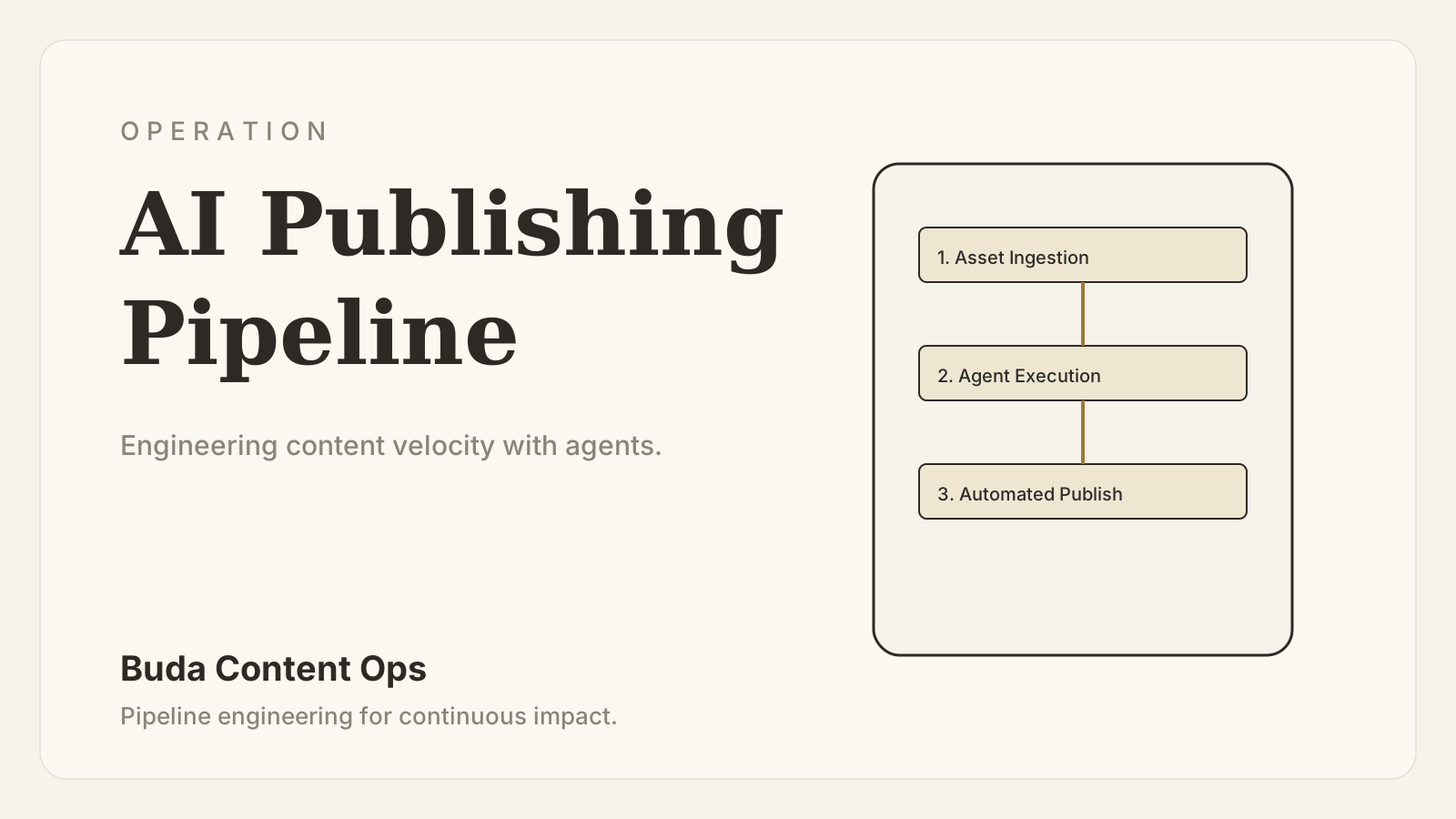
AI Publishing Pipeline: Engineering Content Velocity
Learn how to build an AI publishing pipeline that automates content creation, reactivates dead assets, and elevates you from writer to editor-in-chief.
How to Install GBrain (Garry Tan's Open-Source AI Agent Brain) Using Buda
GBrain gives your AI agent a persistent memory, 25 skills, and self-improving knowledge base. Install it in ~30 minutes using Buda — no model config, no DevOps required.
Buda vs SuperAGI: Cloud Agent Company vs Open-Source Agent Framework (2026)
Buda vs SuperAGI comparison — cloud-native multi-agent company platform vs open-source extensible agent framework. Architecture, deployment, and team use compared.
Buda vs Paperclip: Cloud Agent Company vs Self-Hosted Agent Orchestration (2026)
Buda vs Paperclip comparison — cloud-native Kubernetes agent company vs self-hosted local orchestration. Architecture, security, scaling, and Agent Companies spec support compared.
Buda vs O-mega.ai: Two Cloud-Native AI Workforce Platforms Compared (2026)
Buda vs O-mega.ai comparison — both are cloud-native AI agent workforce platforms. Architecture, visibility, marketplace, and team coordination compared.
Buda vs n8n: AI Agent Company vs Workflow Automation (2026)
Buda vs n8n comparison — cloud-native multi-agent company infrastructure vs visual workflow automation. When to use agents vs pipelines.
Buda vs Manus: Agent Company Platform vs Autonomous Cloud Agent (2026)
Buda vs Manus AI comparison — cloud-native multi-agent company infrastructure vs invite-only autonomous agent. Architecture, team collaboration, and scaling compared.
Buda vs OpenClaw: Cloud Agent Company vs Local AI Assistant (2026)
Buda vs OpenClaw comparison — cloud sandboxed multi-agent infrastructure vs open-source local AI assistant. Architecture, scaling, security & use cases compared.
Introducing Buda: Agents as a Company
Most AI agents are tools for the 1%. Buda is built for everyone else — a platform where AI runs like a company, not just a chatbot.