Buda vs DeepSeek Harness: installing plugins is not the same as handing off work
Track configuration changes separately from evidence and business acceptance.

Connecting a model and tools gets an agent running. Weeks later, another person inherits the workflow and discovers changed plugin versions, unfamiliar settings and outputs without their original acceptance evidence.
That is both a configuration problem and a delivery problem. DeepSeek Harness supplies a plugin-oriented foundation for building agents. Buda supplies a cloud workspace for running and inspecting tasks. The choice depends on which system the team wants to maintain and who receives its work.
A harness is not a model API
DeepSeek Harness, invoked as dsh, is an open-source agent harness developed by DeepSeek AI. The README describes an “Everything is a Plugin” architecture powered by Cordis.
It is an execution framework, not a new model name. Its developer's name alone does not establish that every configuration must use a DeepSeek model. Verify providers, plugins and tools against current documentation and configuration.
The documented entry includes npx @deepseek-ai/dsh web, starting a Web UI at a local address by default, plus a source-build route. A browser interface does not mean a hosted service, and a local default does not prove deployment elsewhere is impossible. Ask who prepares and maintains the host.
Extensibility brings operating responsibilities
An everything-is-a-plugin design lets a team assemble agent behavior from components. Selecting a plugin therefore involves access to files, networks, processes and credentials, not just its feature description.
List the version, permitted plugins, configuration, change owner, trusted inputs and recovery procedure. MIT licensing describes use of the code; it does not answer those operational questions.
Buda's Agent Workspace groups chat, persistent files, Terminal, browsers, preview and Git in one cloud environment. It can host task execution and result inspection. Integrations, inputs, access and business acceptance still require team decisions.
The comparison is not “open source is risky, cloud is safe.” Plugins and integrations both need scrutiny; hosting is not automatic evidence of trust.
Developer preview changes the pilot plan
On October 8, the official README still marks DeepSeek Harness as a developer preview, iterating rapidly with compatibility-breaking changes. Record the version in every pilot rather than retaining only an installation command.
The safety notice calls it experimental, unaudited software that must not be treated as secure or production-ready. It can execute model-generated code and commands, load third-party plugins, and access resources made available to it.
The notice also says sandboxing, approval prompts and permission controls reduce risk without guaranteeing isolation. Allowed resources remain exposed to permitted operations. Its recommendations include least privilege, disposable or dedicated environments, backups, and reviewing plugins, configuration and commands.
Use test credentials, sanitized data and recoverable environments. Explicitly exclude automatic production writes. These statements do not prove a particular Buda security certification or absence of comparable risks.
Keep two ledgers for one recurring task
The following is a proposed pilot, not a measured product comparison. Use a weekly supplier-information update: read authorized material, summarize quote changes, identify missing information and draft a comparison for a procurement reviewer.
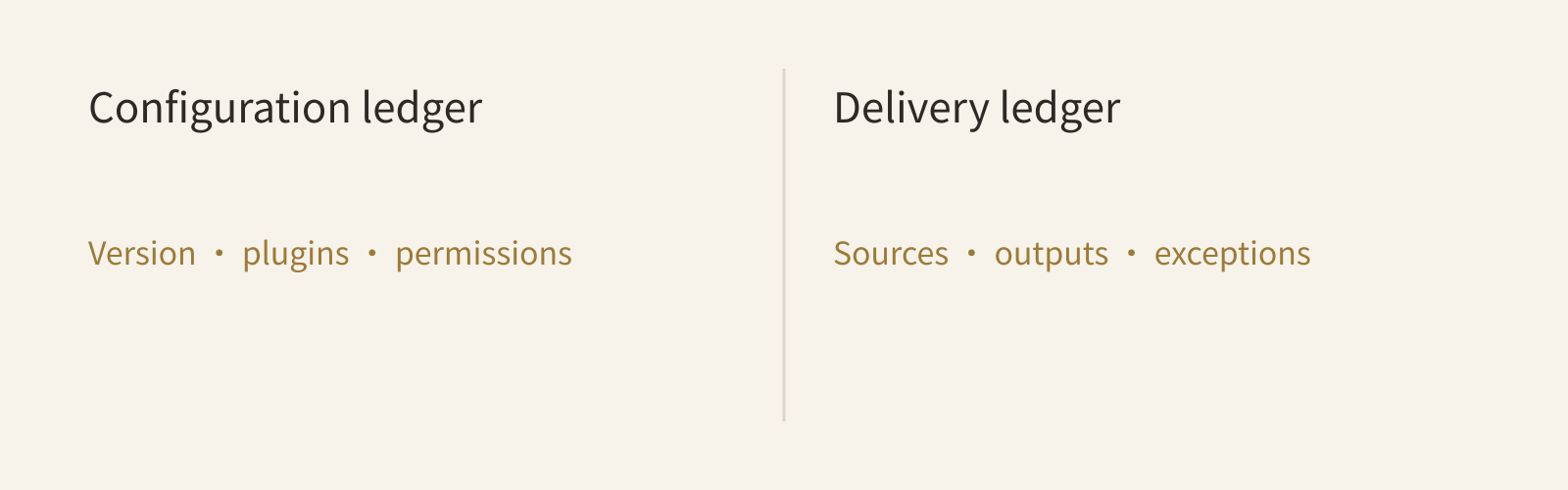
The configuration ledger records environment, versions, plugins, permissions, input location, external services and a minimal runnable configuration. Name who owns changes. Never document secrets merely to make setup reproducible.
The delivery ledger records input versions, sources, output files, reasons for changes, unknown values and human decisions. An unconfirmed quote remains unconfirmed. Sending inquiries, ordering and committing to a price are not implicit permissions for information processing.
With dsh, evaluate how plugins and the host support the first ledger and establish how the second is retained. With Buda, keep input and output files in the persistent workspace and inspect execution alongside them. Conclusions must still trace to source material.
Both approaches should deliver a table, explanation and exception list. Files with defined requirements are easier to inspect than a fluent completion message.
Change one condition in week two
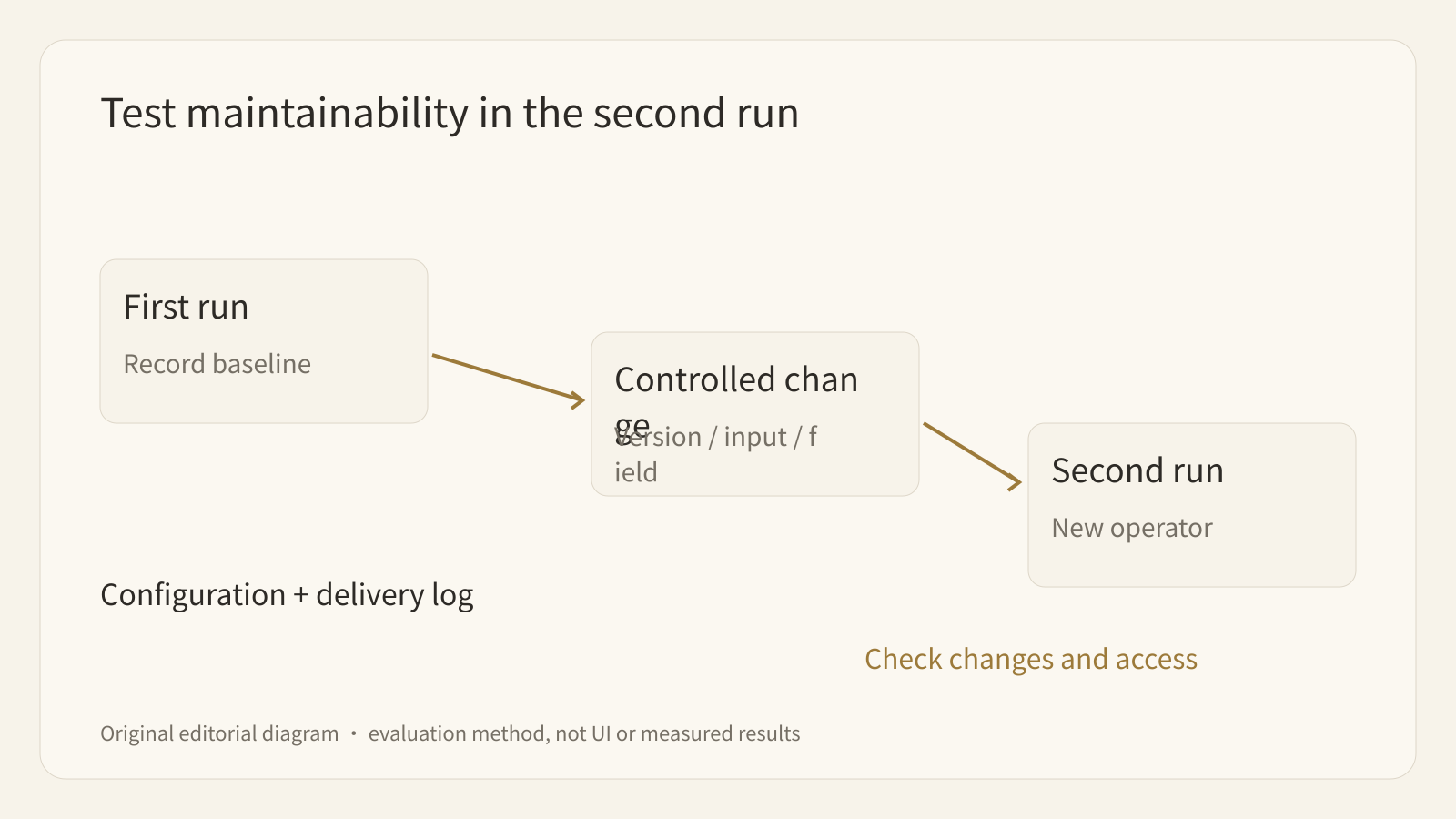
A first success establishes that particular input and configuration. Run again with another person and one controlled change: update a document, adjust a field or use a different approved configuration version.
| Question | Acceptance evidence |
|---|---|
| Can changes be located? | Old and new versions, settings and inputs |
| Can failure be explained? | Missing sources, configuration or access identified without silently filling gaps |
| Can results be reviewed? | Important table changes linked to sources and calculations |
| Can another person continue? | No dependence on the original operator rebuilding all context |
| Are permissions preserved? | No unauthorized messages or production writes after the change |
For developer-preview software, a version change is part of the test. If pinning and recovery are unavailable, narrow the workload rather than hiding instability behind more runs.
The method does not establish which product is faster or cheaper. Measure configuration, troubleshooting, source verification and handoff separately to understand where maintenance effort lands.
Choose the responsibility the team wants
DeepSeek Harness deserves evaluation when a team wants to build plugins, explore composition, control configuration and handle version changes. Its preview status belongs in that plan; it is not a business service that removes maintenance after installation.
Buda is more directly relevant when different roles need a persistent cloud environment to run tasks and inspect process and files. It does not decide procurement or guarantee plugin correctness, but groups execution surfaces and deliverables in one workspace.
Separate workloads may use separate approaches. This article has not tested dsh-plugin compatibility with Buda and promises no one-click migration of configuration, sessions or memory. Establish file-and-source handoff first, then evaluate integrations individually.
Separate model expense, hosting, plugin maintenance and human review. A free license is not a zero-cost operating system. Check Buda pricing for current plans and Credits; no same-task cost advantage was measured here.
FAQ
Is DeepSeek Harness the DeepSeek API?
No. dsh is an agent execution framework; a model API provides model access. Do not conflate their features or billing.
Does its Web UI establish cloud hosting?
No. The documented default starts a local Web UI. Remote access and operations depend on the environment and current documentation.
Does it have sandboxing and approvals?
The safety notice discusses those controls and their limits. This article does not infer a universal guarantee for every plugin and configuration, nor claim they are absent.
Is sensitive production use appropriate immediately?
The official notice says experimental developer preview, no security audit and not production-ready. Begin with least privilege and a recoverable environment, under organizational security review.
Does Buda guarantee correct results?
No. A workspace supplies execution and inspection locations. Sources, files and exceptions still need verification.
Can plugins migrate directly to Buda?
No compatibility test was performed. Inspect interfaces, dependencies, configuration and permissions before proposing a connection.
Let a second colleague test the first delivery
Choose a low-risk recurring task, write the configuration and delivery ledgers, then ask someone else to run the next round. Clear changes, inspectable evidence and transferable work justify expanding scope. Explore Buda's Agent Workspace for its inspection surfaces.
Sources checked October 8, 2026: official README for architecture, entry points and preview status; SAFETY.md for risk boundaries. The supplier task and two-ledger method are constructed evaluation methods, not measured customer cases.