American Workers Are Pushing Back on AI. Companies Are Learning That Training Is Not Enough
Trust grows when employees can shape real workflows, make mistakes safely, and see what the company will protect.

Companies say, “AI will improve efficiency.” Employees may hear, “We will need fewer people.” Companies say, “Learn the new tools.” Employees wonder whether they are already being judged by a standard they have not had time to learn.
That translation gap is becoming one of the hardest parts of workplace AI. CNBC's reporting on Ironclad, Superhuman, and Torani shows companies moving beyond training toward employee participation, protected experimentation, and commitments people can verify.
The backlash is not a sudden rejection of useful tools. It is resistance to a change whose goals, pace, and consequences remain unclear.
Two 53% findings describe different fears
A June 2026 Reuters/Ipsos poll found that 53% of Americans worried AI could put someone in their household out of work. A separate Software Finder survey of 1,006 US adults who use software at work found that 53% worried AI would make their own role feel less necessary.
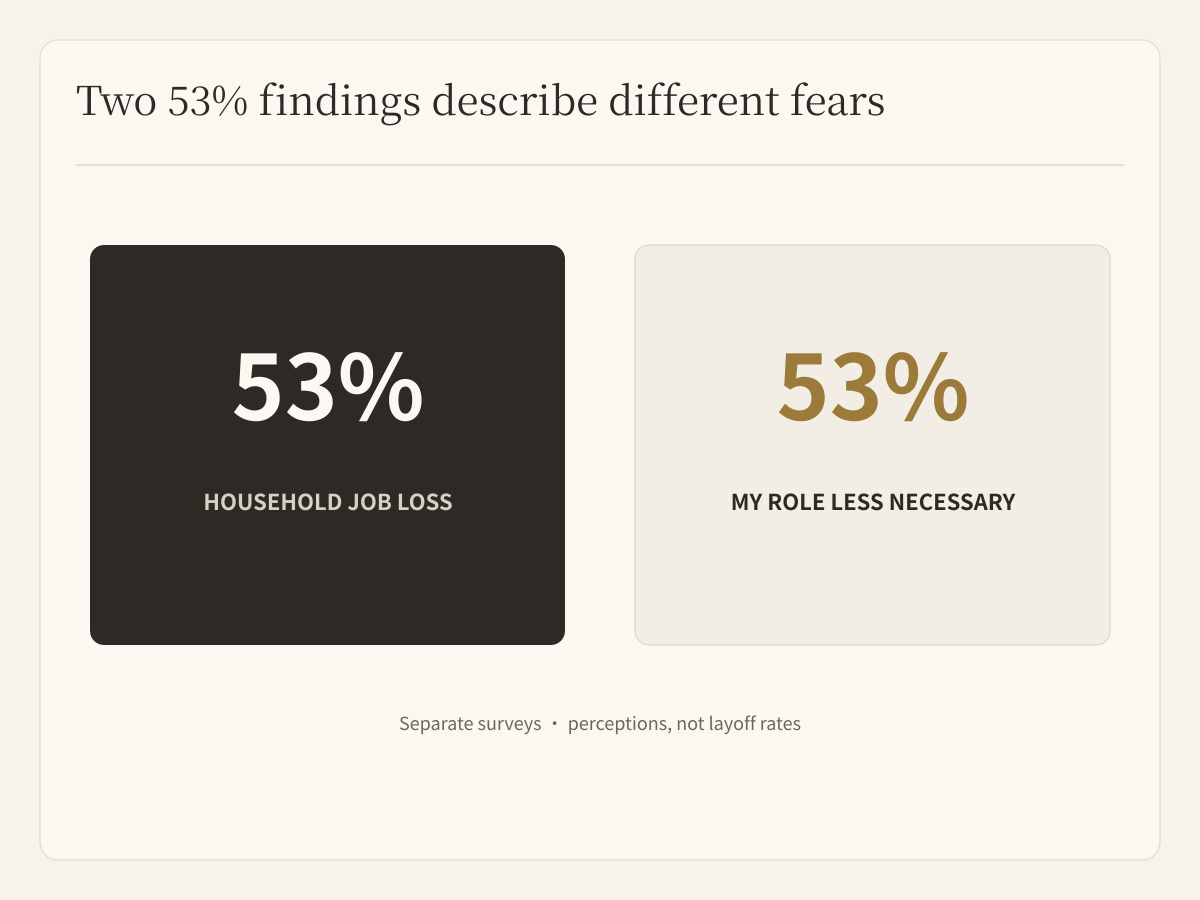
The samples and questions differ, and neither figure is a layoff rate. Together they show anxiety about both household income and personal relevance.
Software Finder also found that 69% lacked enough time and support before new performance expectations were set, 59% felt evaluated while still learning, 42% had pretended to understand a new tool, and 27% had avoided one for fear of mistakes.
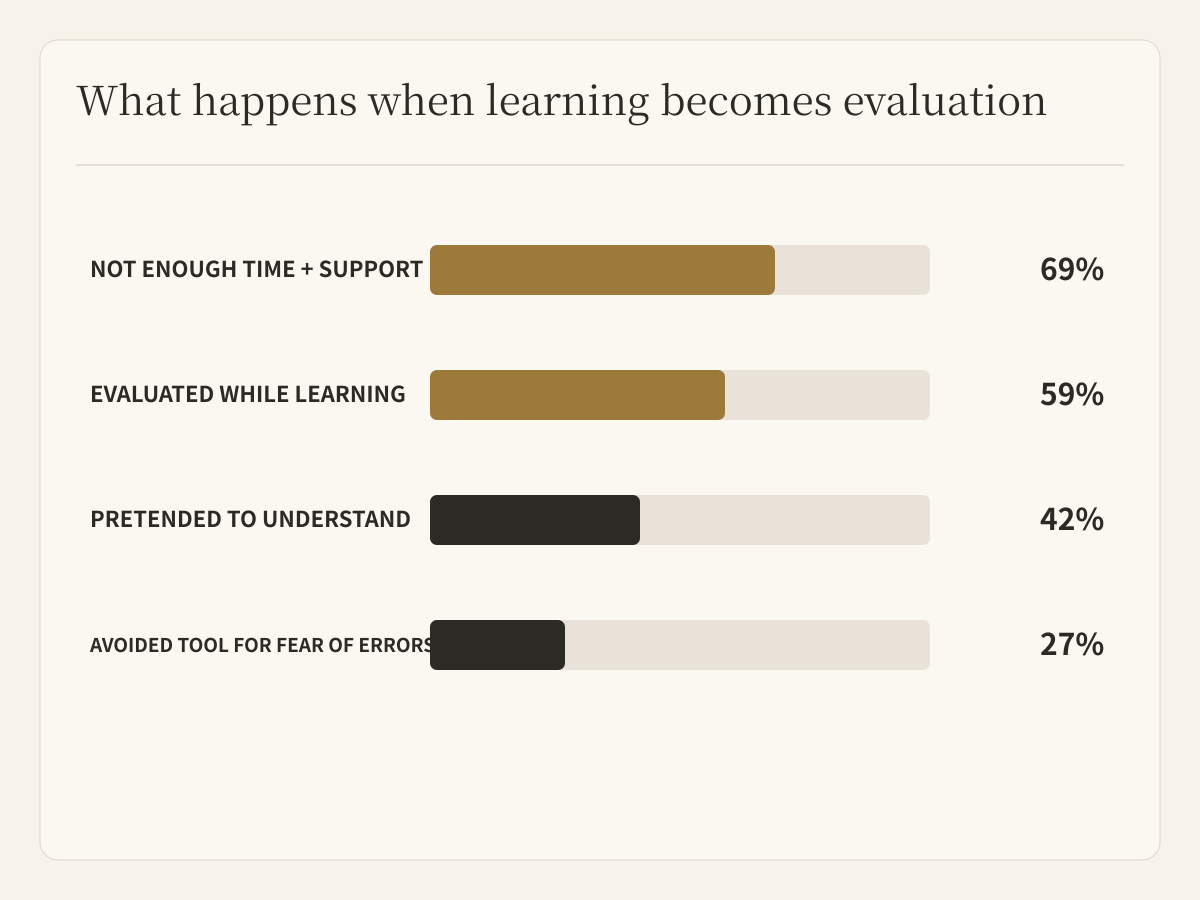
If every mistake can be interpreted as evidence that someone is unfit for the future, the safest behavior is not exploration. It is silence, performance, or avoidance. The company has turned learning into an elimination round.
Training teaches controls, not what work will become
An AI roadmap usually covers models, data, permissions, launch dates, and adoption. Employees ask different questions: Which part of my job disappears? What responsibility is added? Will mistakes affect performance? Who owns an Agent's error? Is the company improving work or reducing headcount?
A course cannot answer those questions for leadership. If employees receive accounts and training but must find use cases alone, absorb failures alone, and prove their value through output, resistance will grow.
AI adoption is a work-design problem before it is a tool-learning problem.
Three companies changed who shapes the roadmap
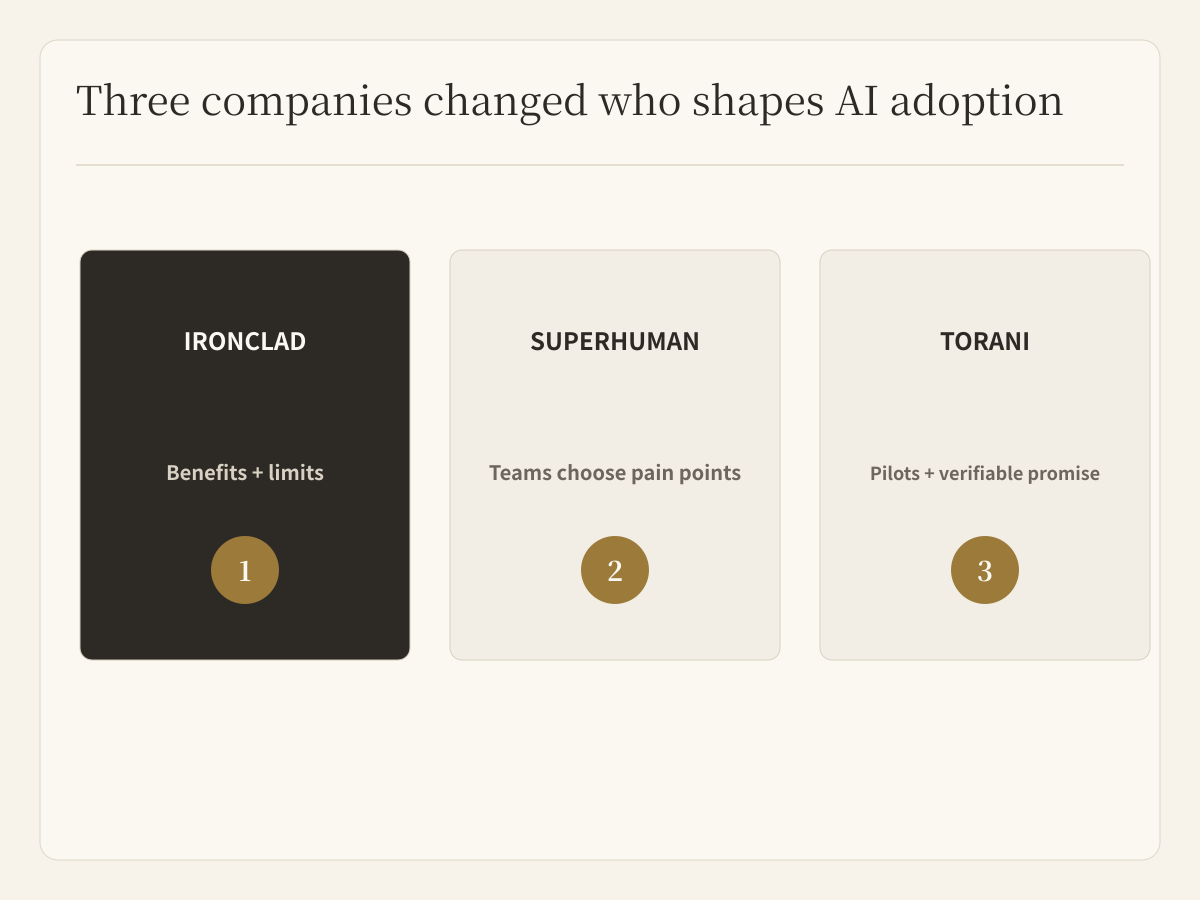
Ironclad pairs benefits with limitations. It offered courses, technical leadership, and peer learning while speaking candidly about failure and risk.
Superhuman lets teams choose where to begin. People closest to workflow pain select tools and redesign their own work. Employees become co-designers rather than targets of transformation.
Torani makes commitments verifiable. It pilots changes incrementally, involves employees in iteration, and says technology will not eliminate work. Its zero-layoff history, planned 30% workforce expansion, and $60 million manufacturing investment give that promise evidence.
Different companies, same power shift: employees help choose tasks, define boundaries, and correct methods instead of receiving only tools and deadlines.
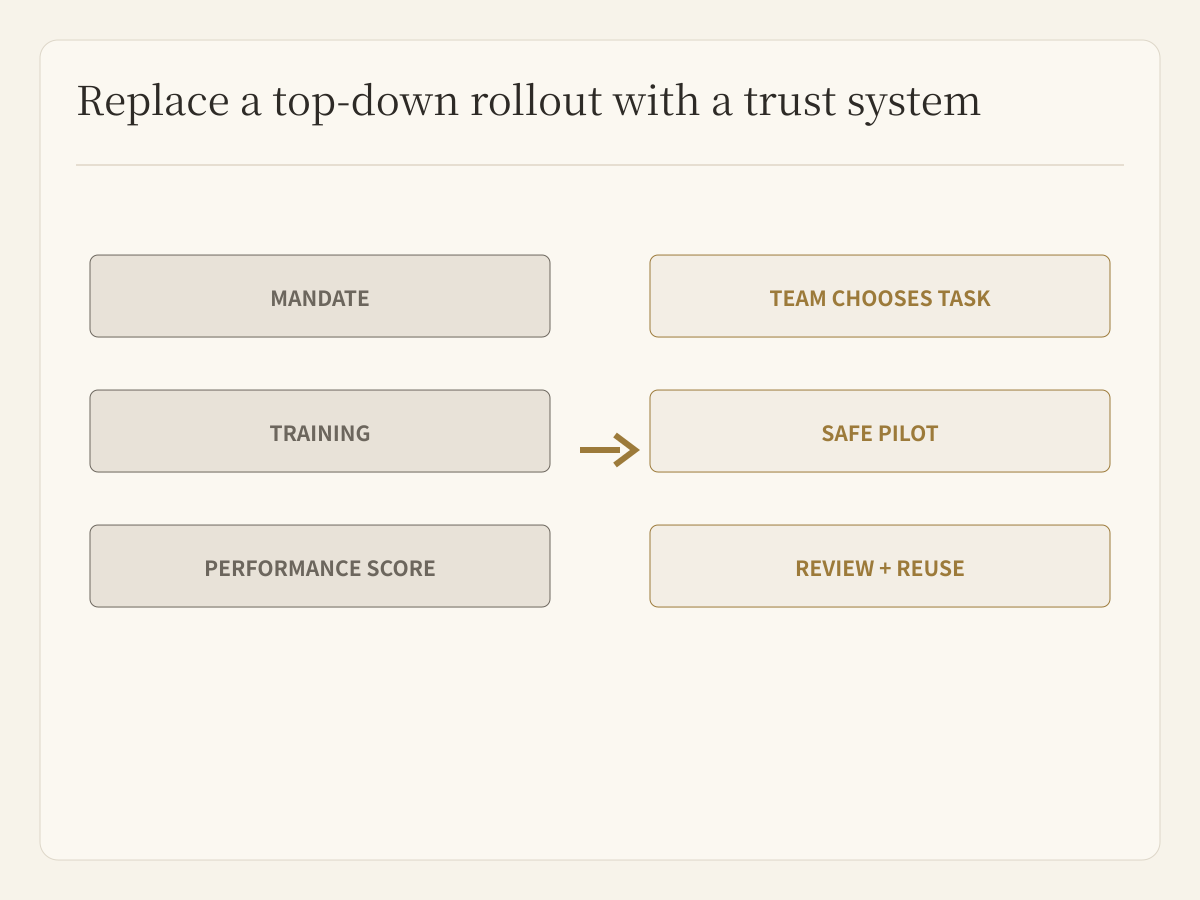
Replace completed training with completed work
A credible rollout needs four elements:
- Define what AI must not do, including restricted data, non-automated decisions, and mandatory review.
- Separate learning from performance evaluation with an explicit experimentation period.
- Let frontline teams choose the first low-risk, frequent, inspectable task.
- Preserve execution and feedback: what the Agent did, what people changed, how errors were corrected, and what method can be reused.
In Buda, teams can run Agents across real files, tools, and tasks. Sessions retain tool calls and artifacts, Skills preserve validated methods, and Automations repeat work only after it is mature. Managers can see where problems occur, while employees do not have to prove themselves through one perfect demonstration.
People are not meant to compete with Agent execution speed. They define goals, provide context, review outputs, and own judgment. That division of labor must be learned through practice, not announced in a training deck.
Trust is not the sentence “AI will not replace you”
Employees watch how performance is measured, how mistakes are handled, whether low-value work is actually removed, and whether promises match company behavior.
Before scheduling a larger AI course, select one real task. Let the team define the objective, risk, and review points. Protect an experimentation window, then review the run openly and decide what deserves to become reusable.
Resistance often begins with lost control. Trust returns through a visible arrangement: people understand why work is changing, can shape how it changes, and can see what the company will own.
Start with the Agent Workspace documentation and turn the next AI training session into one real task the team can complete, review, and reuse together.
Sources: CNBC: America's AI backlash, Software Finder: The Software Anxiety Report