Claude Code Auto Mode Safety Shows AI Agents Need Brakes, Not Just More Autonomy
Claude Code 2.1.183 blocks destructive git and infrastructure commands in auto mode, showing why AI agents need permissions, approvals, audit, and human control.

AI coding agents are getting better at doing the work.
That is exactly why they need brakes.
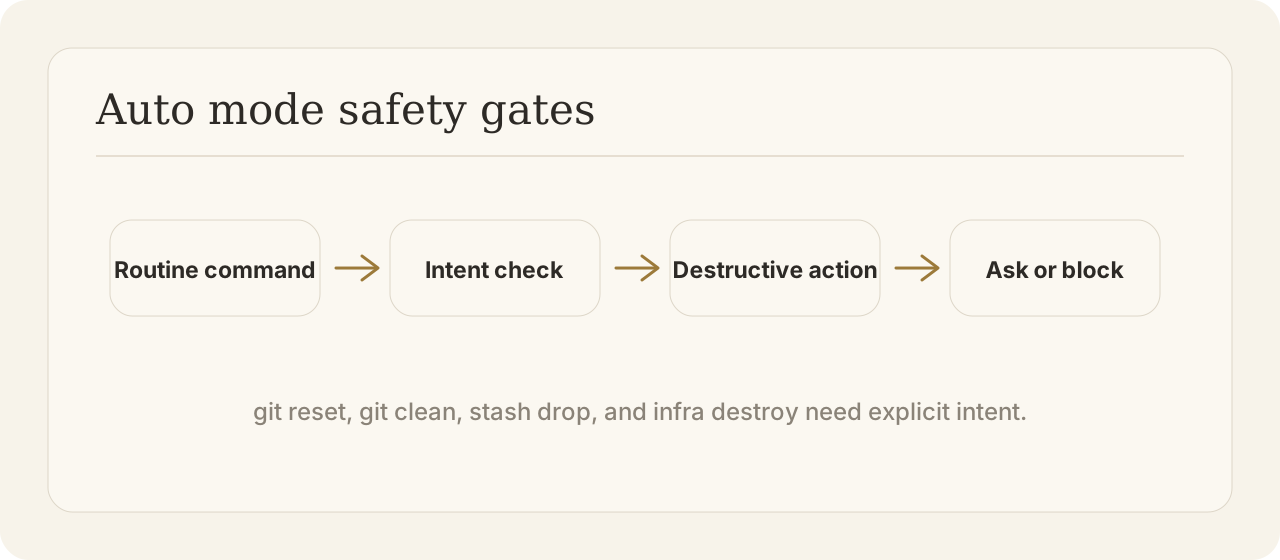
In the official Claude Code changelog, version 2.1.183 adds an important auto mode safety update: destructive git commands such as git reset --hard, git checkout -- ., git clean -fd, and git stash drop are blocked when the user did not ask to discard local work. git commit --amend is also blocked when the commit was not made by the agent in the current session, and terraform destroy, pulumi destroy, and cdk destroy are blocked unless the user asked for the specific stack.
This is not a small footnote.
It is a sign that AI agent products are moving from capability demos to responsibility systems.
What changed in Claude Code 2.1.183
The update is about auto mode: the mode where an agent can execute more work without stopping for every tiny confirmation.
Auto mode is useful because coding work is full of repetitive steps: read files, edit code, run tests, inspect errors, retry, and summarize. If every action requires manual approval, the agent becomes slow.
But some actions are different.
Deleting untracked files is different from running tests. Resetting a repo is different from reading a file. Destroying cloud infrastructure is different from checking a Terraform plan.
Claude Code now treats those actions differently.
Why auto mode needs a safety layer
The tension is simple.
Users want agents to move fast. They also do not want the agent to erase work, rewrite history, drop a stash, or destroy a production stack because it misunderstood the task.
That is the real product challenge for AI agents.
Not “can the agent do more?”
The harder question is “should the agent be allowed to do this now?”
A mature agent system needs to distinguish between routine execution and high-impact action. It needs to understand when autonomy is helpful and when autonomy becomes risk.
The commands matter because the pattern matters
The specific blocked commands are useful examples.
git reset --hardcan discard local work.git checkout -- .can revert working-tree changes.git clean -fdcan delete untracked files.git stash dropcan remove saved work.git commit --amendcan rewrite commit history.terraform destroy,pulumi destroy, andcdk destroycan remove infrastructure.
These commands are not always wrong.
Sometimes they are exactly what the user wants.
But they should not be guessed.
They require intent.
From permissions to accountability
Agent safety is not only a deny list.
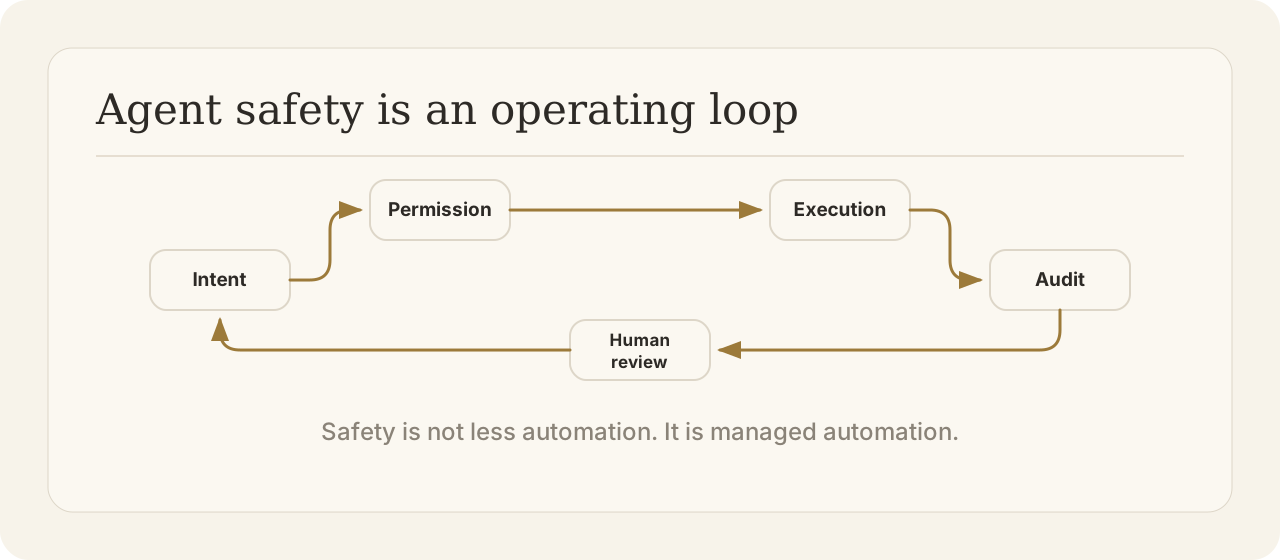
A deny list is the first layer. The deeper layer is accountability: who requested the action, what context justified it, what the agent saw, which command it attempted, who approved it, and what changed afterward.
Teams should evaluate AI coding agents across four controls:
-
Intent detection Did the user explicitly ask to discard work, rewrite history, or destroy infrastructure?
-
Permission boundaries Which commands can run automatically, which need approval, and which are never allowed?
-
Audit trails Can the team inspect what the agent attempted and why it was allowed or blocked?
-
Human takeover Can a person stop, redirect, or approve high-impact actions before damage happens?
Quick answers about Claude Code Auto Mode safety
What is Claude Code Auto Mode? Auto Mode lets Claude Code execute more coding workflow steps with fewer interruptions, so it can read, edit, run commands, and continue work more autonomously.
Why does Claude Code block destructive operations? Because auto execution changes the risk profile. Commands that discard work, rewrite commits, or destroy infrastructure can create irreversible damage if run without clear user intent.
How should AI Agent permissions work? Permissions should separate low-risk routine actions from high-impact actions, require explicit approval for destructive work, and preserve logs for review.
What are the security risks of using Claude Code in a company? The main risks are accidental data loss, unauthorized infrastructure changes, credential exposure, unreviewed code changes, and unclear accountability when an agent acts on behalf of a user.
How this connects to Buda
Buda is built around the same belief: agents should execute, but humans should manage.
The point of an AI Agent Workspace is not to remove judgment from work. It is to remove execution friction while keeping context, permissions, logs, approvals, and review visible.
A team does not need an agent that can blindly do everything.
It needs an agent workspace where dangerous actions are visible, controlled, and reversible when possible.
Claude Code 2.1.183 is another signal that the agent market is maturing.
The next question is not only how powerful the agent is.
It is whether the team can trust the system around it.
Explore human-led agent workflows in the Buda dashboard, or read the Buda Agent Workspace docs.