Anthropic Says AI Is Starting to Build AI: Why Agent Management Becomes the New Bottleneck
When agents accelerate AI development, human judgment, review, and control become the scarce layer.

Anthropic published a direct warning this week: When AI builds itself. It is not a normal model announcement. It is about a deeper shift: AI systems are already accelerating the development of AI systems. Anthropic is careful: full recursive self-improvement has not arrived, and it is not inevitable. But the signal is clear. AI is no longer only helping people write code. It is beginning to participate in building the next generation of AI.
Claude is becoming part of the R&D system
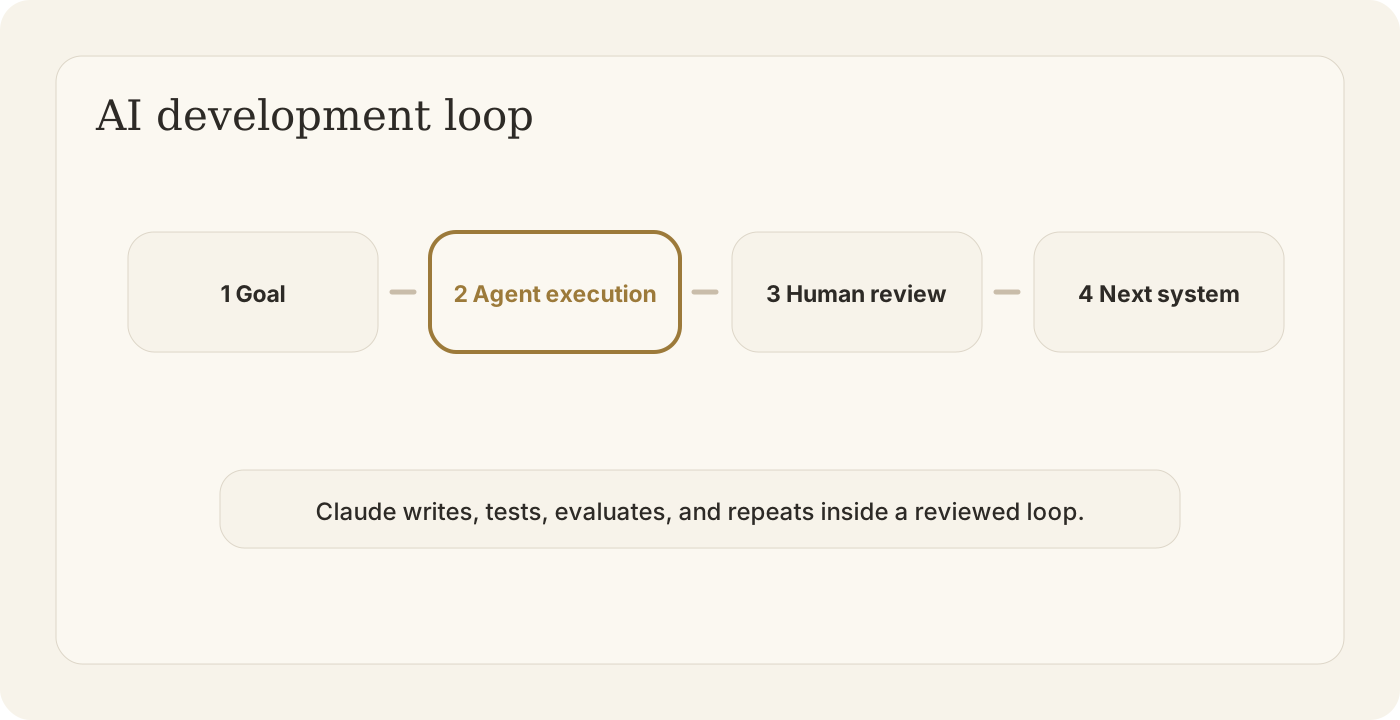
As of May 2026, more than 80% of the code merged into Anthropic’s production codebase could be attributed to Claude. Before Claude Code launched in research preview in February 2025, that figure was in the low single digits. In Q2 2026, a typical Anthropic engineer merged eight times as much code per day as in 2024. The exact multiplier matters less than the workflow change: humans provide the goal; Claude increasingly finds the method, writes code, runs tests, investigates failures, and repeats.
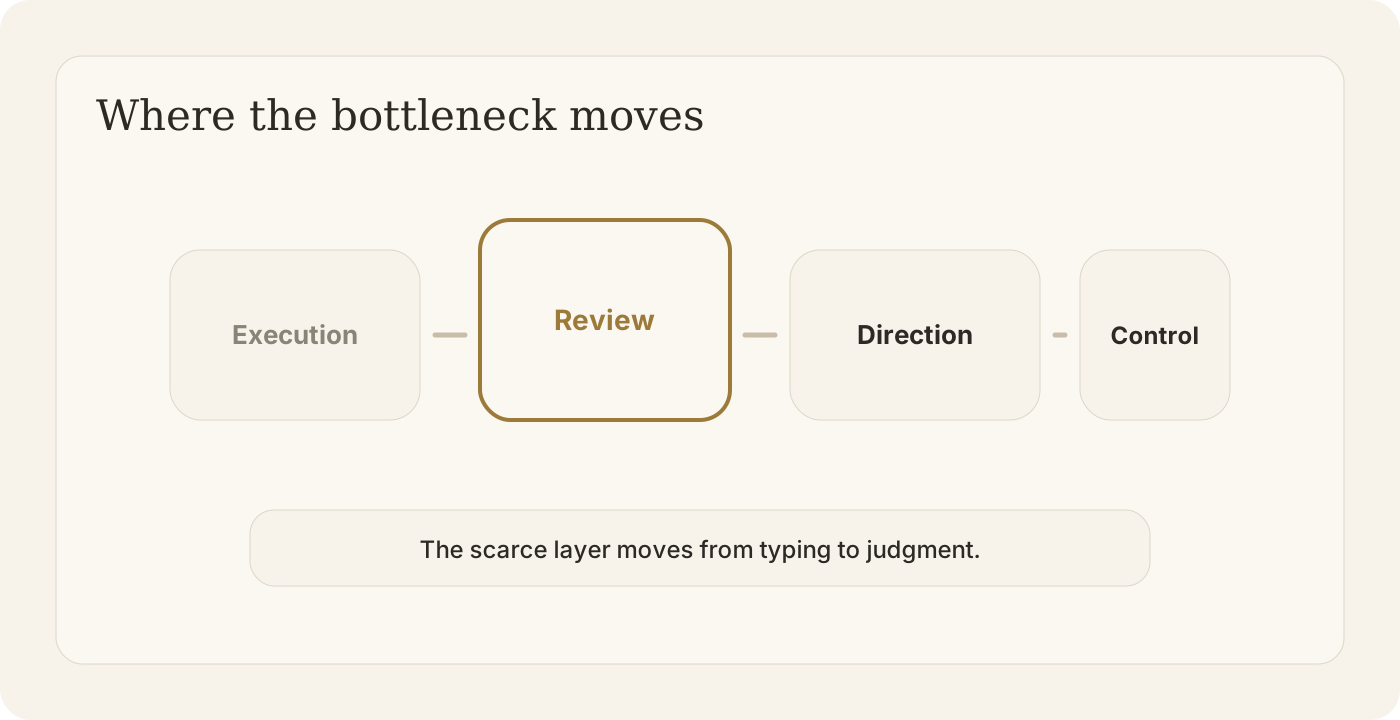
Execution is getting cheaper. Judgment is getting more expensive.
Anthropic’s useful point is not simple replacement. AI is becoming strong at doing: writing code, running experiments, optimizing known objectives, and trying many paths quickly. The hard gap is still judgment: which goals matter, which results to trust, and when to stop. When agents make execution cheap, the bottleneck moves to review, direction, and control. Anthropic says human code review has already become a new bottleneck as Claude produces more code.
AI companies are the first test case
The first organizations deeply changed by AI may be AI companies themselves. They have the strongest models, dense engineering needs, and the biggest incentive to automate their own research loops. The pattern will spread: software teams maintaining codebases, security teams finding and fixing vulnerabilities, life sciences teams designing experiments, and operations teams routing work. The better question is not whether AI affects a job. It is whether a company’s core workflow can become agentic.
Recursive self-improvement is a governance problem
Recursive self-improvement means an AI system fully autonomously designing and developing its own successor. That is not today’s reality. But early pieces are visible: agents can write code, run experiments, optimize systems, compare results, and suggest next steps. A faster loop may help science and engineering. It also makes governance concrete: what can the agent access, what can it change, which actions need approval, what evidence is logged, and who can pause or roll back the system.
How Buda fits this shift
Buda is built for a world where agents do more execution and humans manage more execution. A Buda Space gives an organization a boundary. Agents work with files, sessions, terminals, browsers, channels, artifacts, and tasks. Humans inspect what happened, shape goals, review output, approve sensitive actions, and take over when needed. As agents become stronger, companies need identity, context, permissions, review, audit, and handoff—not more isolated chat windows. Execution is becoming abundant. Judgment is becoming the scarce layer.
You can start building human-led agent workflows at buda.im, or read the Buda Agent Workspace docs.