The Vibe Coding Era: How a 10-Year-Old Became a Full-Stack Developer Through Conversation
Learning to code used to mean battling syntax. Today, it means chatting with an AI. Discover how Vibe Coding eliminates technical barriers and empowers human creativity.
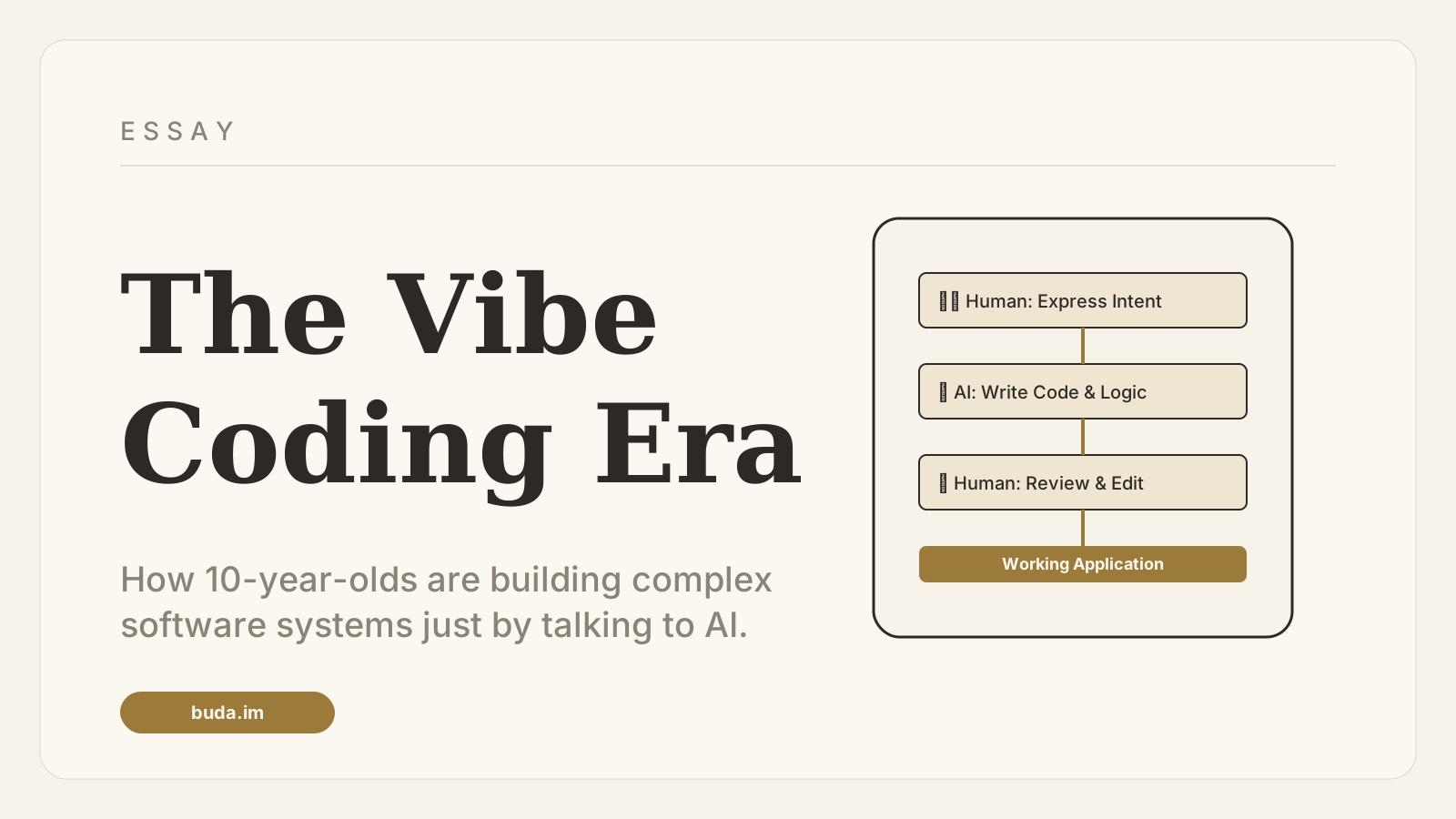
"When coding is no longer about fighting the compiler over syntax, but expressing your creativity like chatting with a friend, even a 10-year-old can build a complete virtual economy system."
If your impression of software development is still stuck on thick "C++ for Beginners" textbooks and tedious Hello World exercises, you might have missed a quiet paradigm shift—Vibe Coding.
In a recent sharing session, we witnessed the ultimate manifestation of this revolution. The youngest creators in the room—13-year-old Eason and 10-year-old Yanni—didn't use any profound technical architectures. They independently built software applications with complete logic simply by "conversing" with AI.
The barrier to creating software has completely collapsed before our eyes.
Farewell to Heavy Syntax: From "Manual Labor" to "Intent Expression"
In the past, when our generation first started coding, the first step was absolutely memorizing variables, loops, and object-oriented design patterns by rote. One of a developer's core competencies was the ability to "translate human intent into machine language."
But now, with AI Agents, the execution friction of this "translation" layer has been completely stripped away.
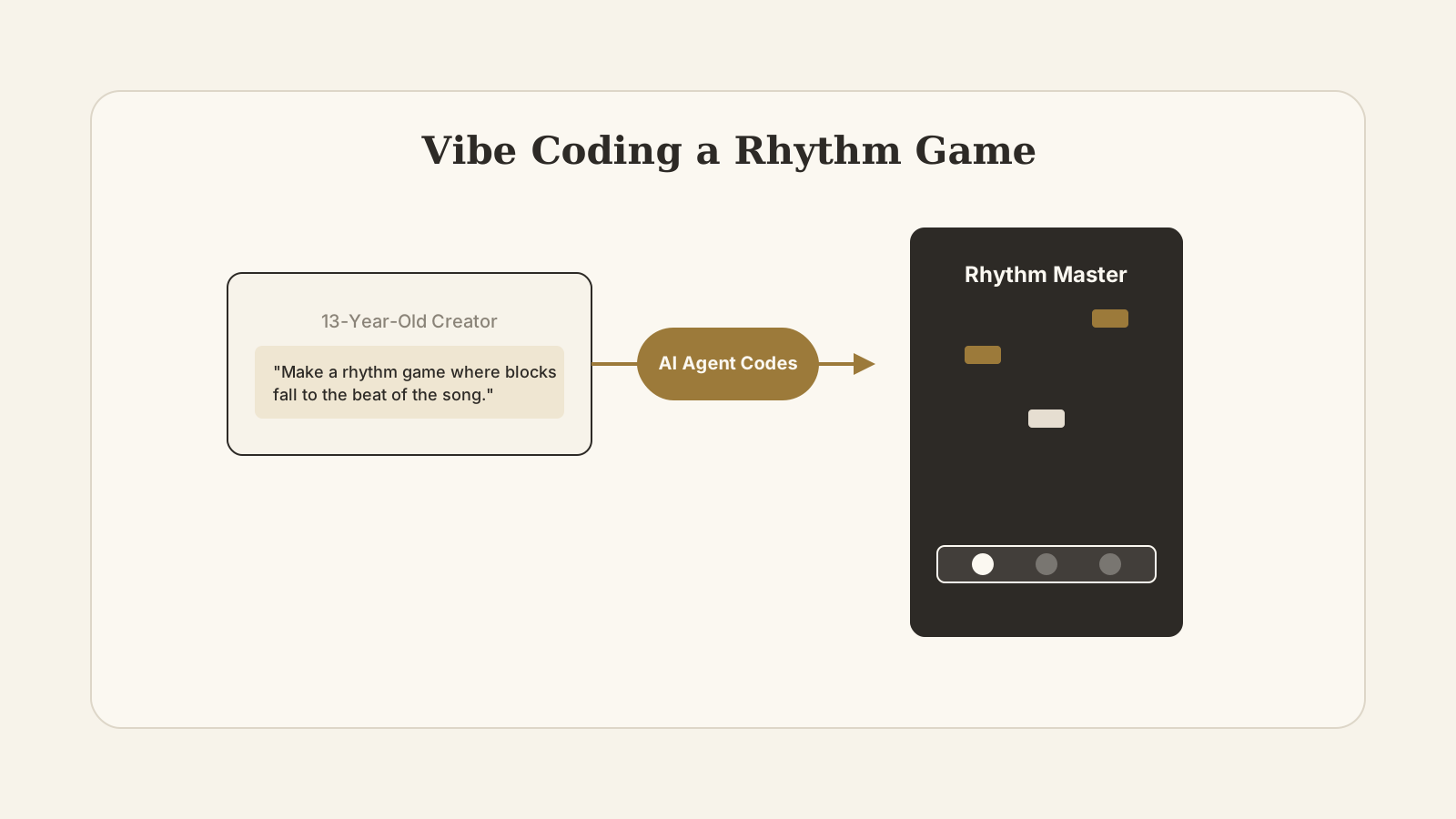
Take 13-year-old Eason, for example. He wanted to make a Rhythm Game. He didn't need to write an underlying rendering engine or audio synchronization logic from scratch. He only needed to tell the AI his ideas in natural language: rhythm blocks falling to the music of "You were the shine to my life...", perfectly synchronized with the beat.
The agent quickly transformed these intuitions (Vibes) and natural language into perfectly running code. A 13-year-old is no longer a passive "player" but has easily crossed the technical barrier to become a true "creator."
The 10-Year-Old "Game Director": Humans as AI Managers
While Eason had some basic computer science knowledge, 10-year-old Yanni showed us the ultimate democratization of Vibe Coding.
"Initially, my programming skills were zero. I had absolutely no idea how to start making a game, didn't know CSS, or even HTML."
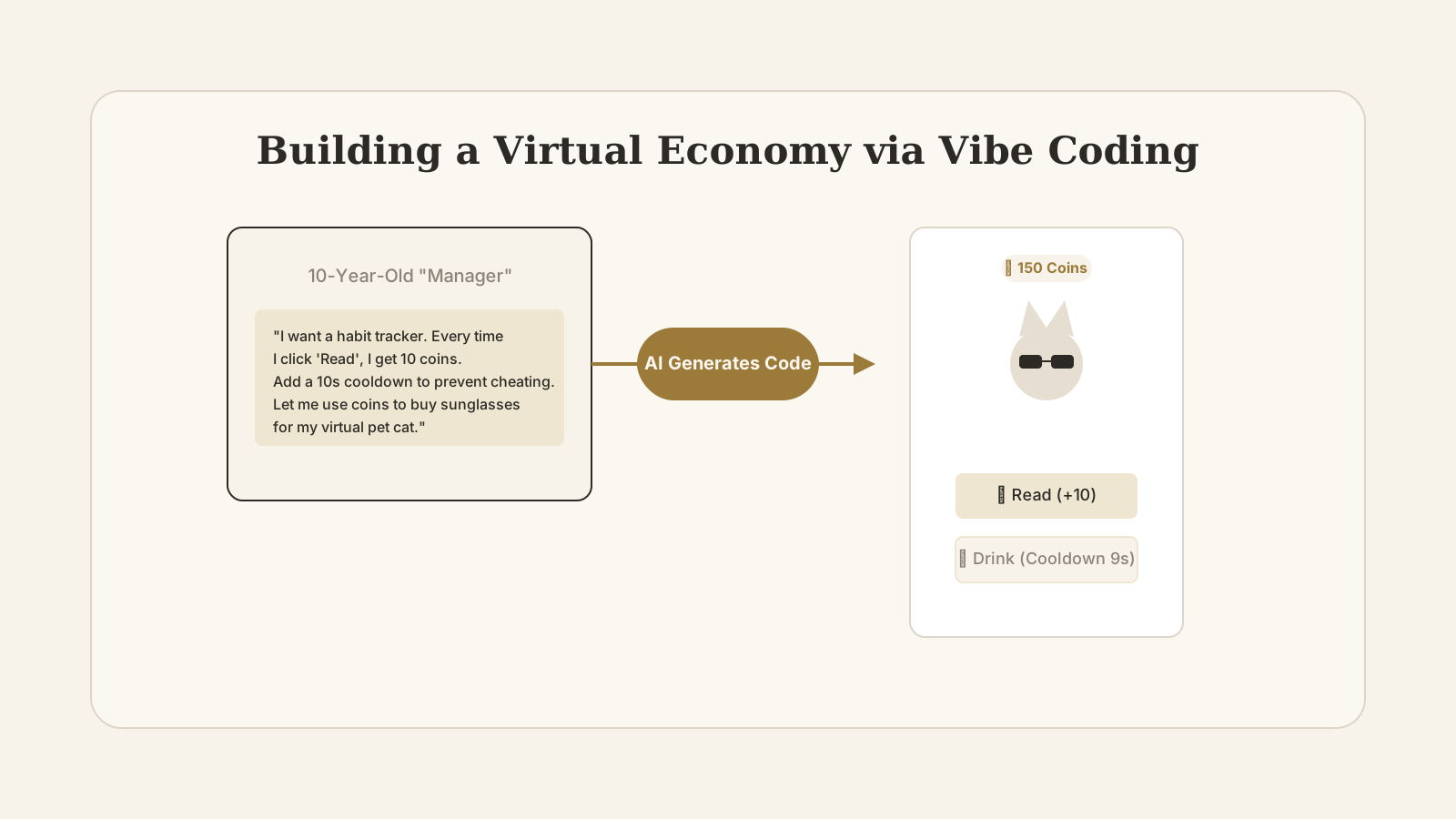
But she had a brilliant idea—a game to help her cultivate self-discipline. In this process, Yanni's workflow was exactly like a senior product manager directing her "execution lobsters" (agents):
- Ideation & Discussion: She discussed ideas with the AI, deciding the game needed interaction buttons for drinking water, reading, and sleeping early.
- Issuing Execution Commands: She let the AI automatically generate the UI and logic code based on her ideas.
- Review & Acceptance: She carefully checked the generated results, tried to understand the code, and proposed modifications.
This is exactly the best practice Buda advocates: Humans act as the managers and Reviewers of AI, while AI handles the tedious execution.
Unexpectedly Hardcore Systems: Anti-Cheating & Virtual Economy
Under Yanni's direction, the AI built much more than a simple "habit clicker." It constructed a hardcore system with an extremely mature gameplay loop:
- Anti-Cheating System: To prevent players from spamming the button for points, she had the AI add a 10-second click cooldown mechanism.
- Virtual Economy System: Coins earned from completing good habits can be spent in the in-game Shop to buy glasses or new backgrounds for the virtual pet cat in the center of the screen.
Clear logic, strict anti-abuse mechanisms, and even the prototype of commercialization. This is the power of Vibe Coding: as long as your logic and product sense are good enough, even if you haven't written a single line of code, you can build a complete application with the help of AI.
Conclusion: When Imagination Becomes the Only Boundary
The technical barriers of the previous generation of "coders" are disappearing.
In the past, enterprises paid high salaries to hire people largely for their ability to translate requirements for machines. But now, the cost of code generation has been compressed to the limit. Machines can understand human language, and agents can automatically handle the details.
Ultimately, what separates individuals and companies is no longer syntax proficiency, but the imagination to build product logic and the aesthetic judgment to manage AI execution.
You can toss the tedious execution to machines and save your brainpower for real business decisions. As long as you have ideas, you can summon an entire AI team at any time to turn the world in your head into reality.
If you also want to experience the ultimate efficiency of "developing software just by talking" and bring those long-forgotten brilliant ideas to life, visit buda.im to adopt your first AI agent and start your Vibe Coding journey.