Gemini 3.5 Flash and OpenAI Codex Context Update: What Developers Actually Need
Gemini 3.5 Flash and Codex are not peers. One is a fast model, the other is a coding agent experience. The real issue is workflow routing.
Gemini 3.5 Flash and OpenAI Codex should not be compared as if they were the same kind of thing.
Gemini 3.5 Flash is a model. Codex is a coding-agent product experience built around models, tools, repository context, and task execution. Putting them into a simple “which one is better?” table is misleading.
The better question for developers is different:
When do you need a fast execution model, and when do you need a coding agent that understands the workspace around the task?
That is the useful comparison after Google’s Gemini 3.5 Flash announcement and OpenAI’s latest Codex release notes, which mention richer context, goal mode, browser improvements, and remote locked use.
What happened
Google positioned Gemini 3.5 Flash as a fast model for agentic and coding work. For teams building AI workflows, that matters. Latency shapes whether an agent feels usable.
OpenAI’s recent Codex update points in a different direction. The release notes focus on product capabilities around coding work: richer context, clearer goals, browser improvements, and safer remote execution.
These are related trends, but not equivalent products.
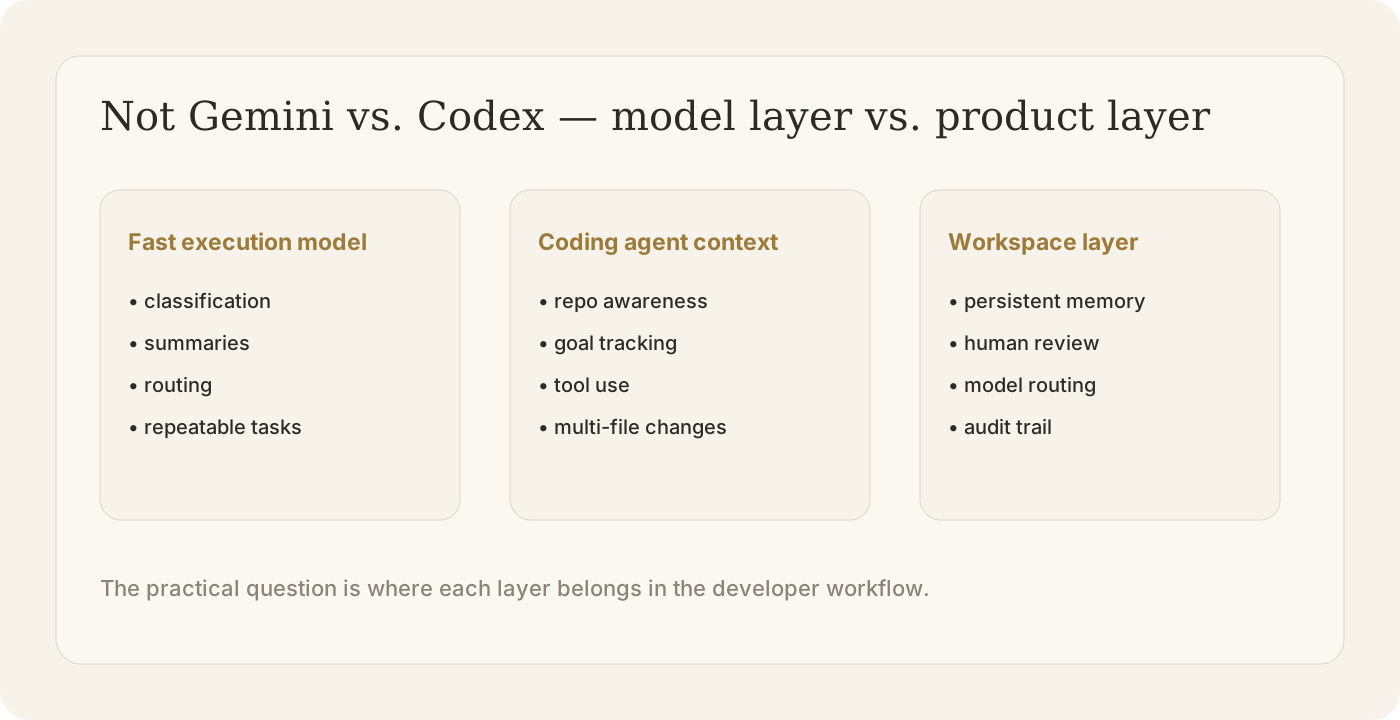
One improves the model layer. The other improves the coding-agent layer.
Why the distinction matters
A fast model is valuable when the task is frequent, bounded, and low-risk.
Examples:
- classify an issue;
- summarize a diff;
- route a support ticket;
- extract fields from a document;
- generate a first pass of a repetitive task.
A coding agent needs more than speed. It needs to understand the environment around the code:
- what files exist;
- which conventions the repo uses;
- what the user asked for three turns ago;
- which tests should be run;
- where the human should review before merge.
If a coding agent is fast but context-poor, it does not become more useful. It makes wrong changes more quickly.
This is why Codex-style updates matter. The progress is not only in raw intelligence. It is in the product layer that keeps an agent oriented while it reads, edits, runs tools, and reports back.
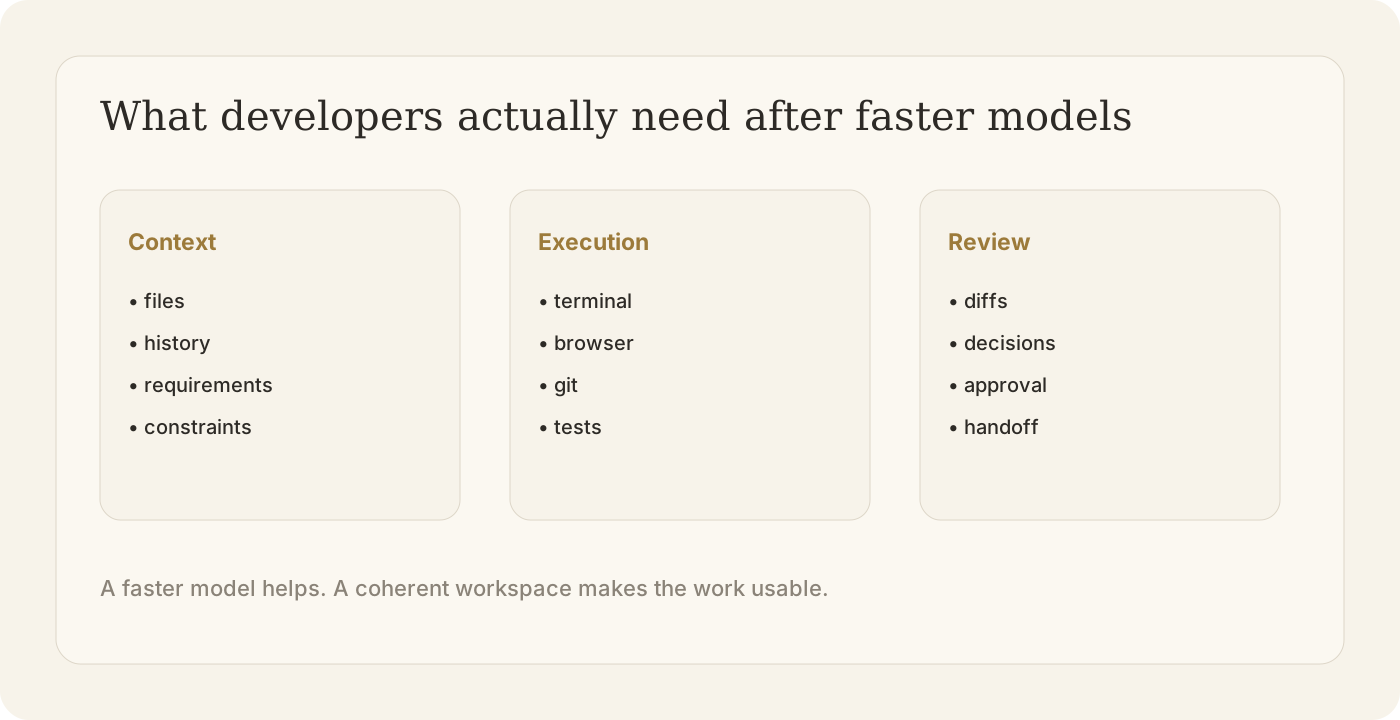
What developers actually need
The practical answer is not “Gemini vs. Codex.”
It is model routing inside a coherent development workspace.
1. Use fast models for execution loops
Gemini 3.5 Flash is well suited for parts of the workflow where speed and cost matter more than deep architectural judgment: triage, summaries, extraction, repetitive transformations, and first drafts.
These are the steps where agents should reduce friction.
2. Use coding agents for context-heavy work
Codex-style experiences are useful when the task depends on project context: multi-file changes, debugging, test feedback, browser checks, repository conventions, and goal tracking.
These are not just model calls. They are workflows.
3. Keep the human at the review point
Neither a fast model nor a coding agent should be treated as a replacement for review. The human still decides what should ship.
The agent does the execution. The human manages direction, quality, and risk.
How this connects to Buda
Buda is built around the workspace layer.
Inside Buda, teams can use different models for different jobs, keep files and knowledge in Drive, run work inside a sandbox, inspect outputs, and review before anything is delivered. Gemini 3.5 Flash can be useful as a fast execution model. Codex-powered coding workflows can be useful when context depth matters.
The product question is not which name wins the headline.
The product question is whether your agent workspace can route work intelligently, preserve context, and keep humans in control.
That is where developer tools are heading.
Try building your first agent workflow at buda.im, or read more about agent workspaces.