OpenAI Says Non-Developers Are Using Codex: Why Non-Coders Must Learn to Manage Agents
OpenAI’s latest economic research reveals rapid Codex adoption among non-developers. Legal, finance, and recruiting teams are using AI agents to cross technical boundaries.

Most people assume that "Coding Agents" like OpenAI's Codex are tools exclusively built for software engineers.
But new data from OpenAI shatters this misconception.
On June 25, OpenAI published an economic research report titled How agents are transforming work. The data reveals a surprising trend: the fastest-growing user segment for Codex isn't developers. It is non-technical professionals.
Since August 2025, non-developer individual users have grown by 137x, and organizational users by 189x. Legal, Finance, and Recruiting teams are now using Codex as their primary AI tool.
Why? Because they aren't learning to write Python. They are learning to manage agents.
Crossing the Technical Boundary
In the past, if a recruiter wanted to automatically scrape LinkedIn profiles and match them against a complex spreadsheet of internal requirements, they had to submit an IT ticket and wait weeks for a developer to build a script.
Today, that same recruiter uses an agent.
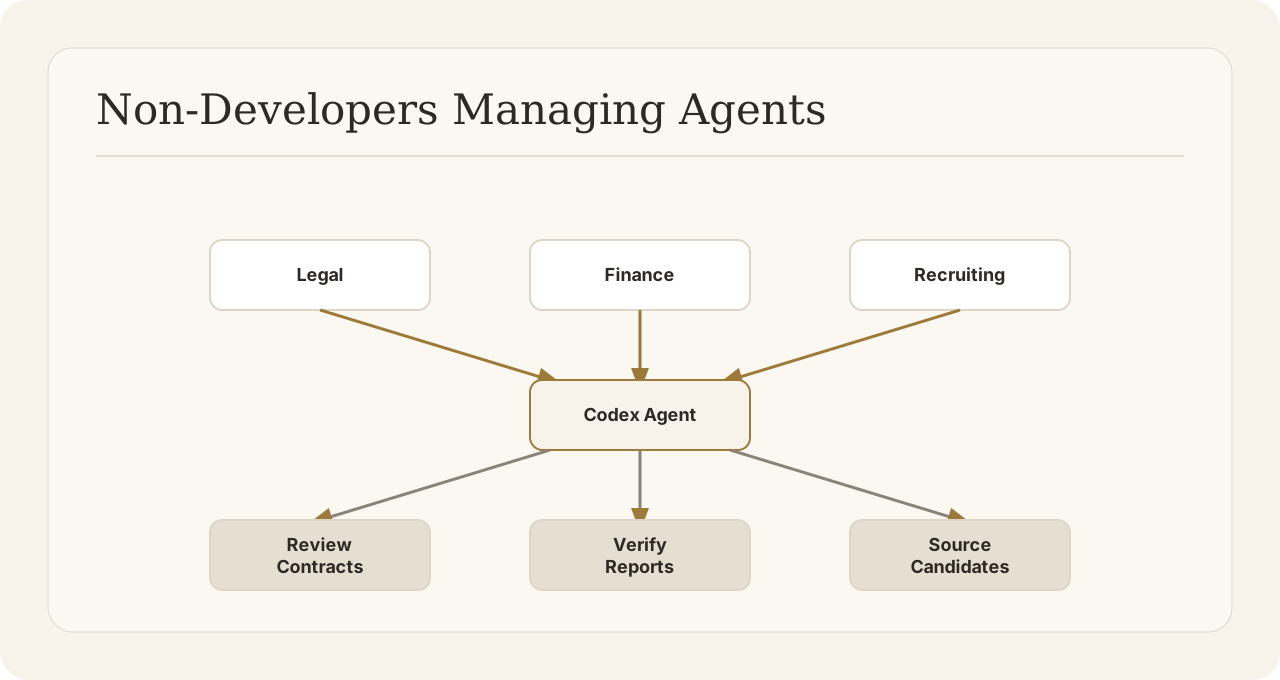
They describe the workflow in plain English. The agent writes the Python script, executes it in a sandbox, handles the errors, and outputs the final matched spreadsheet. The recruiter never reads a single line of code. They just review the final result.
This is what OpenAI calls "Agentic Work". It is the shift from treating AI as a conversational chatbot to treating AI as a digital executor.
From Chatting to Orchestrating
When you use a chatbot, you are the executor. You ask for a template, the AI gives you text, and you copy-paste it into your software.
When you use an agent, you become the orchestrator. You assign a goal, and the AI uses tools (like code execution, browsers, or APIs) to complete the entire workflow.
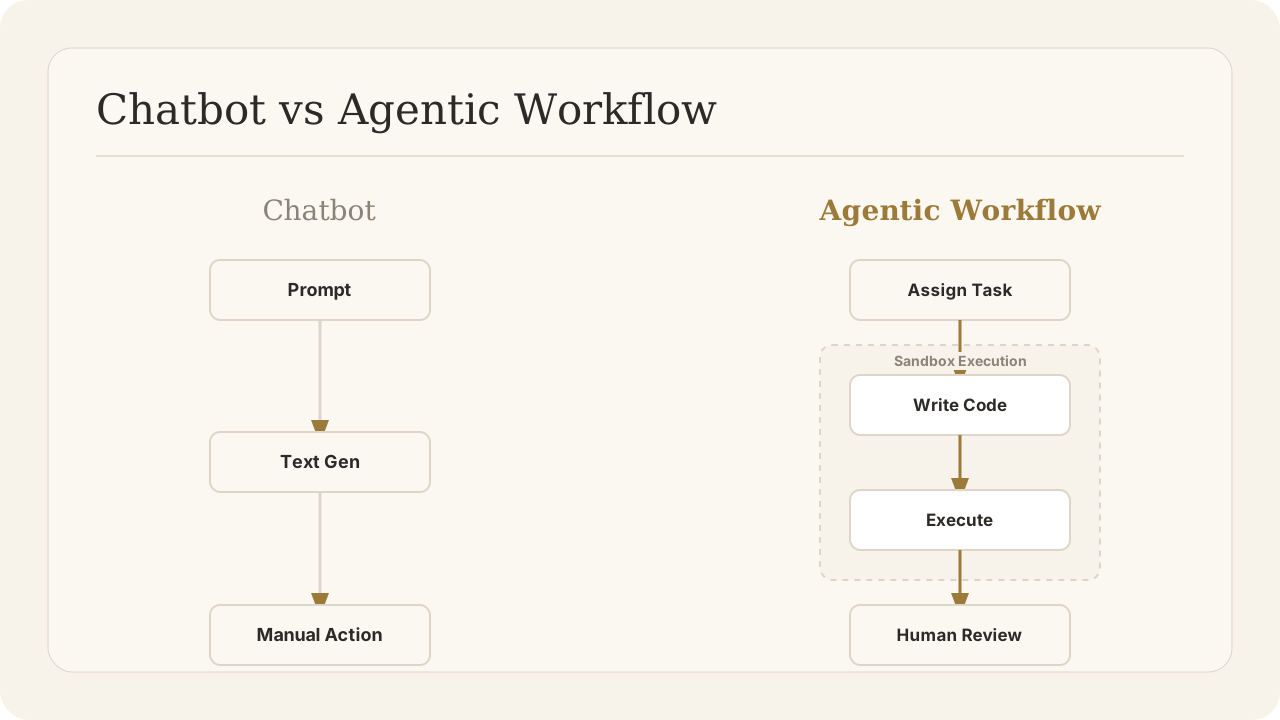
The real barrier in the AI era is not "knowing how to code." The real barrier is knowing how to delegate. Non-technical workers who learn to break down their repetitive tasks and assign them to agents are crossing traditional job boundaries. They are becoming "Team Managers" of their own digital workforce.
The Buda Agent Workspace
This paradigm shift is exactly why we built Buda.
Buda is designed around the philosophy of The Bunny and The Claws. The human (The Bunny) provides judgment, direction, and review. The AI (The Claws) handles the execution.
To make this work safely for non-developers, Buda provides a complete Team Agent Workspace. When an agent writes and runs code, it happens inside an isolated sandbox. When an agent needs to click buttons on a web page, it uses the AI Browser. You don't need to configure environments or manage dependencies. You just manage the workflow.
OpenAI's data proves that the future belongs to those who know how to manage agents.
Start building your team's agentic workflows today in the Buda dashboard.