Buda vs Windsurf: Command Center or Persistent Functional Agents?
Windsurf coordinates local and cloud development agents. Buda extends review across business functions and operational artifacts.

Buda vs Windsurf: Command Center or Persistent Functional Agents?
Windsurf can place local Cascade sessions, Devin Local, cloud Devin agents, pull requests, files, and context in one development control plane. Buda starts elsewhere: each durable role gets its own Agent workspace, files, tools, Channels, and schedules.
The buying question is not which product has “more agents.” It is whether the organization needs one engineering operator supervising many development sessions or several long-lived functional Agents, each accountable for a recurring job.
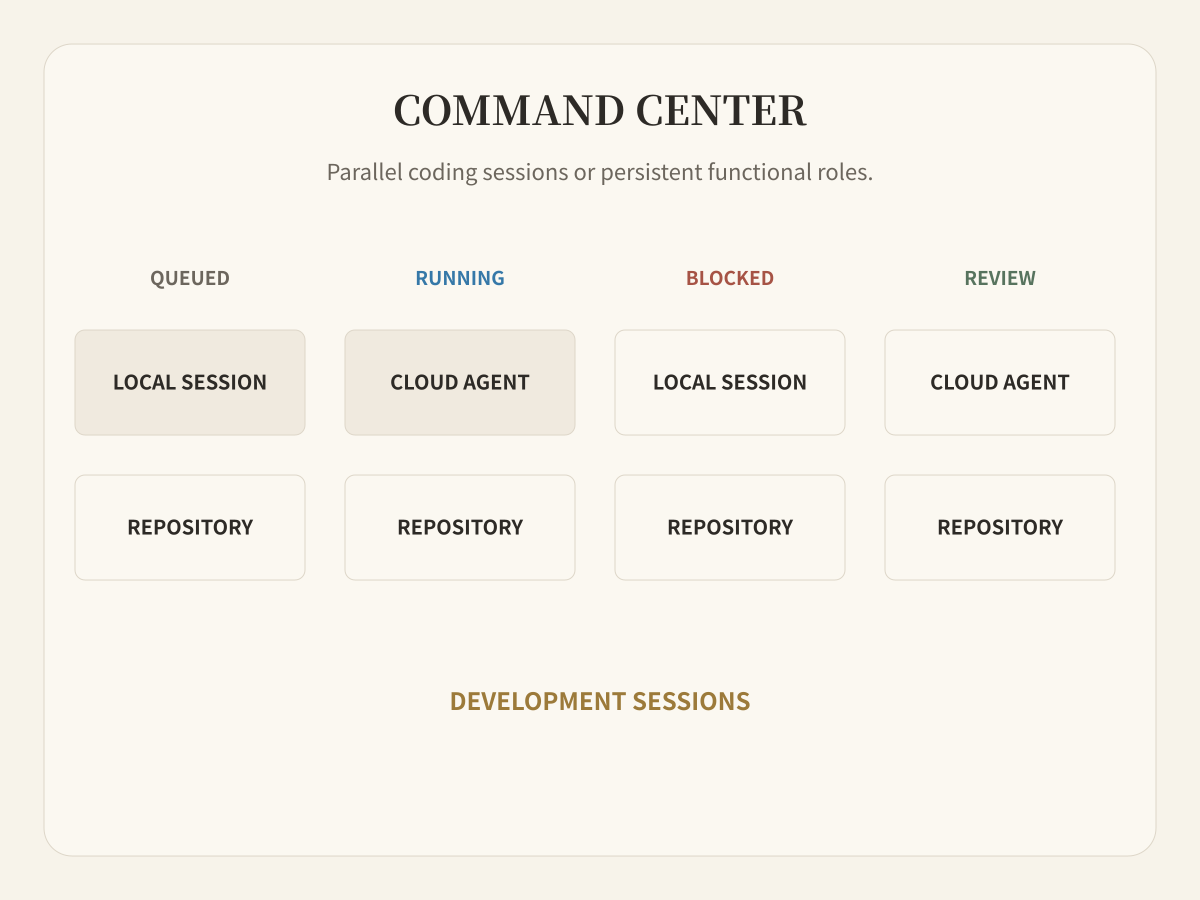
Read Command Center as an engineering control plane
The Agent Command Center shows what agents are working on, what is blocked, and what is ready for review. It includes local sessions and cloud Devin sessions running on their own VMs. Spaces can group agent sessions, PRs, files, and project context, and new sessions can inherit shared context.
Cascade adds Code and Chat modes, planning, terminal and web tools, checkpoints, MCP, Skills, Hooks, workflows, memories, rules, simultaneous sessions, and worktrees. Enterprise plans add SSO, SCIM, RBAC, policies, analytics, and admin controls. Devin can take complex tasks into autonomous cloud execution.
That is not “just an editor.” It is a serious system for increasing and supervising engineering throughput.
Model a ten-agent engineering day
Imagine one lead supervising agents that upgrade a dependency, investigate a flaky test, migrate an API, repair a production bug, and prepare separate pull requests. The useful screen is a portfolio view: which session owns which repository task, which one is blocked, and which result needs code review.
Windsurf's local/cloud mix, worktrees, Spaces, and Command Center fit that topology. The agents are parallel execution capacity around software projects. Their context should stay close to repositories, PRs, rules, and development evidence.
This is where Windsurf should be evaluated: queue throughput, collision rate, review latency, failed runs, and the operator's ability to redirect work.
Ask what remains when the session closes
A functional role has a different persistence requirement. A support Agent may receive questions from a Channel every day. A content Agent may retain source files, drafts, screenshots, and review history. An operations Agent may run on a schedule and return a report to the same owner each week.
Buda treats those as durable workspaces rather than a changing set of development sessions. Each Agent has its own Drive and cloud computer, and can use browser, terminal, files, Git, Skills, Channels, and Automations. The organizing unit is the recurring responsibility, not the repository task.
Neither topology is universally better. A short-lived coding session should not be forced to become a permanent business role. A recurring business role should not depend on reconstructing context from an engineering board.
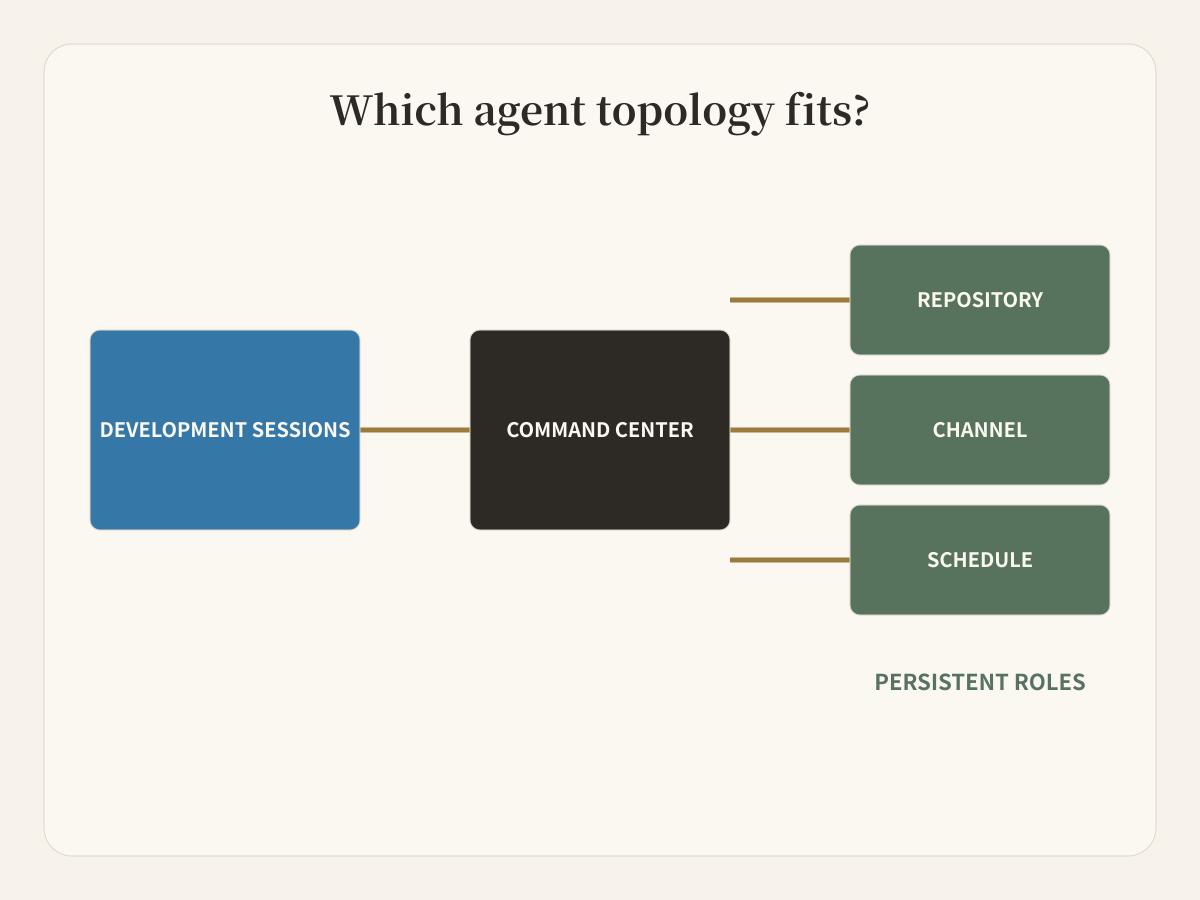
Compare topology instead of feature count
| Operating question | Windsurf / Devin Desktop | Buda |
|---|---|---|
| What is multiplied? | Concurrent development sessions | Persistent functional roles |
| Main control surface | Agent Command Center and project Spaces | Dedicated Agent workspaces and Sessions |
| Context center | Repository, PR, rules, files, project Space | Agent Drive, business files, Channels, recurring history |
| Typical operator | Developer or engineering lead | Functional owner or manager |
| Natural trigger | Coding task or repository event | Message, file, schedule, or recurring workflow |
| Primary measure | Accepted code throughput | Accepted recurring business outcomes |
Test three organization shapes
Product engineering team: Windsurf can be the primary system. The team needs many coding sessions, repository context, PR visibility, and one engineering control plane.
Operations-heavy company: Buda can be the primary system. The company needs stable Agents for support, research, content, reporting, and other recurring responsibilities.
Mixed organization: keep both systems authoritative in their own layer. Pass a small accepted artifact between them, such as a commit, release note, test result, or approved source file. Do not copy every session or give a functional Agent unrestricted repository authority.
Questions before standardizing on Windsurf
Can Command Center see both local and cloud work?
Yes. Current documentation describes local Cascade and Devin Local sessions alongside cloud Devin agents, with status and review visibility in one place.
What does a Space preserve?
A Space groups sessions, pull requests, files, and shared project context. Evaluate whether that project boundary matches how your engineering teams actually divide ownership.
When should work become a dedicated Agent instead of another session?
When the responsibility recurs, has a stable human owner, receives work through its own intake, and must retain non-code files and history across many unrelated projects.
Choose the topology that matches accountability
Windsurf scales the number of software tasks one engineering operator can supervise. Buda gives recurring company responsibilities a persistent place to run. Count the sessions and roles your organization actually needs before comparing feature lists.
Explore how Buda organizes persistent Agent workspaces