Enterprise AI Security: How to Safely Deploy Agents in Production
Discover the hidden risks of open-source AI skills and learn how isolated cloud sandboxes protect your enterprise data while deploying autonomous AI agents.
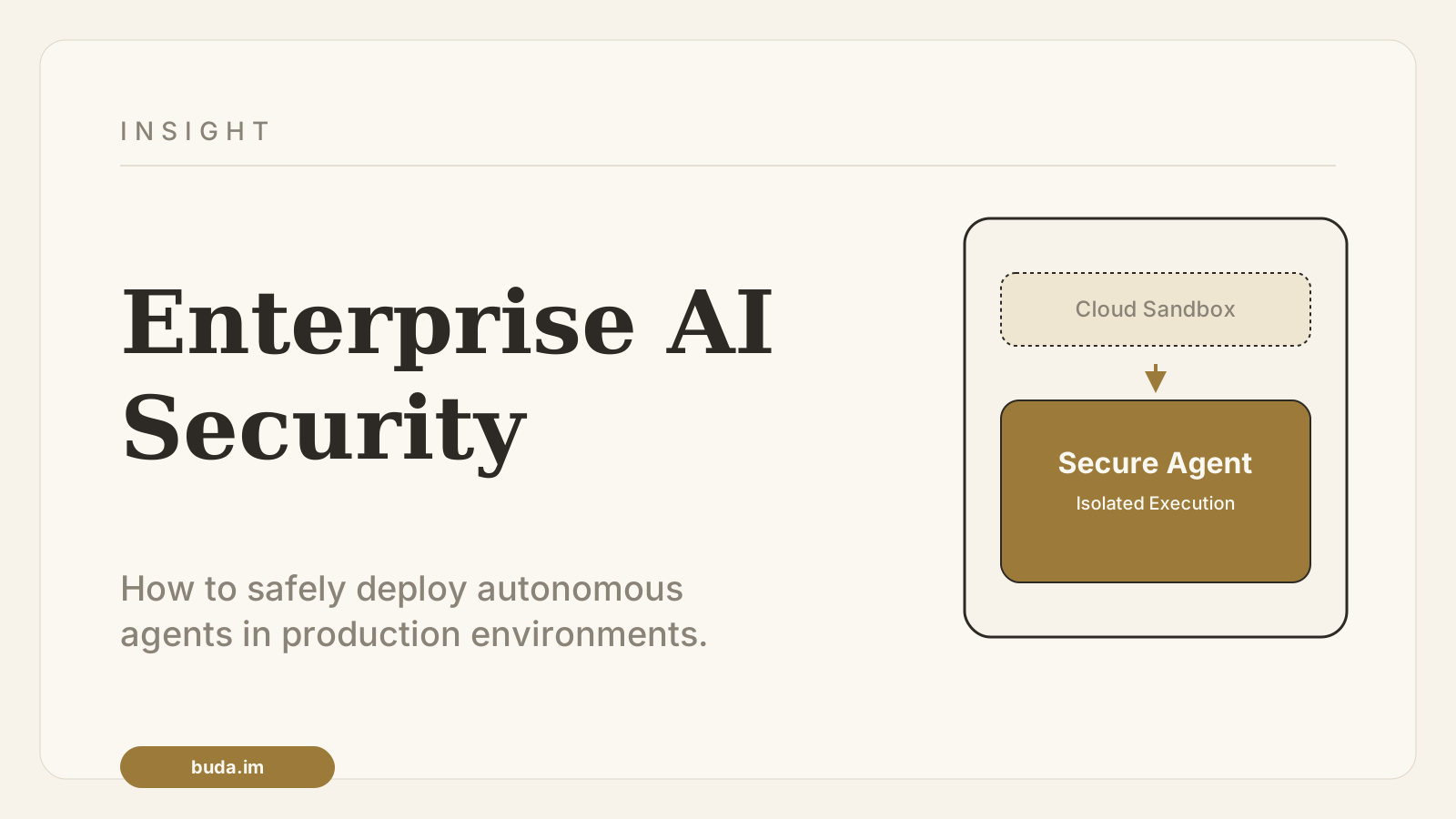
When enterprise teams witness the high efficiency of autonomous AI agents, their first instinct is often to deploy them immediately to handle business workflows. However, deploying "digital labor" inside a corporate environment carries a hidden, often unacknowledged risk.
As shared during recent enterprise discussions on cloud security, organizations are facing a sobering reality: while open-source agents are powerful, running them locally or without strict boundaries can be devastating to corporate security.
In this guide, we will unpack the specific vulnerabilities hidden within modern AI agents, why traditional IT security models struggle to contain them, and how deploying agents within isolated cloud sandboxes is the only viable path for enterprise adoption.
The Hidden Backdoor: Malicious AI Skills
There is a common misconception that AI is simply a machine, and machines operate predictably. This is true for basic Chatbots, but an autonomous Agent relies on external "Skills"—tools that allow it to read emails, execute database queries, and make network requests.
Recent security surveys highlight an alarming statistic: a significant portion of open-source "Skills" circulating in developer communities contain hidden vulnerabilities or outright malicious code.
What does this mean for an enterprise?
Imagine downloading a highly capable open-source agent to analyze your company's financial records. While it generates an excellent summary, a hidden backdoor within one of its skills silently packages and transmits your proprietary data to an external server.
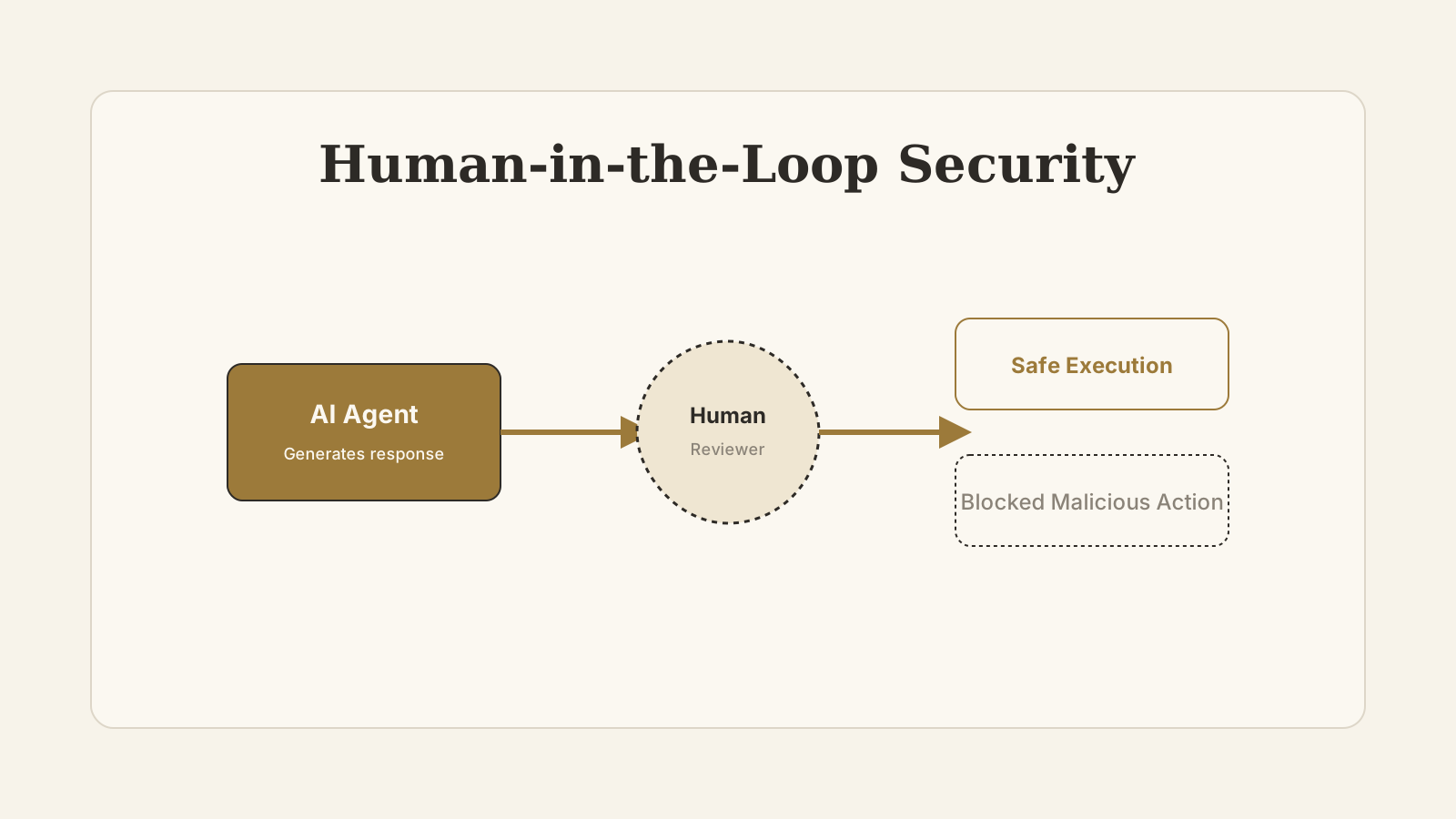
Deploying unverified open-source tools directly onto your corporate network without permission isolation is the equivalent of handing your root server password to a stranger on the street. This is the primary reason why many large enterprises have paused their internal rollouts of AI agents.
The Penetration Testing Bottleneck
Because many open-source agent frameworks require local execution—running directly on office machines or internal servers—any compromised tool immediately breaches the corporate intranet.
In a traditional IT architecture, defending against this is incredibly expensive. Companies must hire external security teams to conduct Penetration Tests. Not only is this process slow, but every time a new "Skill" is added to the agent, the entire system must be audited again.
This creates a deadlock:
- Businesses want the efficiency of AI agents, but open-source tools are inherently risky.
- To guarantee security, they must spend hundreds of thousands of dollars on compliance audits or physically isolate the environment, thereby destroying the agility they sought in the first place.
The Solution: Cloud Sandboxing for Digital Labor
When individual digital workers evolve into large-scale digital fleets, management strategies must evolve. You cannot allow agents to run exposed on internal servers.
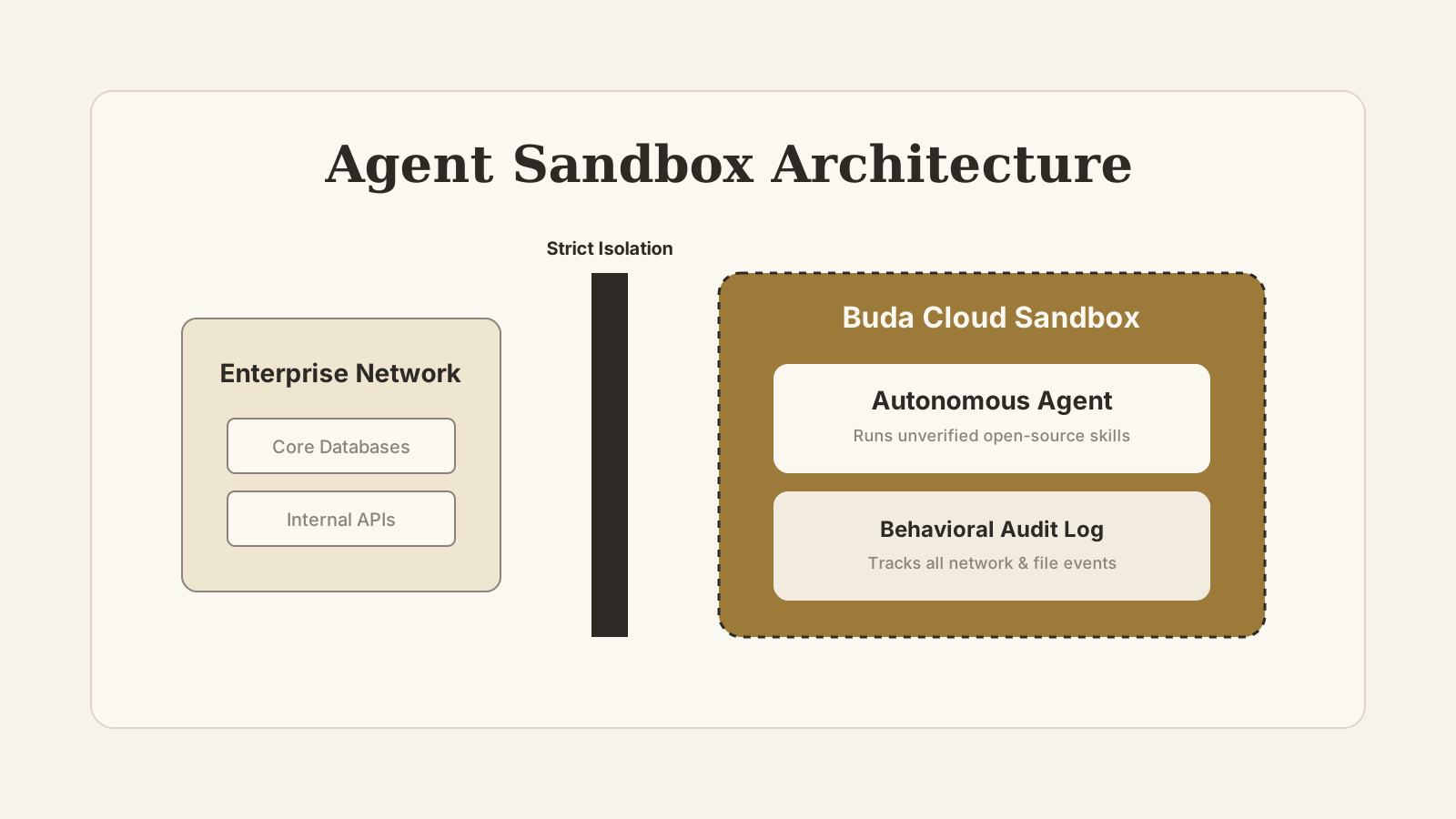
The solution lies in shifting execution away from local hardware and into specialized, multi-tenant cloud environments. In a secure platform like Buda, all digital workers execute their tasks inside isolated Cloud Sandboxes.
Think of a sandbox as a secure, windowless cleanroom for your digital labor:
- Absolute Isolation: Agents can freely write code, run scripts, and process data inside the sandbox, but they are physically separated from your enterprise intranet. Even if a malicious component is triggered, it remains trapped within the sandbox, unable to touch your core assets.
- Behavioral Auditing: Every network request and file operation executed by the agent leaves a trace. This creates a highly controllable and auditable environment.
By utilizing secure sandboxes, companies eliminate the need to worry about malicious open-source code or expensive penetration tests. You can focus entirely on defining business logic, while the platform handles the underlying security, isolation, and compute allocation.
The enterprises that will truly capture the AI dividend are not those taking reckless risks with unverified code, but those who learn to deploy digital labor in secure, scalable environments. Start building your secure agent cluster today at buda.im.