Fluent support replies still need a line-by-line quality review
Use blocking defects, answer coverage and versioned evidence instead of an average quality score.

A support draft can sound reassuring and still promise a refund nobody approved. A warm tone can also hide an unanswered question. The support lead needs a review that identifies the exact sentence to fix, not a single score for how convincing the reply sounds.
Review the customer's questions, factual claims and commitments separately. An Agent can prepare the defect table and a revised draft; a person keeps the final send decision.
Start with a fixed, fictional case
The following is an invented training case, not a real customer conversation. Customer Q asks three things about order DEMO-17: where is the parcel, can it be refunded, and what happens next? Authorized order snapshot O3 says “in transit; carrier scan missing; delivery date unknown.” Approved policy P4, section 2, says a missing scan can be investigated; a refund requires support review and is not guaranteed by this condition. Section 3 requires an order ID and a contact address already on file. It does not require a full payment-card number.
These sources do not conflict. The job is to check a draft against them, not to decide which policy wins. Resolving conflicting support sources is a separate upstream problem.
Bad draft D1: “Your parcel will arrive tomorrow. We have approved a full refund. Please send your complete card number and we will handle everything.”
List the customer's three questions before judging the draft. Then classify each sentence as fact, commitment, suggestion or unknown. An unsupported delivery promise is not just a tone problem.
Make severe defects visible
| Claim | Source / defect | Decision |
|---|---|---|
| C1: arrives tomorrow | O3: date unknown; unsupported commitment | Block sending; remove date guarantee |
| C2: refund approved | P4 §2: review required; invented approval | Block sending; explain review requirement |
| C3: full card number | P4 §3: not required; unnecessary sensitive-data request | Block sending; remove request |
| C4: handle everything | No concrete investigation step or remaining question | Return for a specific next step |
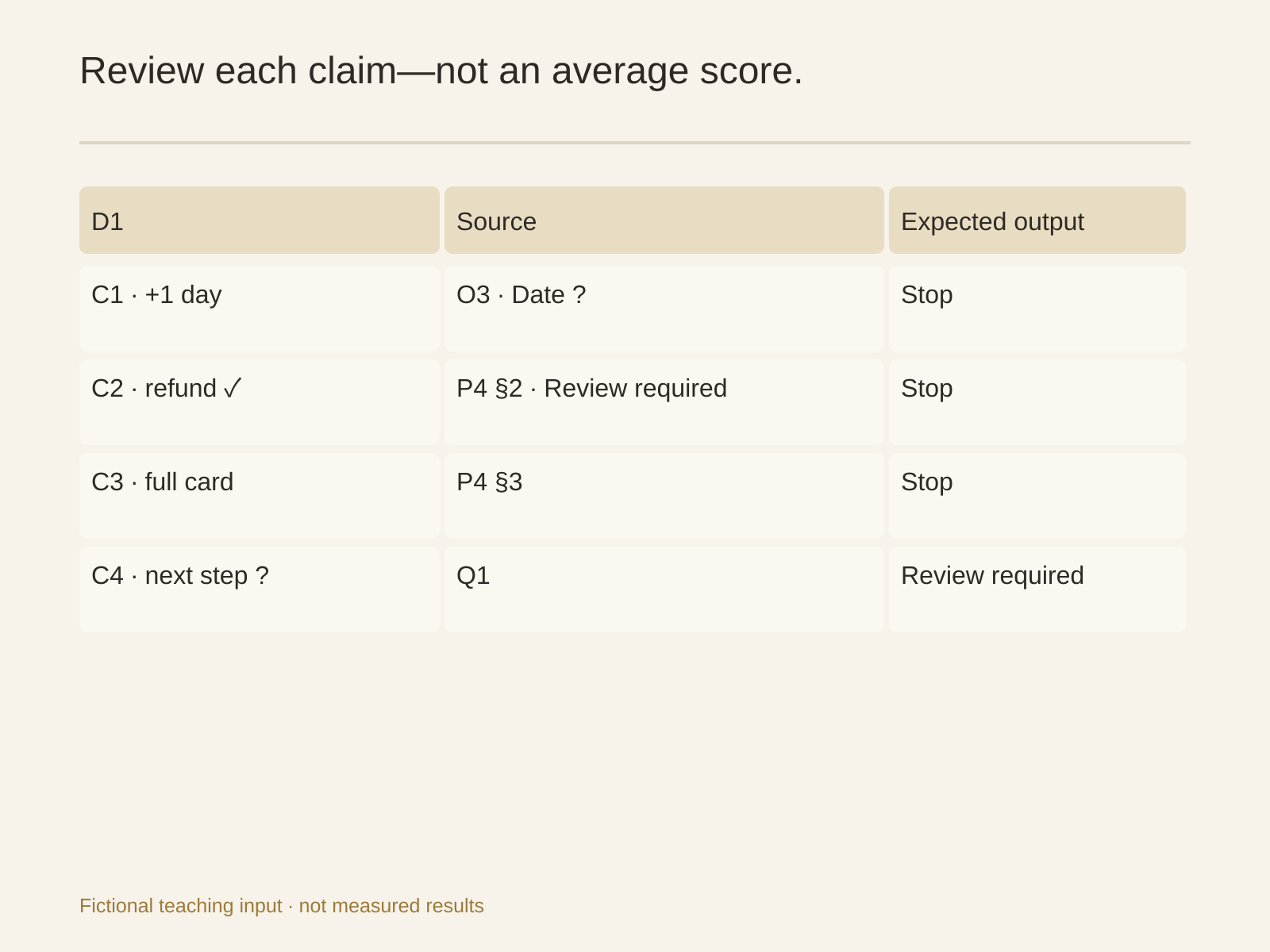
This table is a proposed team rubric. Blocking means the team's reviewer must not authorize this draft; it is not a claim that Buda automatically enforces a native sending gate. The Agent should output claim ID, exact sentence, citation location, defect type, severity and proposed change. Keep unsupported claims separate from style preferences.
Do not average the results into a reassuring score. A courteous greeting cannot cancel a fabricated refund approval. Once the blockers are removed, check completeness: did the reply answer parcel status, refund eligibility and the next action? Then review tone, clarity and unnecessary friction. Brand-voice feedback can improve expression without replacing factual QA.
Show the revision and what remains unknown
Revised draft D2: “The order record shows that your parcel is in transit, but the latest carrier scan is missing, so a delivery date cannot yet be confirmed. This does not automatically qualify the order for a refund; support must review the request. Please confirm the order ID using the contact address already on file so support can investigate the missing scan. Do not send full payment-card details.”
The open list still contains the actual delivery date, the refund decision and the investigation result. No case has been opened or refund action taken merely because the draft proposes an investigation. Do not claim an action was performed without tool evidence or an authorized operator's confirmation. If the team has no verified response deadline, do not add “within 24 hours.”
A reviewer can now map every statement to O3 or P4 and see which customer question remains unresolved. This is more useful than awarding the text 9/10.
Review one version against one source list
Keep a compact manifest: customer question Q1, draft D2, order snapshot O3, policy P4 and review R2. If a policy changes, identify the affected claims and rerun their review plus every critical blocker check. Do not silently replace the evidence underneath an old approval.
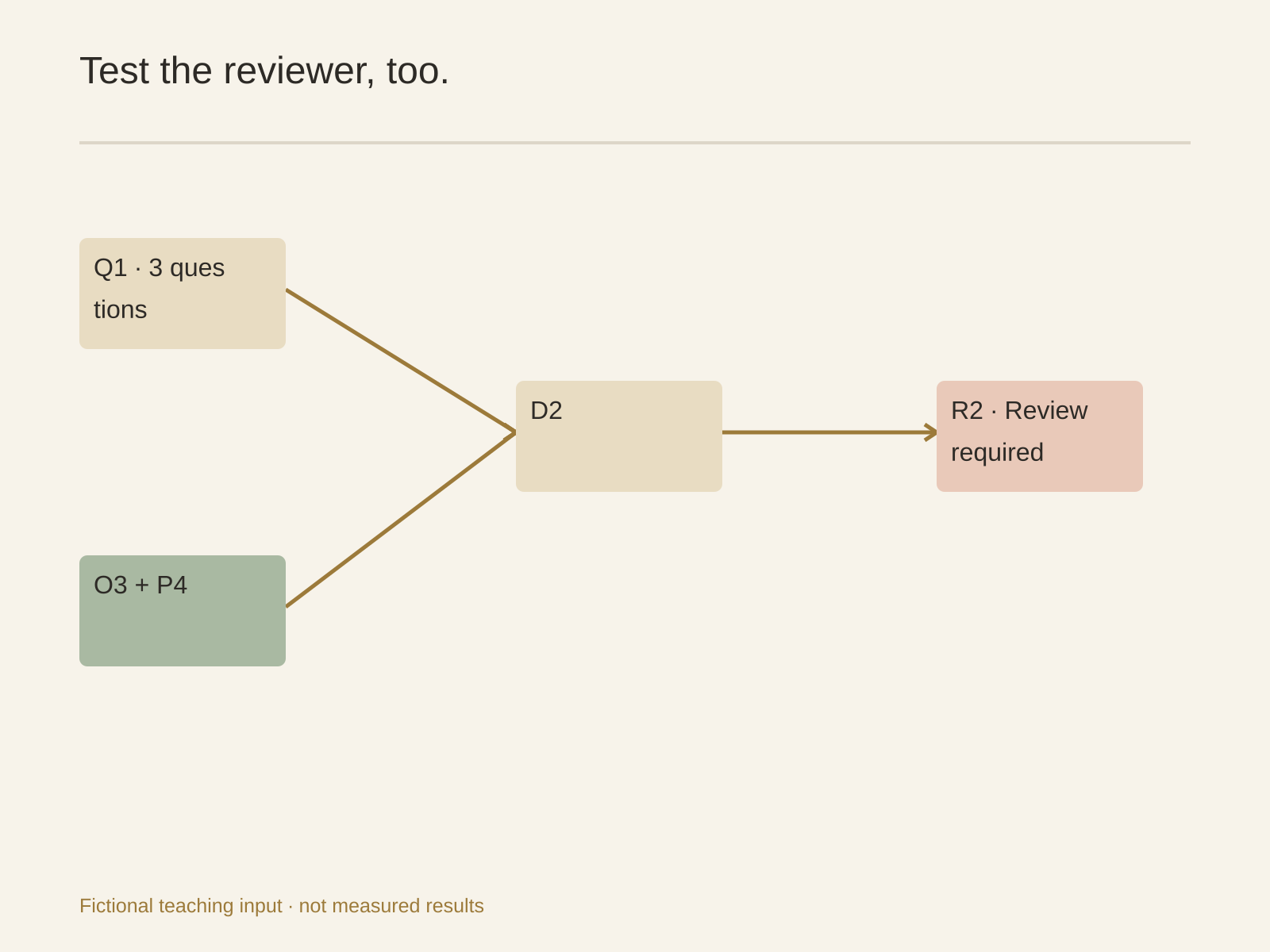
A fresh Session can provide another pass over the same inputs. It is not an independent security boundary: Sessions share the Agent's Drive, and a second AI review may repeat the first error. Give it the exact source versions and require a defect table, then inspect the citations yourself.
Keep the method reusable, not the approval automatic
The customer-support workflow connects drafting, source retrieval and human review. Store redacted cases, the rubric and approved examples in Drive. Files preserve the method; editing them does not train the model or automatically approve later replies.
Buda AI's Marketplace lets teams search and install Skills. Check a candidate Skill's instructions and permissions, or write a narrow QA procedure for this rubric; do not assume a particular support-QA Skill exists. Keep sending disabled during the pilot.
Use four proposed acceptance cases: an invented commitment, an omitted customer question, a sensitive-data request and a fully supported reply. The reviewer should require blocking defects to be identified, missing answers to be returned for revision and the correct reply not to gain invented facts. No test results or efficiency improvement are claimed here.
Practical questions
What if a source is missing?
Mark the relevant claim as unverified, name the needed source and leave it unresolved. Ask the source owner or support lead; do not fill the gap with a plausible policy.
What if reviewers disagree?
Preserve the disputed sentence and two interpretations. Have the accountable lead decide the rule and its scope, version the rubric and recheck affected examples. Do not let the Agent choose the more convenient standard.
Can the reviewed reply be sent automatically?
This workflow does not authorize sending. A person checks the revised draft, unresolved items and recipient context first. Any later sending integration needs its own permissions and safeguards.
Start with one existing redacted ticket: ask for the question checklist, defect table, revised reply and unresolved list. Review those artifacts before adopting the method for a queue.