Gemini 4 Hydrogen: separate fast execution from architectural judgment
A practical way to divide implementation, verification and difficult decisions across agents.

A difficult project does not require the same kind of thinking at every step. Choosing an architecture, applying an agreed change and checking its consequences are different jobs. Running all three through one model can make it hard to see where judgment is still missing.
Google introduced Gemini 4 Hydrogen on November 12, 2026. Its positioning makes that division explicit: Carbon and Argon handle deep, long-horizon reasoning, while Hydrogen emphasizes rapid execution. Hydrogen can also work independently. Model specialization is a design choice, rather than a requirement to assemble a team for every request.
What the announcement actually changes
Google describes Hydrogen as available across AI Studio, the Gemini API, Gemini for business, the Gemini app and Search, with paid Pro and Ultra access in Antigravity. These are distinct product surfaces. In the Gemini app, the announcement's footnote says free users receive Hydrogen through automatic selection when appropriate; that is different from promising every free account a manual selector.
The four thinking levels are low, medium, high and xhigh, with high as the default. Treat these as controllable reasoning settings, not as four different agents or a guarantee that a lower setting is sufficient for a particular task.
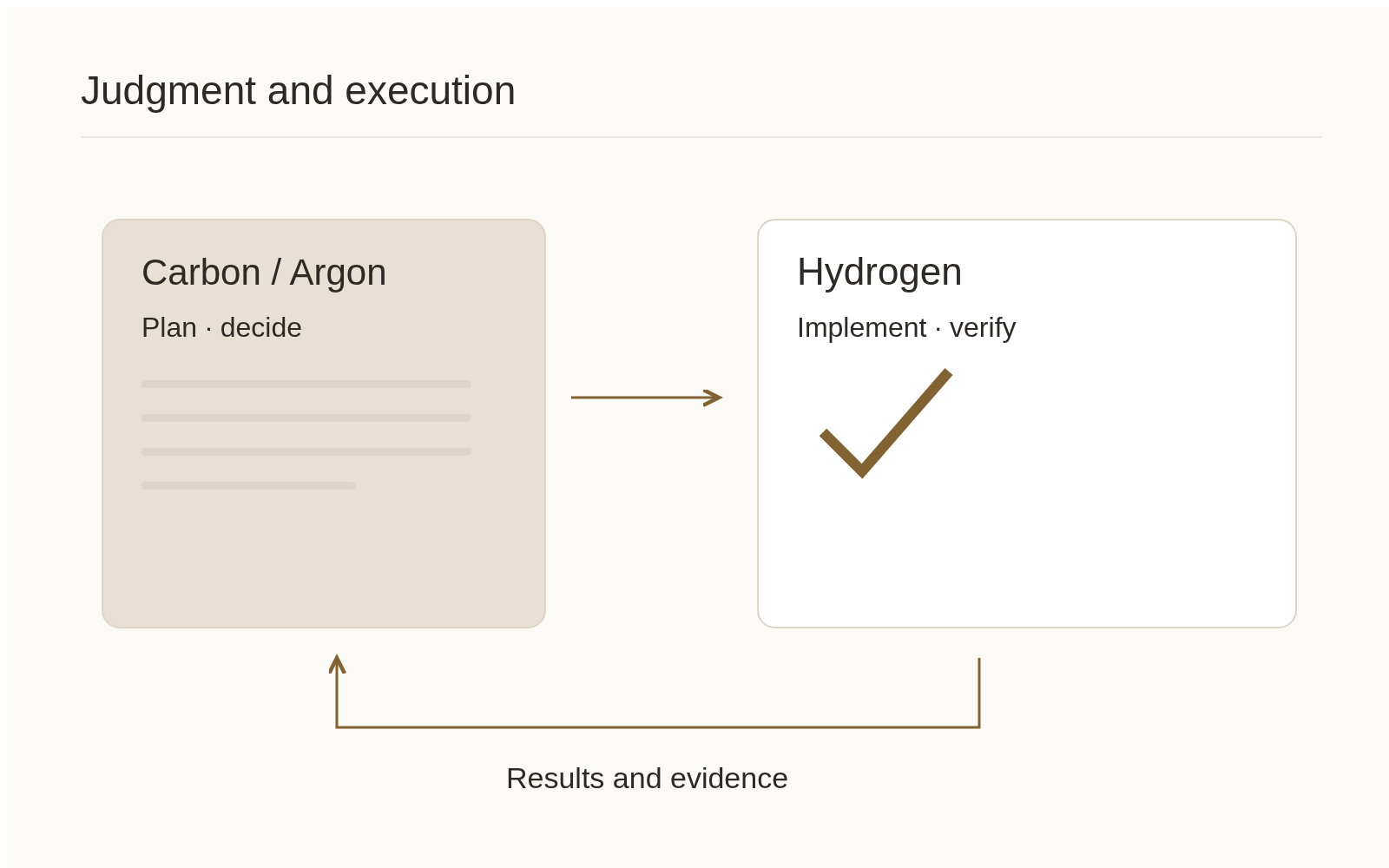
Proposed division of work; thinking settings are not measured performance.
Give the executor a bounded change
A useful implementation handoff names the approved decision, the files or material in scope, the expected deliverable and the condition that requires escalation. Architectural uncertainty belongs with the decision-maker before implementation expands.
For example, ask an execution agent to implement an agreed interface and return changed files plus test evidence. If the interface itself proves inconsistent, ask it to stop and identify that conflict rather than silently redesign the system. This is a proposed operating method, not a reported Hydrogen experiment.
Let verification challenge the result
Google describes Carbon coordinating Hydrogen worker and verifier agents across isolated workspaces. Separate workspaces help keep simultaneous changes distinct; they do not by themselves make a verifier independent or a test complete.
Give verification the original acceptance criteria and the actual artifact. Require reproducible checks, failed checks and remaining uncertainty. A confident summary from the worker cannot replace those inputs. If verification changes code, run the relevant checks again against that changed version.
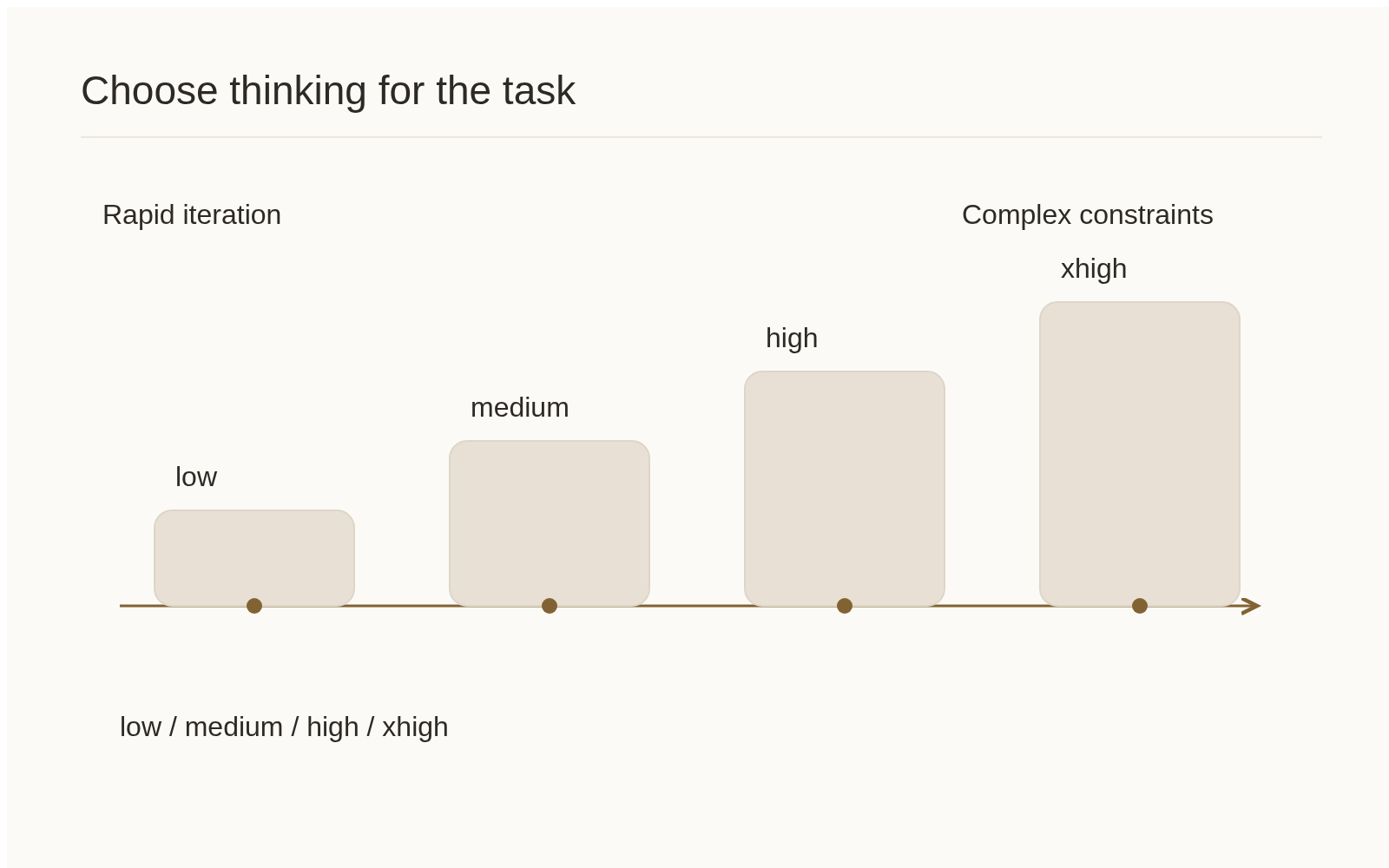
Proposed division of work; thinking settings are not measured performance.
Read the speed claims with their experiment attached
Google reports that Antigravity's Orchestrator dynamically switches models within a session. On Terminal-Bench 4.0 it reports near-Carbon success with 24% less quota and 19% faster completion on average. Those figures belong to that reported setup. They are not a forecast of savings in another agent platform or a measurement of every workload.
Decide whether orchestration helps using your own acceptance rate, end-to-end elapsed time and rework. A faster first draft can still produce a slower accepted delivery. Keep the workload and review standard comparable when testing settings.
Build around artifacts and review points
In Buda, a useful starting point is to define separate agent tasks around an approved plan, an implementation artifact and a review result. Preserve the source material and decisions with the work, and state which actions need human approval. Model assignment and available tools must follow the actual environment.
Start with one bounded task. Write its acceptance criteria before execution, inspect the returned artifact and compare the verification evidence with those criteria. That operating discipline remains useful as models and routing change.