When a client asks for one more thing, prepare a scope decision before promising
Separate additions, replacements, removals and unchanged commitments so the owner can assess the trade-offs.

“Could you add one more thing?” might mean extra work, or an exchange for something the customer no longer needs. Treat every request as an addition and the team may refuse too soon; accept it casually and an unevaluated commitment follows.
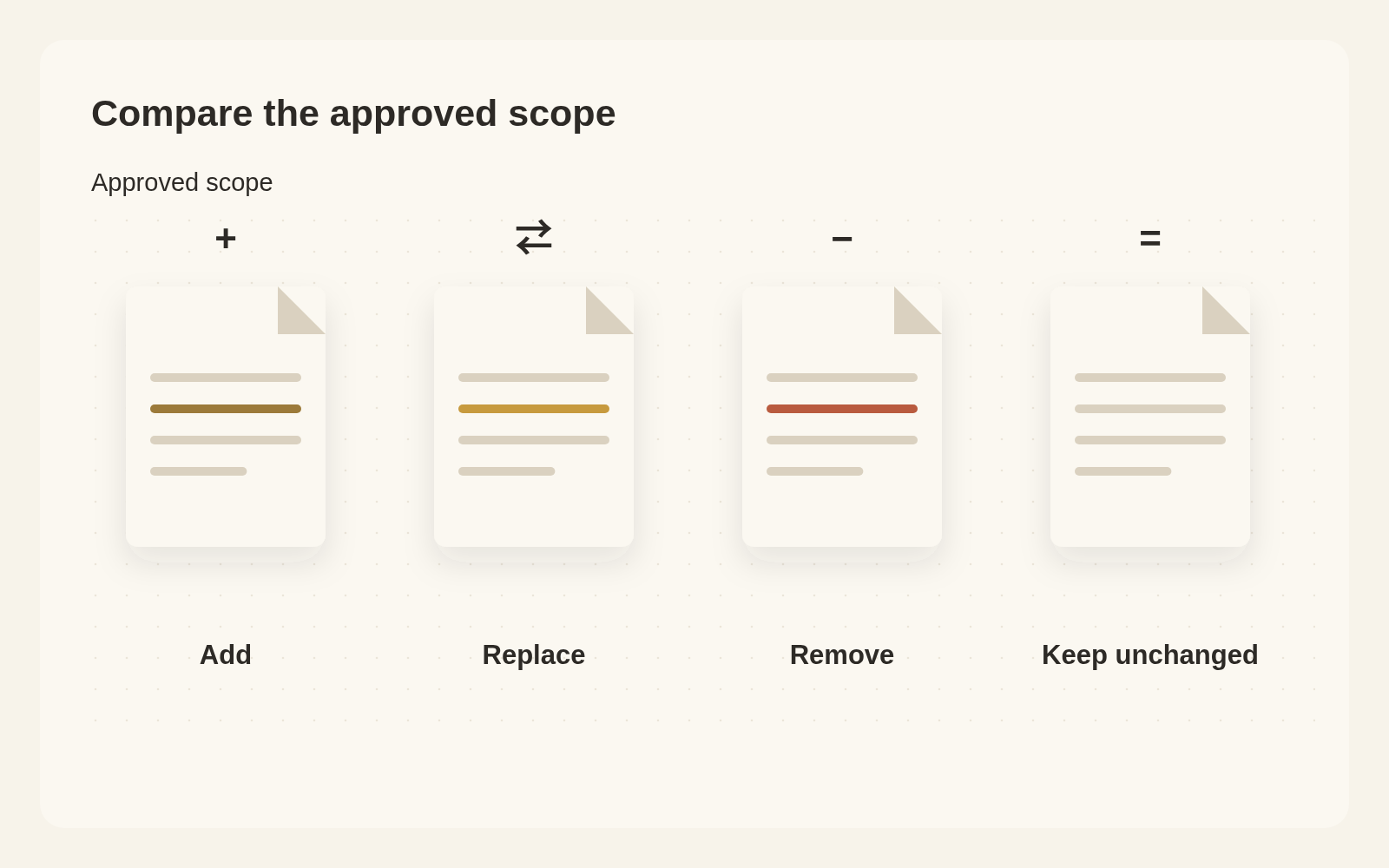
Show additions, substitutions, removals and unchanged work together. An Agent can organize those differences so the responsible person can choose what to preserve, replace or quote separately.
Show replacements and unchanged work too
Break the request into discussable deliverable items and map them to the existing scope. Distinguish additions, replacements, removals and unchanged commitments. Do not assume the client wants every original item plus the new work; do not silently remove an old item to make the new request fit.
For each row, retain the original deliverable and source, the request’s exact wording, the change category, affected deliverables and acceptance conditions, and questions requiring an owner’s assessment. Include unchanged items so the decision makes clear what remains in force.
This produces a scope comparison rather than merely another task list. The owner can see what accepting an option would actually do to the agreement.
Establish the approved baseline
Collect the accepted scope, deliverable list, acceptance requirements, prior change decisions and the client’s original request. Preserve source passages rather than relying only on a rewritten project summary. The most recently edited file is not necessarily the most recently approved commitment.
Buda Drive can retain source material and outputs. Separate approved material from working drafts. Ask the Agent to identify baseline files, relevant passages and approval evidence. If approval is unclear, resolve that with the owner before comparing changes.
A usable baseline says what must be delivered and what counts as acceptance. A broad project description leaves too much room to interpret a seemingly small request.
Separate observed effects from estimates
An Agent can locate dependencies, existing dates and relevant acceptance requirements in the material. Effort, cost, dates and resource decisions need a responsible person and evidence. If no reliable estimate exists, leave a concrete question instead of inventing a precise value.
A documented deliverable is a fact you can cite. A possible effect on a milestone is an assessment to check. Do not turn that assessment into an approved delay, or turn “probably small” into free additional work.
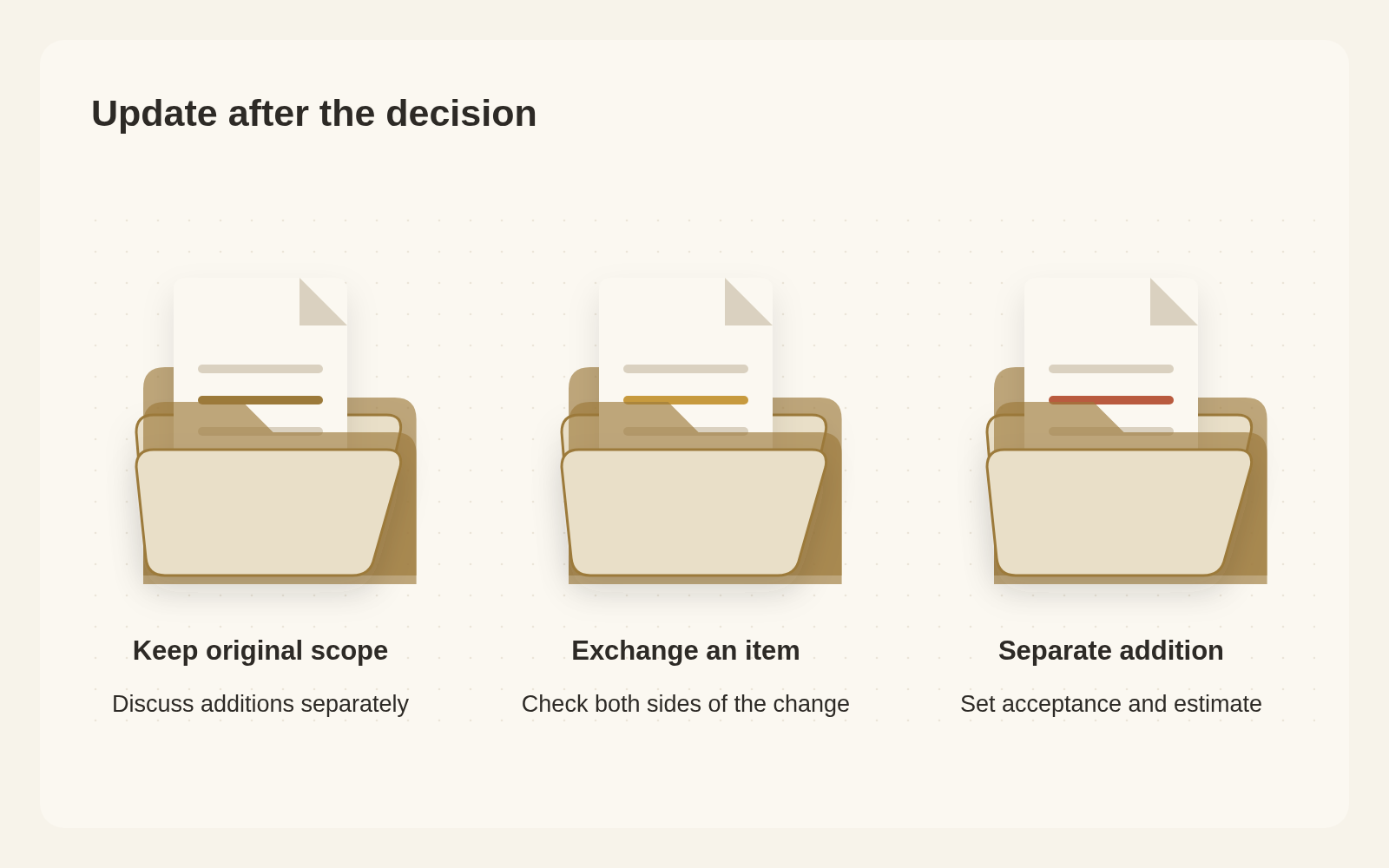
Develop only useful options supported by the actual project: accept an addition, replace existing work, stage the request or retain the original scope. For each option, explain what remains, what changes and which conditions must be met. There is no need to fill a fixed menu with implausible alternatives.
Prepare one decision packet
Keep a difference matrix, unresolved questions, viable options and a draft client response together. A simple file structure is enough if each option traces back to the baseline and original request.
Read the approved scope, acceptance checklist, previous change decisions and this client request. Preserve source references. List additions, replacements, removals and unchanged items. Identify affected deliverables and conditions needing confirmation; distinguish facts from impact assumptions. Prepare options and a response draft. Do not invent costs or dates, change the official schedule, accept free work or send a message.
The response draft should not commit before the owner has chosen. An acknowledgement can confirm receipt while leaving scope and conditions for a subsequent answer. The owner supplies any response deadline.
Turn impact into choices the owner can make
Ask whether the request needs new inputs or connections, changes acceptance, or displaces an existing commitment. Present the conditions for retaining the original scope, exchanging an item or adding separate work. If estimates are missing, identify the person and question needed; do not invent time or cost to fill an options table.
Match the customer response to the actual decision state. Acknowledge the request and explain the pending assessment without promising unapproved dates or prices. Once accepted, update deliverables and acceptance while retaining the earlier scope and the change.
Update the baseline after the decision
Retain the accepted option, conditions, superseded items and unchanged commitments. Under the resulting authorization, the Agent can prepare a revised scope and difference note for the owner to inspect. Preserve the previous baseline and avoid interpreting an ambiguous “yes” as approval of every option.
Check that downstream deliverable lists and acceptance requirements follow the chosen decision. Updating a third-party project tool or sending a client message requires its own clear target and authorization. A decision saved in a document does not demonstrate that another system was updated.
Once the method is useful, turn the preparation steps into a team Skill with Skill Creator. Public installable Skills can be searched in Buda AI’s Marketplace. Keep the input requirements, output and approval point explicit.
An additional request need not be rejected automatically or accepted casually. Let the Agent make the change understandable so the owner can stand behind the resulting commitment.