Claude Sonnet 5.5: Faster Everyday Agent Work
For the work you can define clearly: fix a bug, build a document, refine a design. Sonnet 5.5 brings faster iteration and stronger everyday execution; Buda keeps the files, tools, and results in one persistent workspace.
Anthropic released Claude Sonnet 5.5 on September 28, 2026. It complements Opus 5.5 rather than replacing it: Sonnet is strongest when the outcome and scope are clear, while Opus remains stronger on complex, open-ended work requiring sustained judgment.
The practical question is not whether a model can answer. It is whether it can produce the file, pass the test, and explain what a person needs to check.
Explore Buda
Spend less time waiting between useful revisions.
¹ Anthropic reports 30%+ faster output and up to 30% lower cost per task versus Sonnet 5 in its testing. The cost improvement comes from using fewer tokens, not a lower token price. Results depend on the task and effort setting.
Faster iteration
A clear brief can move through draft, feedback, and revision with less waiting. Output speed is a model-level measurement, not a promise that every workflow finishes 30% sooner.
Stronger coding execution
Sonnet 5.5 scores 70.6% on Terminal-Bench 4.0 versus Sonnet 5’s 10.3%. Use the benchmark as a reason to test your bug-fix workflow, not as a forecast of your pass rate.
More polished knowledge work
Anthropic highlights documents, slides, spreadsheets, chart understanding, and design. Give the agent source files, a template, and explicit quality criteria rather than a vague request for something impressive.
A useful complement to Opus
Low and medium effort suit routine execution in Anthropic’s evaluations. More thinking is not automatically better: compare accepted output, elapsed time, and cost on representative tasks.
Three jobs with a clear finish line.
These are suggested workflows, not claims of an end-to-end Sonnet 5.5 integration test. Buda provides the working context; acceptance remains your decision.
Use Sonnet for defined execution. Use Opus for difficult judgment.
Choose by the uncertainty in the task, not by a single winning benchmark.
| Task | Sonnet 5.5 | Opus 5.5 | Human decision |
|---|---|---|---|
| Reproducible bug; known acceptance test | A strong candidate | Useful if the cause stays unclear | Accept scope and tests |
| Document from sources and a template | A strong candidate | Useful for conflicting evidence | Verify claims and calculations |
| Short design-feedback cycles | Prioritize iteration speed | Use for harder trade-offs | Approve visual quality |
| Open-ended research or architecture | Use for scoped follow-up work | Prefer for sustained judgment | Set direction and risk boundaries |
This is a task-selection guide, not automatic model routing or a guaranteed handoff between agents.
A narrow brief makes the result easier to review.
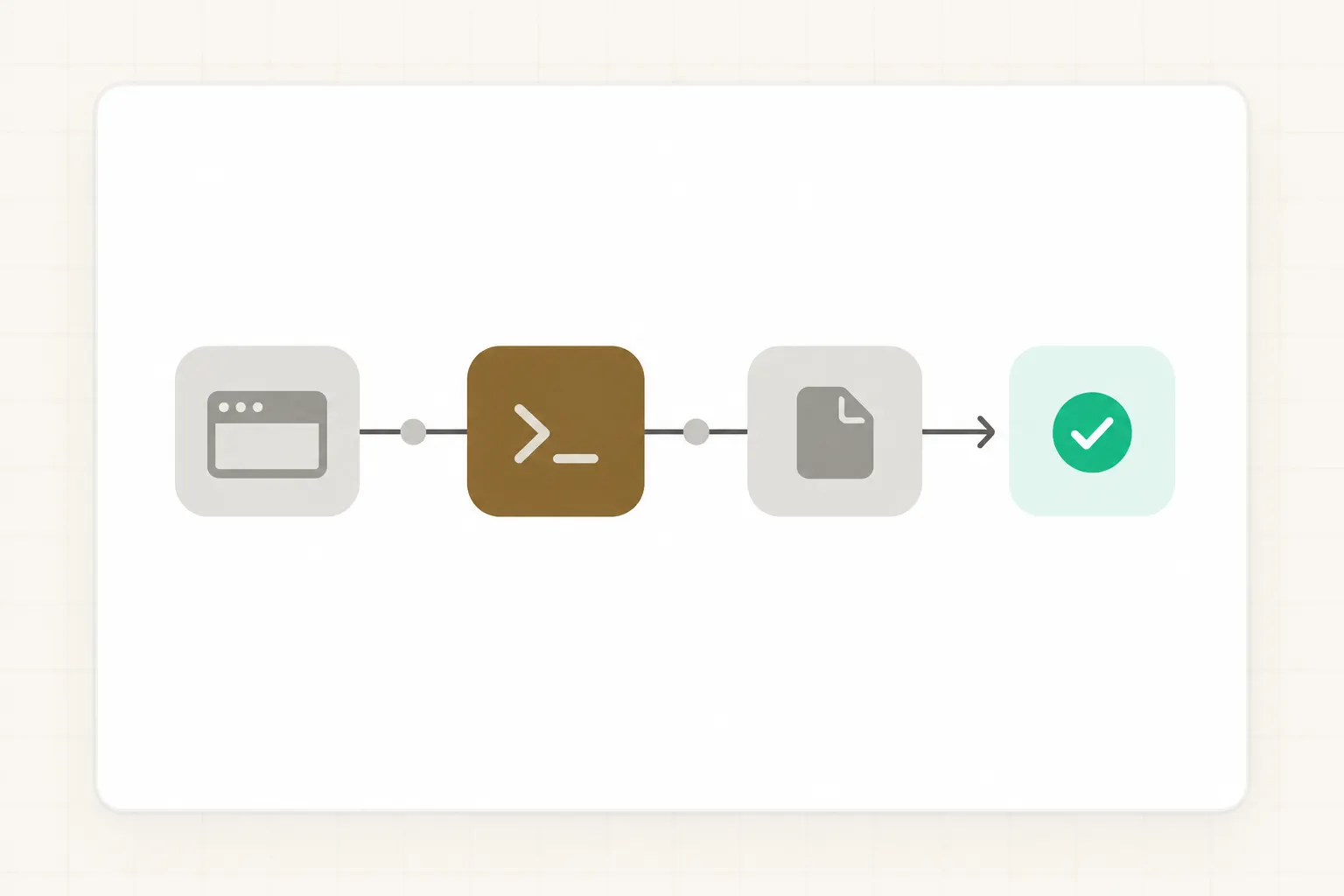
Define what must change and what must stay untouched. Buda can keep source files, working artifacts, and visible tool calls together. Review tests, evidence, and exported output before consequential actions.
| Human review | A narrow brief makes the result easier to review. |
|---|---|
| 1 | Define the deliverable and acceptance criteria |
| 2 | Provide source files and approved tool access |
| 3 | Inspect the diff, evidence, and final files |
| 4 | Authorize consequential external actions |
Keep the next iteration in the same workspace.
Buda is a cloud-native AI Agent Workspace. Agent files in Drive and a visible execution trail make it easier to continue from the last result instead of rebuilding context in a new chat.
| Workspace layer | Practical use |
|---|---|
| Drive | Store source files, templates, and working outputs |
| Agent sessions | Keep task context and inspect tool calls |
| Browser and Terminal | Inspect pages and run commands on supported plans |
| Skills and connected tools | Reuse task methods and approved integrations |
Claude Sonnet 5.5 FAQ
What is Claude Sonnet 5.5?
Anthropic’s September 28, 2026 update to Sonnet: faster output, stronger coding and knowledge work, and more efficient execution than Sonnet 5.
Does the 30% saving mean the token price fell?
No. Anthropic says the token prices are unchanged from Sonnet 5; lower task costs in its tests come from using fewer tokens. Buda Credits are a separate billing system.
Should Sonnet 5.5 replace Opus 5.5?
Not for every task. Sonnet fits well-scoped work and fast iteration; Anthropic still finds Opus stronger on complex, open-ended work requiring sustained judgment.
How should a team evaluate it?
Compare a small set of representative tasks using the same inputs, acceptance tests, and review process. Track accepted results, time to completion, and actual consumption—not output speed alone.
What does Buda add to a model workflow?
Persistent files, agent sessions, tool execution, and inspectable deliverables. Available models and plan access are listed on Buda’s pricing page.
Can a more capable model skip human review?
No. Accuracy and speed do not transfer responsibility. People still define permissions, verify consequential output, and decide what leaves the workspace.
Turn the next brief into a result you can inspect.
Give an agent the source files, a bounded outcome, and a clear finish line. Keep the execution in Buda—and the final judgment with the person responsible.
Explore Buda