Agent Workflow Optimization: The Shift from Multi-Agent to Single-Agent Systems
As foundational models evolve, complex multi-agent pipelines are becoming obsolete. Discover why streamlining to single-agent workflows is the new optimization strategy.
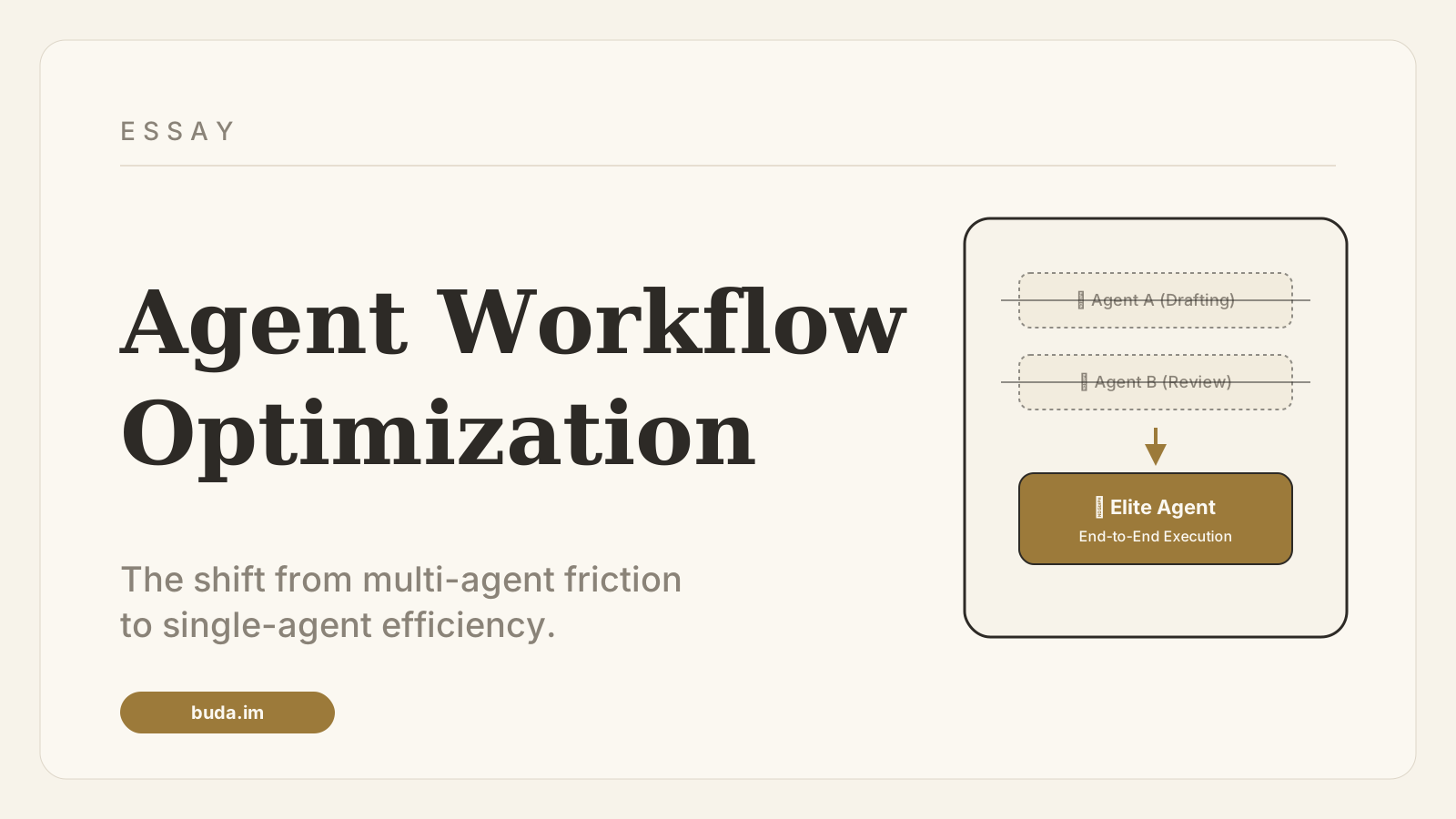
As enterprise AI adoption matures, a common architectural pattern has emerged: breaking down complex tasks into highly specialized "multi-agent pipelines." However, what once seemed like the pinnacle of automated execution is rapidly showing its hidden costs.
When evaluating automated output, the most critical shift happening right now is not about adding more agents, but about consolidating them. The evolution from fragmented, multi-step pipelines to powerful, end-to-end single-agent systems is reshaping how modern organizations structure their workflows.
The Hidden Costs of Multi-Agent Handoffs
In the early stages of agentic automation, the reasoning capabilities and context windows of large language models were limited. To prevent hallucinations and errors, workflows were intentionally fragmented. Processing a complex business requirement typically meant configuring several specialized agents to pass the baton (e.g., Research Agent -> Drafting Agent -> Review Agent).

However, as foundational models surge in capability, this "assembly line" approach has become an organizational bottleneck. A multi-agent system bouncing tasks back and forth wastes token costs, introduces high latency, and significantly increases the fragility of the workflow. Every handoff between agents is a potential point of failure where context can be lost or misaligned.
The Rise of the End-to-End Elite Agent
Today, the paradigm has shifted. By equipping a single, highly capable agent with a comprehensive set of tools (Skills), one robust prompt can empower it to execute the entire process end-to-end.
Consolidating redundant agents stops the needless drain on computational resources. It drastically reduces latency and ensures that the full context of a task is maintained from inception to final delivery. This is the equivalent of optimizing a bloated corporate department: streamlining the operation removes friction and accelerates delivery.
Redefining the Human Role: The Commander
This workflow evolution also redefines the human role within the enterprise. As single agents become capable of managing broader scopes of work autonomously, human professionals are freed from overseeing the micro-interactions of complex bot-pipelines.
Your focus transitions from managing "how" the work flows between nodes to defining "what" needs to be accomplished and judging the quality of the final output. You become the reviewer and commander, leveraging deep domain knowledge to steer automation rather than getting bogged down in its execution logic.
If you are ready to streamline your enterprise automation and build highly efficient, consolidated agent workflows, visit buda.im to start optimizing your AI strategy with Buda.