OpenAI Codex and Gartner: Why Enterprise Coding Agents Are Moving from Demo to Standard
Why enterprise coding agents are moving from demos to governed standards.

OpenAI announced that Codex was named a Leader in the Gartner Magic Quadrant for Enterprise AI Coding Agents. The announcement matters less as an award headline and more as a market signal.
Enterprise coding agents are moving from demo to standard.
For years, AI coding tools were judged mainly by how well they completed code snippets, autocomplete suggestions, or isolated benchmark tasks. That phase is ending. Enterprises now want agents that can understand large codebases, use tools, make changes, run tests, prepare work for human review, and operate under governance.
That is a different category.
It is not only software assistance. It is managed software execution.
What OpenAI announced
OpenAI said Gartner recognized Codex as a Leader in the Magic Quadrant for Enterprise AI Coding Agents. The company also said Codex is used by more than 4 million people each week and by companies including Cisco, Datadog, Dell Technologies, and NVIDIA.
OpenAI highlighted several enterprise capabilities around Codex:
- agentic software development;
- enterprise governance;
- sandboxing;
- flexible deployment options;
- a broad developer surface across the Codex app, IDE extensions, CLI, SDKs, and cloud orchestration;
- approval gates, RBAC, customizable policies, OS-level sandboxing, and auditable workspace governance.
OpenAI’s framing is clear: the enterprise question is no longer only whether AI can write code. The question is whether companies can deploy coding agents safely, govern them, and review their work.
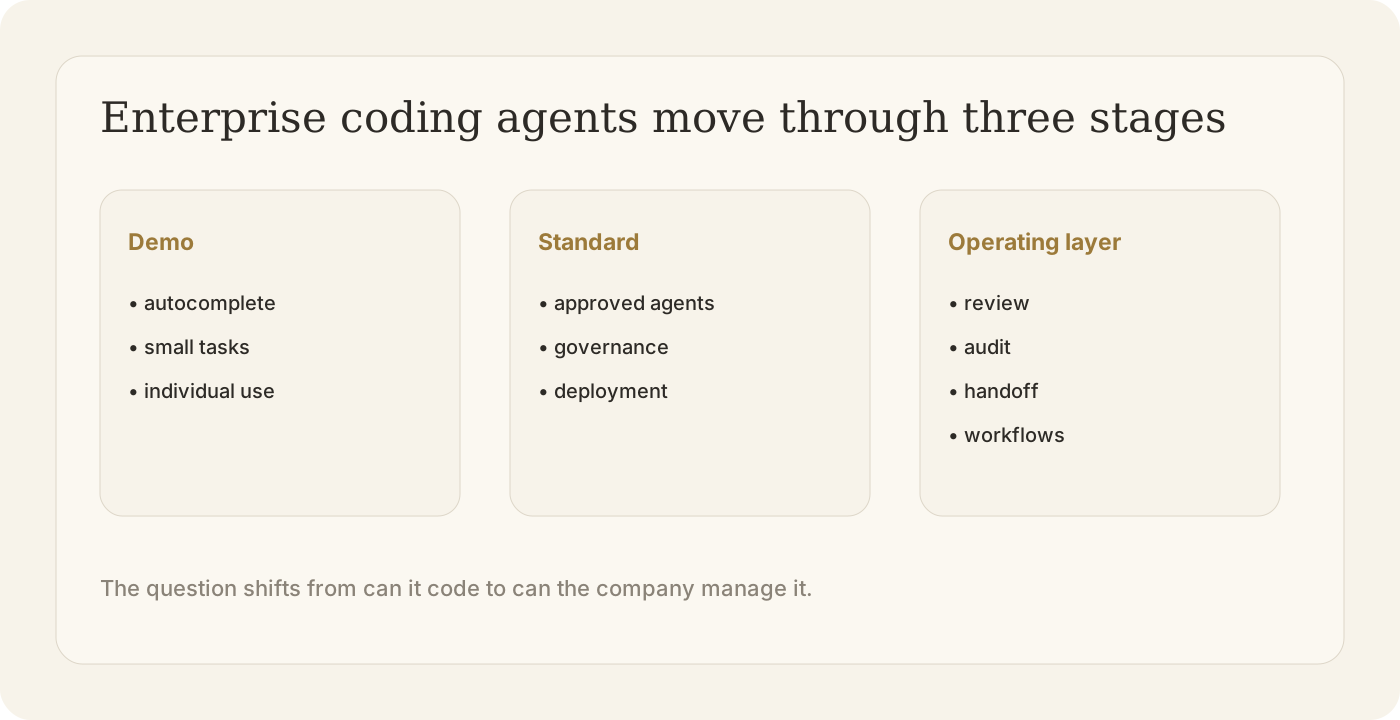
Why this is a category shift
A demo tool can impress one developer.
An enterprise standard must satisfy an organization.
That means a coding agent needs more than model intelligence. It needs a product surface that supports identity, permissions, environments, policies, cost controls, review loops, audit trails, and deployment options.
This is why Gartner’s category is important. “Enterprise AI Coding Agents” is not the same as “AI autocomplete.” It describes a work system where agents can participate in real software delivery.
The agent is no longer only suggesting code.
It is entering the delivery workflow.
The real standard: control plus speed
OpenAI’s announcement uses a phrase that captures the enterprise tradeoff: speed with control.
Speed alone is easy to understand. A coding agent can help teams write, debug, test, and refactor faster.
Control is the harder part.
Companies need to know what the agent changed, why it changed it, which environment it used, which approvals were required, whether tests ran, who reviewed the result, and whether the work can be audited later.
That is where enterprise coding agents become operational infrastructure.
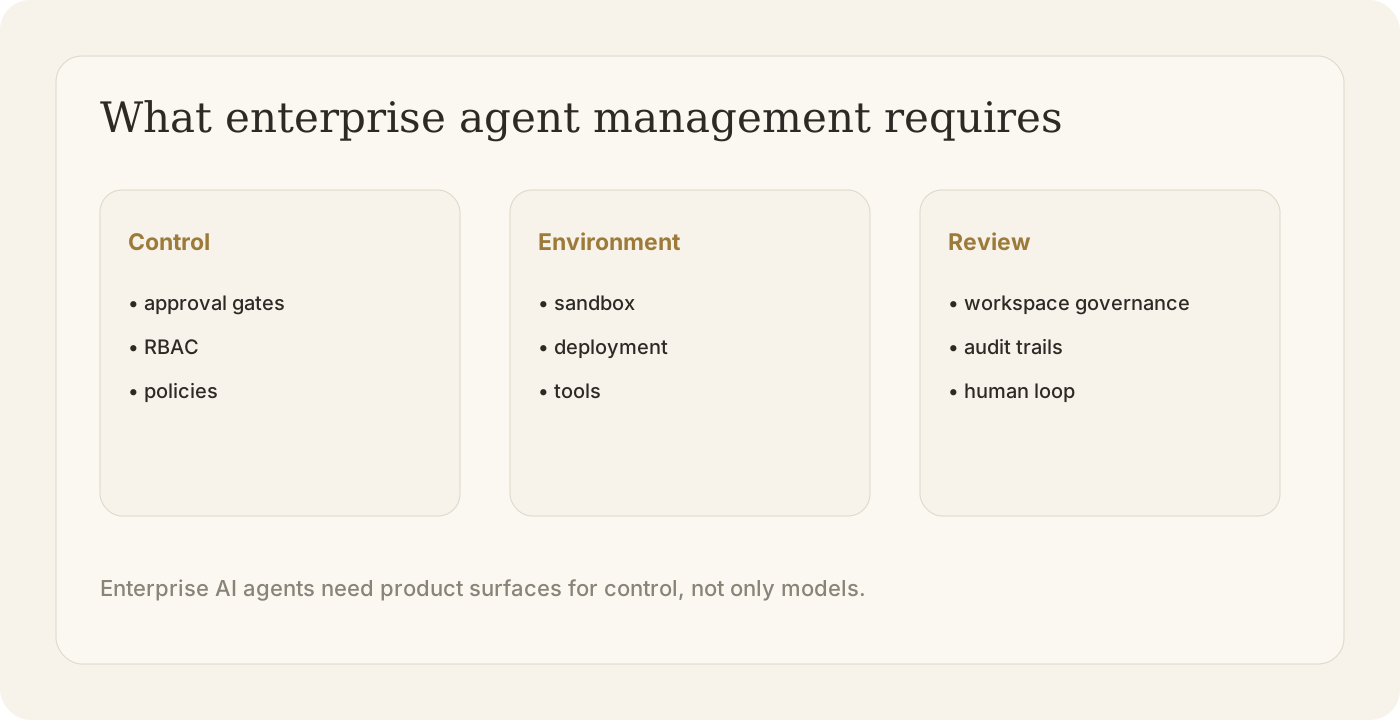
Why this matters beyond coding
Coding agents are the first obvious enterprise agent category because software work is structured, testable, and high-value.
But the same pattern will spread.
Companies will not stop at coding agents. They will also deploy research agents, content agents, support agents, operations agents, finance agents, sales agents, and security agents.
Each agent category will need its own tools and context. But the management questions will repeat:
- What is the agent allowed to access?
- Which tools can it use?
- What counts as done?
- Who reviews the output?
- How does the work transfer to another human or agent?
- How does the company preserve context and audit the process?
That is why the enterprise coding agent shift is bigger than coding.
It is a preview of how companies will manage AI work.
How Buda fits
Buda is built for this broader management layer.
Codex shows how coding agents are becoming enterprise standards. Buda focuses on the next organizational question: how do humans manage many agents across many kinds of work?
Buda provides an agent workspace where teams can coordinate sessions, files, terminal work, browser work, artifacts, skills, automations, and channels. The goal is not to make AI disappear into the background. The goal is to make agent work visible, reviewable, and aligned with human intent.
This is the idea behind agents as a company.
A company does not only hire one engineer. It coordinates many roles around shared goals, shared context, and review standards. As AI agents enter more workflows, humans need the same operating layer for agents.
Buda’s position is simple:
AI executes. Humans judge.
Enterprise coding agents becoming a Gartner category is one sign that AI execution is becoming real infrastructure. The next step is making that infrastructure human-led.
Start building human-led agent workflows at buda.im, or learn more about the Buda Agent Workspace.