Microsoft, Claude Code e Copilot CLI: por que AI coding tools viram infraestrutura empresarial
Relatos sobre a Microsoft movendo engenheiros do Claude Code para o GitHub Copilot CLI mostram que AI coding agents estão virando infraestrutura governada.

According to The Verge, Microsoft is reportedly winding down most Claude Code licenses in its Experiences + Devices division and encouraging many engineers to move to GitHub Copilot CLI by the end of June.
The story is spreading because it looks like a simple product rivalry: Claude Code vs GitHub Copilot CLI.
But the more useful reading is bigger than that.
This is a signal that AI coding tools are becoming enterprise infrastructure.
What was reported
The Verge reported that Microsoft opened access to Claude Code internally in December, that the tool became popular among thousands of employees, and that Microsoft now plans to remove most Claude Code licenses while pushing many developers toward GitHub Copilot CLI.
The report says the affected organization includes teams working on Windows, Microsoft 365, Outlook, Teams, and Surface. It also says the June 30 cutoff aligns with the end of Microsoft’s financial year, making cost one likely factor alongside product strategy.
Microsoft’s reported internal framing is also important: Copilot CLI is a product the company can shape directly with GitHub for Microsoft’s repositories, workflows, security expectations, and engineering needs.
That sentence explains the real issue.
At enterprise scale, the question is not only “which AI coding tool do developers prefer?”
It becomes: which agent system can the company govern?
Why this matters beyond Microsoft
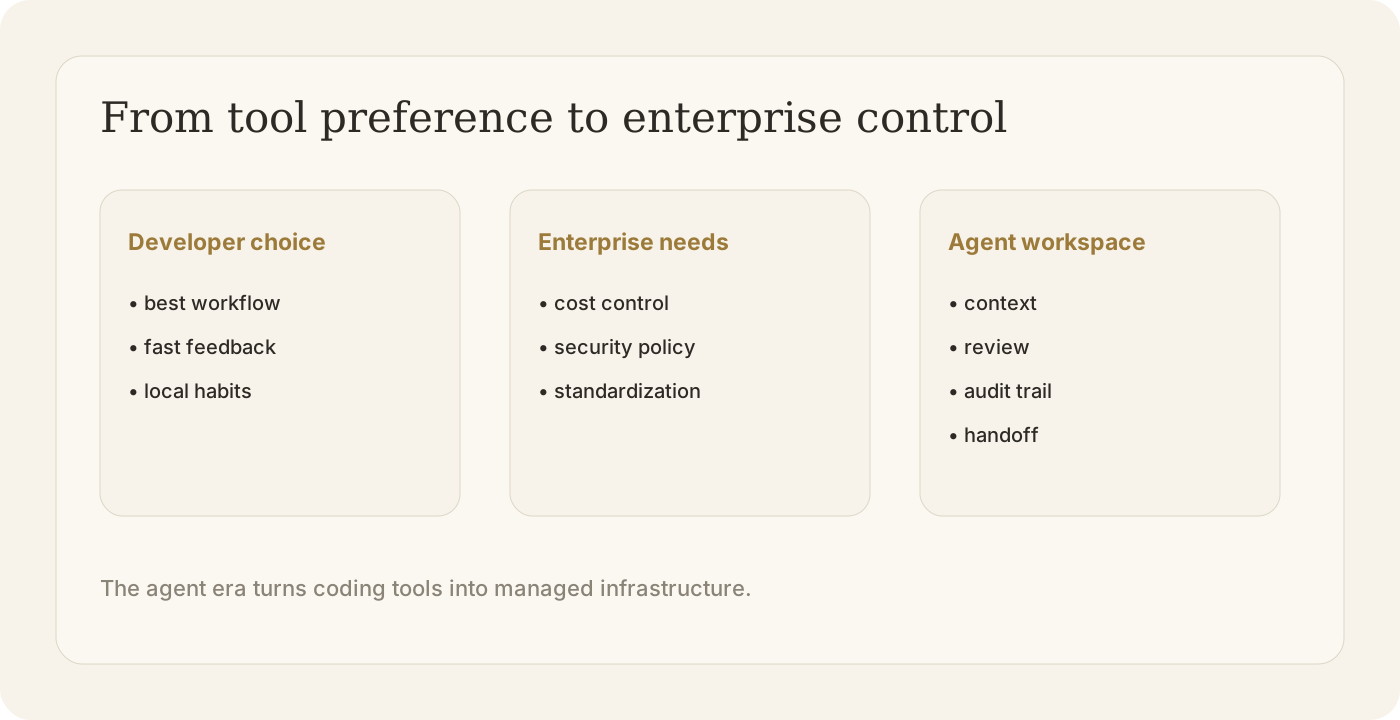
Individual developers optimize for flow.
They care about which tool understands the codebase, edits quickly, keeps context, and fits their habits. That is why tools like Claude Code, Codex, Cursor, and Copilot CLI can build strong communities quickly.
Enterprises optimize for a wider set of constraints.
They care about security, cost, audit trails, identity, data policy, model availability, procurement, support, and integration with existing systems. A tool that feels best for one developer may still create governance problems when deployed across thousands of employees.
That tension is now becoming visible.
AI coding agents are no longer experimental side tools. They can read repositories, modify files, run commands, call tools, and generate pull requests. Once agents can affect production work, companies need management systems around them.
The new enterprise AI questions
The Microsoft-Claude Code-Copilot CLI story points to a set of questions every company will face:
- Which AI coding agents are approved?
- Which models can each team use?
- How are costs measured and capped?
- What code, files, and systems can agents access?
- Which actions require human approval?
- How are agent sessions reviewed after the fact?
- Can another teammate understand why an agent made a change?
These are not benchmark questions. They are operating-model questions.
The agent era turns software work into a managed execution layer.
Strongest tool vs managed system
The mistake is to frame the story only as “Claude Code is better” or “Copilot CLI won because Microsoft owns it.”
The deeper issue is that enterprise AI adoption has two different selection pressures.
One pressure comes from users. They choose the tool that helps them work fastest.
The other comes from the organization. It chooses the system it can govern, budget, secure, audit, and improve.
Sometimes those pressures point to the same tool. Sometimes they do not.
That is why AI agent platforms need to be judged not only by model quality, but also by management quality.
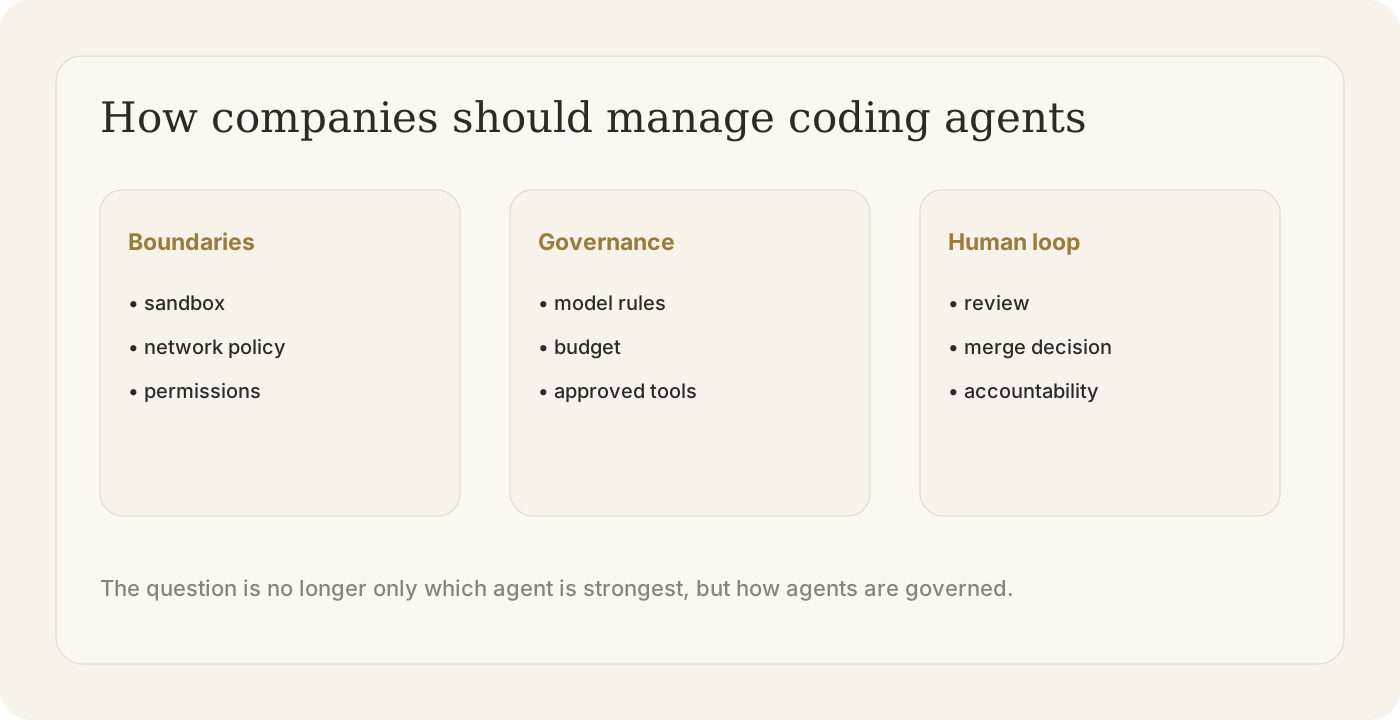
A good enterprise agent system needs:
- visible sessions;
- clear file and tool boundaries;
- reviewable outputs;
- human approval points;
- team handoff;
- reusable skills;
- auditability;
- and model flexibility.
Where Buda fits
Buda is built for this management layer.
Buda does not assume one model, one coding tool, or one chat window will solve the entire future of work. The product idea is agents as a company: humans coordinate multiple AI agents with shared context, visible workspaces, review loops, and responsibility.
In Buda, agents can work with Drive files, skills, terminal sessions, browser sessions, artifacts, automations, and channels. Humans remain in the loop as managers, reviewers, editors, and final decision-makers.
This matters because the future of AI work will not be a single agent doing everything alone.
It will be many agents doing many pieces of work, while humans set direction and judge outcomes.
The Microsoft report is a useful reminder: enterprise AI is not just about tool preference. It is about governance.
The next wave of AI coding will be shaped by the companies that can combine powerful agents with human-led management.
Start building human-led agent workflows at buda.im, or learn more about the Buda Agent Workspace.