Claude Fable 5.2: capabilities, pricing, and the work worth upgrading
What sustained execution, better data judgment, and a new effort budget change for real work.

Anthropic reports that roughly 1,000 Fable 5.2 agents formalized Fermat’s Last Theorem in 30 hours. In a separate experiment, a prototype operating system was built from an empty folder over eight days, coordinating more than 1,000 subagents. Those examples in the November 9 release concern sustained execution and verification, not simply a more polished answer.
For teams, the quieter changes may matter sooner: standard input and output rates are 20% below 5.1, output generation is up to 30% faster, and one coding evaluation reaches approximately Opus 5.5’s best quality with a different effort budget. Work previously too costly to escalate deserves another look.
Anthropic still recommends Opus 5.5 for most coding and knowledge work. The useful question is which previously unreliable or impractical jobs become worth attempting with 5.2.
Look at the work that reached a result
Beyond the operating-system experiment, Anthropic describes an earlier 5.2 version migrating a critical production service from Python to Rust. The resulting service started about 26 times faster. That is the service’s startup improvement, not a claim that the model writes code 26 times faster.
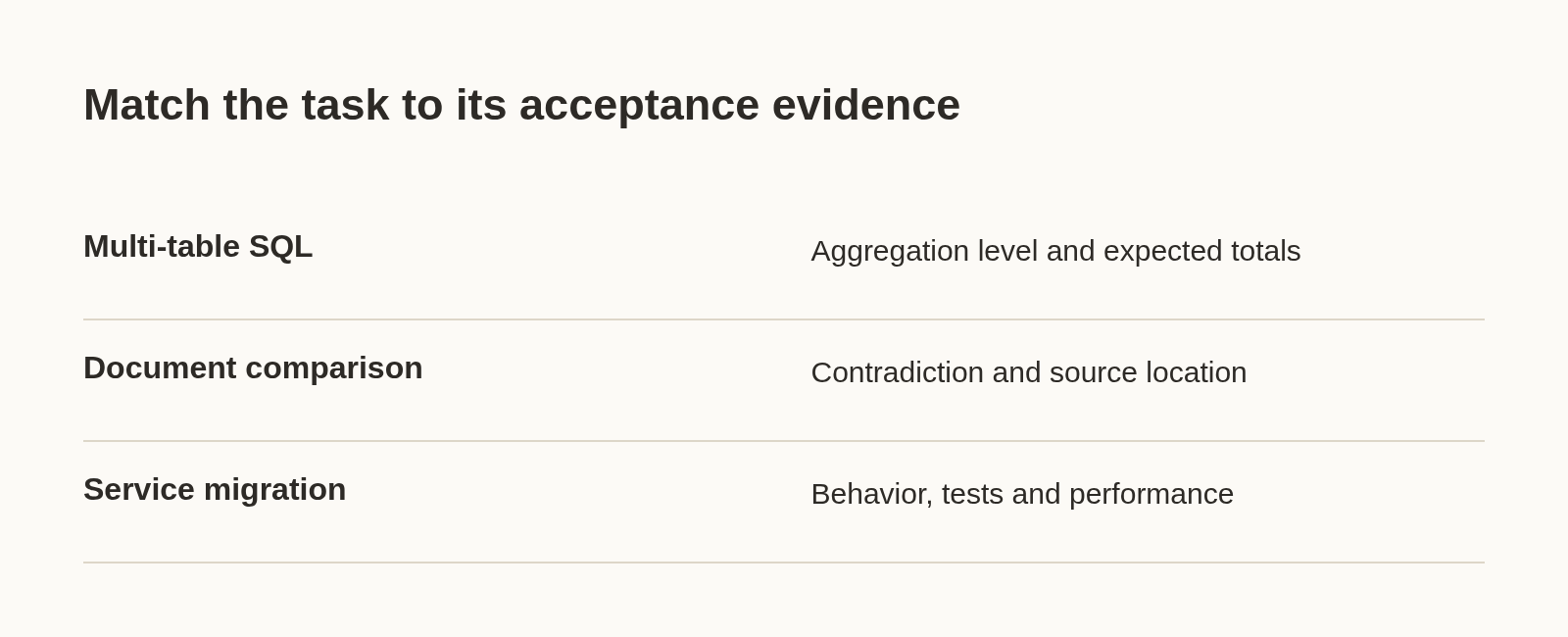
Oracle’s reported test exposes a more everyday failure: combining country debt summaries, repayment history and regional benchmarks, two other models produced executable SQL that incorrectly summed country-level amounts to 5–8 times the expected result. Fable returned the expected calculation. Valid code and correct business logic are different acceptance tests.
Box describes another useful behavior: finding a mismatch between salary deposits and a bank statement balance in loan-application attachments. These vendor and tester reports suggest meaningful trial workloads—conflicting documents, aggregation semantics and complex migrations. They are more informative starting points than another one-turn writing contest.
Where 5.2 improves over 5.1 and Opus
Anthropic’s FrontierCode 2.0 results rise from 32.4% for Fable 5.1 to 49.1% for 5.2, against 45.5% for Opus 5.5. FrontierSWE v2 moves from 56.3% to 69.9%, versus 62.3% for Opus. Complex engineering is a sensible first evaluation target.
On Remote Labor Index, scores move from 17.9% to 41.3%, with Opus at 21.3%. AA-Briefcase’s rubric changes more modestly, from 61.5% to 66.1%, versus 61.2% for Opus; Opus retains a slightly higher Elo there. A universal winner label hides the task differences buyers need.
These are publisher evaluations under their stated settings. Use them to prioritize tests of sustained work, business calculations and complex changes, then inspect your own accepted outputs. Research progress does not automatically justify escalating every summary.
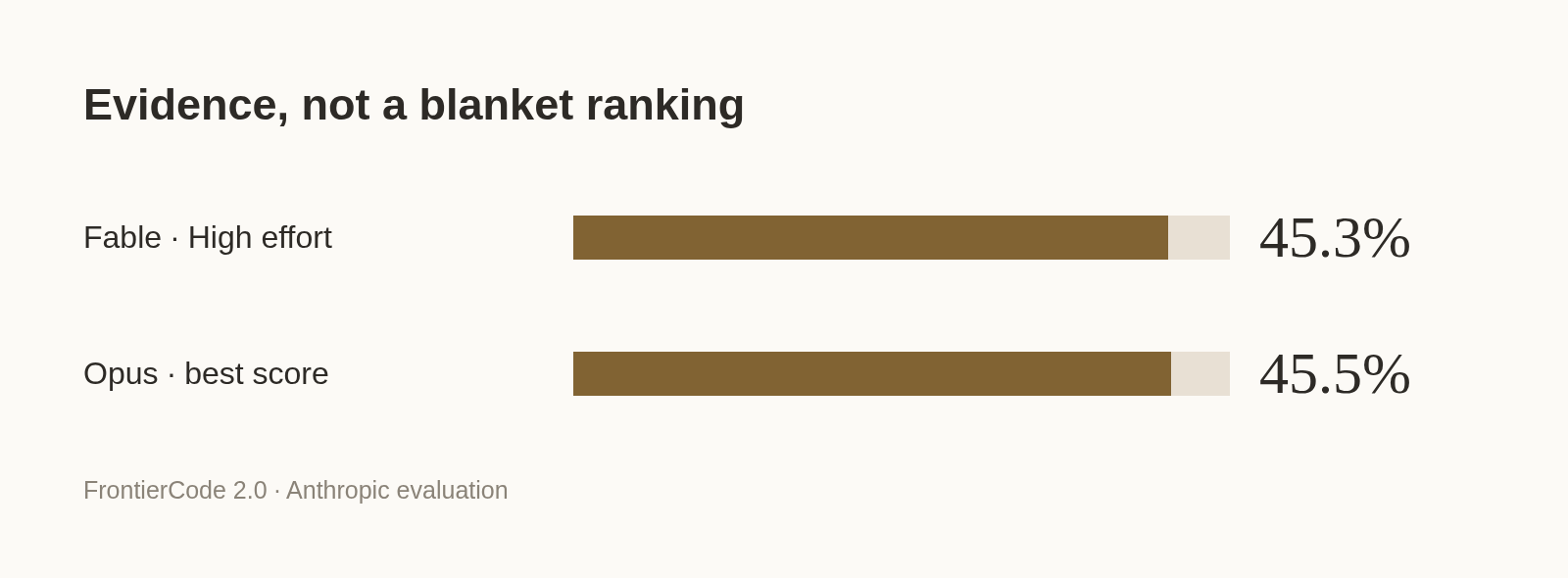
Similar quality can use a different effort budget
At High effort, 5.2 scores 45.3% on FrontierCode 2.0, close to Opus’s best 45.5%; Anthropic reports roughly half the cost per task for that comparison. Moving 5.2 to Xhigh produces 49.1%. One choice seeks comparable quality for less; the other spends more to seek a higher completion rate.
A stronger model therefore need not mean maximum effort everywhere. For work already meeting its standard, test whether lower effort preserves quality. For repeated failures, test whether more effort actually resolves the failure. Keep inputs, outputs and rejection reasons so the comparison reveals what the additional reasoning bought.
Calculate the 20% price reduction separately
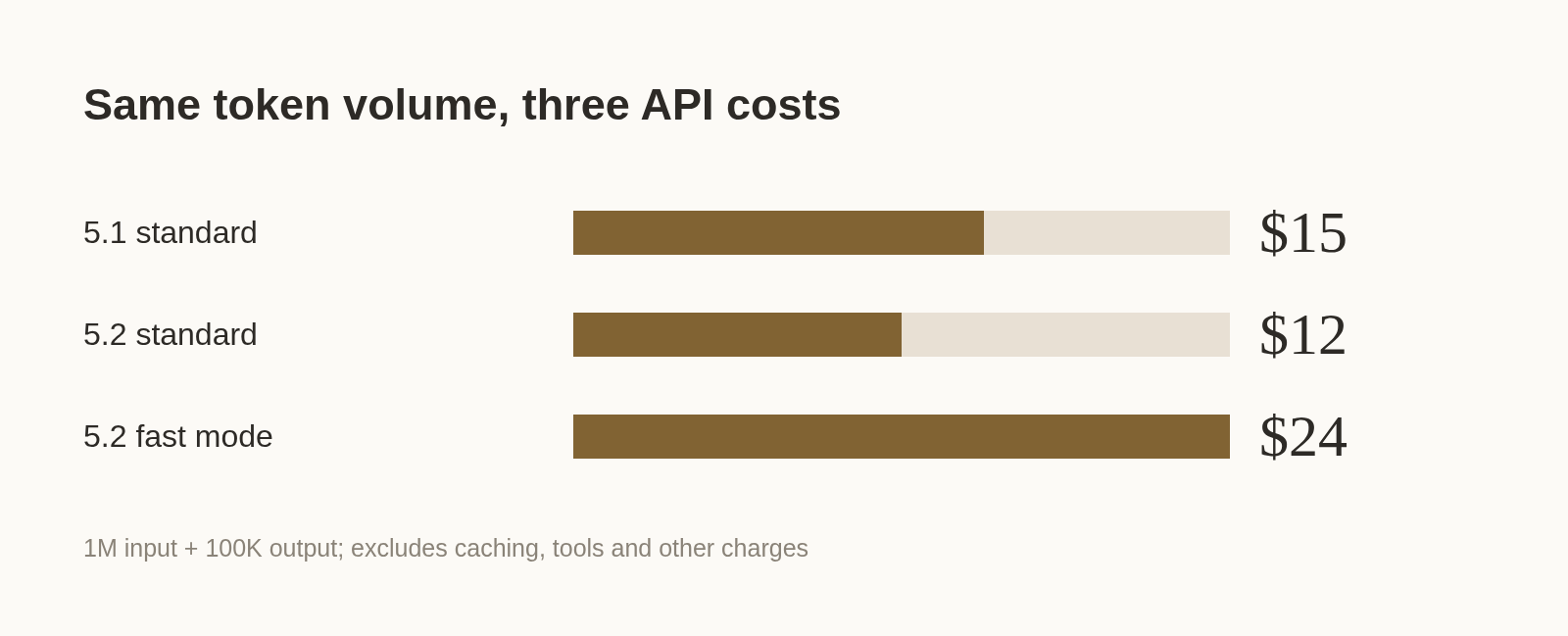
Standard API rates are $8 per million input tokens and $40 per million output tokens, down from $10 and $50 in 5.1. Both fall 20%. Fast mode is $16 and $80—twice the new standard rates—for up to 2.5 times token-generation speed. These are Anthropic’s upstream prices.
At those rates, one million input plus 100,000 output tokens costs $15 on 5.1, $12 on standard 5.2 and $24 on fast mode. This arithmetic excludes caching, tools and other charges. More context, subagents or retries can still increase the full bill.
Fast mode is most useful when generation dominates waiting. If external queries, builds or human decisions dominate instead, doubling token rates may barely change delivery time. Measure generation and tool waiting separately.
Access and integration details that change the decision
The API identifier is claude-fable-5-2. The announcement lists availability through Claude Platform, AWS, Google Cloud and Microsoft Azure. Check the actual account’s model selection, allowance and fast-mode support for the channel you use before choosing a bounded trial.
Fable and Mythos share the underlying model but differ in safeguards and access. Fable has broader availability; Mythos requires admission through cybersecurity or life-sciences verification programs. A Mythos security benchmark is not proof of Fable’s allowed task scope.
Preserved thinking also expands to all API accounts. Integrations that alter history, retry or mix models should check current developer guidance. The 5.1 migration article provides historical context rather than a substitute for validating 5.2.
Give it a problem worth solving
Choose real work the existing route repeatedly struggles with. For database work, verify calculation semantics. For migration, check behavior, tests and the intended performance result. For document research, inspect evidence and contradictions. Those outcomes reveal value that a generic prompt cannot.
You can build that evaluation process with Buda: preserve identical inputs, both routes’ outputs and reviewer feedback in persistent Drive. Let the agent organize differences while the owner decides which stages deserve a change. Better reasoning makes problem selection and acceptance judgment more consequential.
Practical questions
What should an existing 5.1 user test first?
Retry difficult engineering or cross-document jobs that previously needed repeated intervention. Also retain successful tasks to check quality regressions and accepted-result cost. The standard token rates fall 20%; the bill depends on actual usage.
Should Opus remain the default?
Anthropic still recommends it for most coding and knowledge work. Compare Fable for longer exploration, complex reasoning and demonstrated quality gaps, including lower-effort options.
When does fast mode make sense?
When the value of less generation waiting justifies twice the standard upstream token rates. Separate tool and human waiting before calculating the benefit.
Is Mythos an ordinary substitute?
It requires the appropriate verification-program access. Shared underlying weights do not remove safeguards or access differences.