A Complete Account Brief Can Still Describe the Wrong Company
Connect company identity, source attribution and meeting questions before relying on Agent-generated sales research.

An Agent preparing for a customer meeting can quickly gather company descriptions, job postings, product announcements and leadership information. A polished brief makes it tempting to jump straight to a sales angle. An earlier question deserves attention: do these materials actually describe the same organization?
The problem extends beyond identical names. A brand may differ from the company’s legal name. News may describe a group while the meeting concerns a regional team. A website may present a product portfolio when the contact owns just one business. Individual sources can be accurate while the combined customer picture points in the wrong direction.
Useful preparation connects three questions: who is the target, who does each source describe, and what conversation can that evidence support? Establish that connection before expanding the research.
Define the level of the meeting’s target
“Research this company” leaves important scope unspecified. Start with its known website, the name the customer uses, region and the team or business attending the meeting. Preserve the origin of information supplied in email or previous correspondence as an anchor for the assignment.
Then define the job. Are you understanding group strategy, preparing a demonstration for a product line or exploring a regional team’s operational problem? The relevant information differs even within one group. Clear scope lets the Agent distinguish essential evidence from corporate background.
If only an abbreviated name is available, do not let search ranking select the target. Return candidate websites with their identifiable regions and businesses, then ask the salesperson to identify the intended organization. An accurate clarification is more useful than a complete brief about the wrong account.
A real example: affiliation still requires attribution
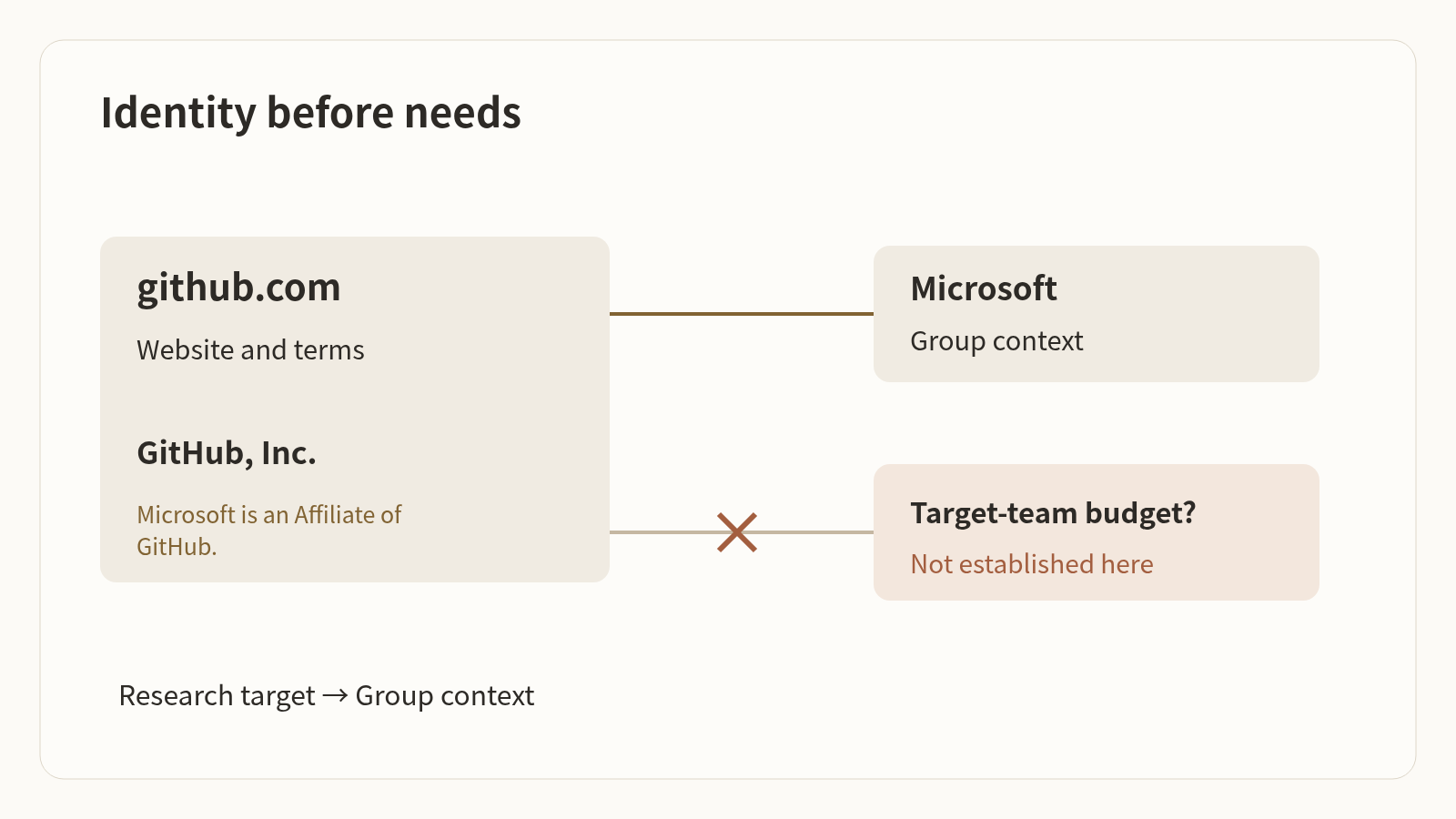
GitHub’s Terms of Service define GitHub by reference to GitHub, Inc. and other covered parties, and explicitly identify Microsoft as an Affiliate. That verifies a definition and relationship. It does not turn every Microsoft announcement into a GitHub team’s purchasing plan.
For research concerning a GitHub business, Microsoft information can provide group context. A specific claim about the target team needs evidence about that team, business or product. Affiliation explains why something may be relevant; direct evidence establishes who did what.
A website’s legal definitions also have their own scope. They can help connect a name with a website during meeting preparation. Identifying the counterparty for a particular contract requires the relevant order, agreement and responsible person’s confirmation. An accessible page should not replace the documents the actual job requires.
Attribute each signal before deciding how to use it
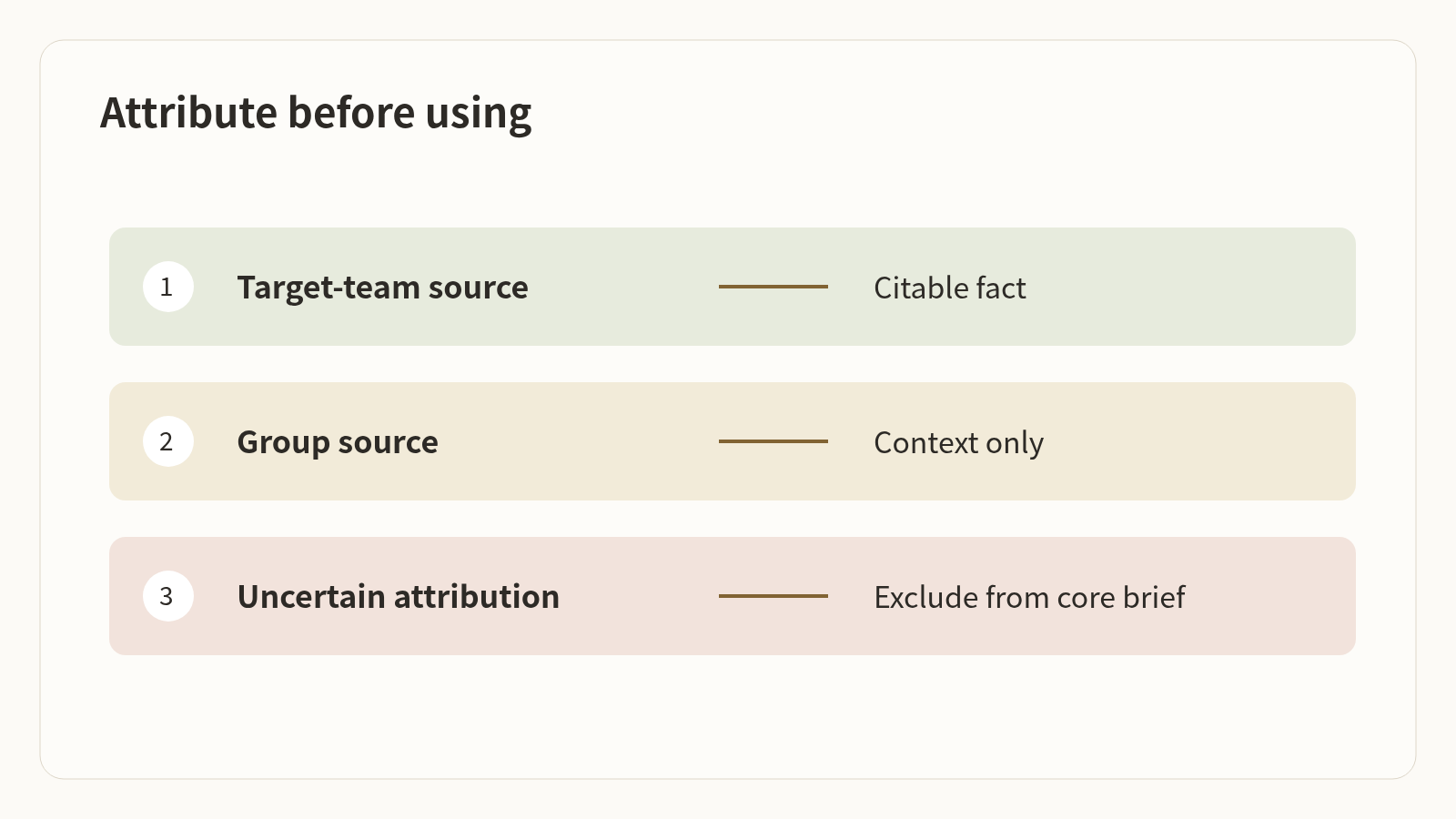
For an announcement or job posting, retain the named entity, region, event date and original source, then check its relationship to the target. Search snippets help locate material; the complete page establishes what it says.
Attribution should change how the brief is written:
| Evidence obtained | How to use it | What remains to establish |
|---|---|---|
| The target team’s announcement or hiring page | Quote the stated action with time and source | How it relates to the meeting topic |
| A parent or group announcement | Label it as group background | Whether the target team has acted on it |
| A same-name company’s news or uncertain attribution | Keep it in excluded or unresolved material | Which name, region or website evidence resolves the ambiguity |
Hiring can justify asking which responsibilities are expanding. It does not independently establish purchasing budget. Keep confirmed facts separate from the questions sales wants to ask, so inference does not become a decision supposedly made by the customer.
Build a usable meeting-preparation packet with Buda
You can use Buda to build this research and attribution workflow. In the Agent conversation, provide the known website, region, meeting participants and permitted correspondence. Ask it to establish identity before attributing sources. Access to websites, full reports and internal material must be checked during the assignment.
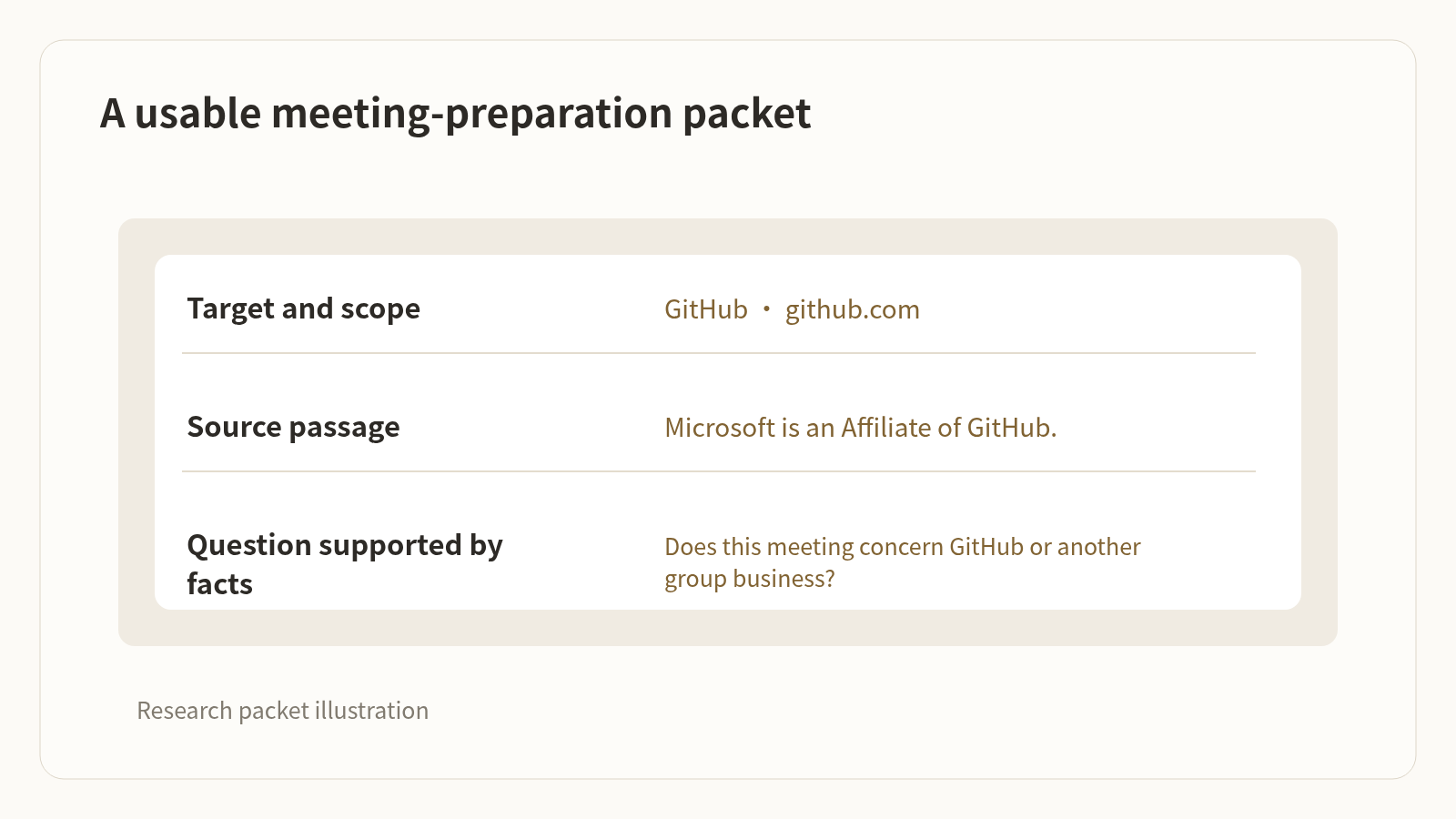
Keep three linked pieces in Drive: a target-and-scope note, a source-attribution table and the meeting brief. The note anchors the target. The table retains original passages, URLs, event dates and usage reasons. The brief uses checked facts and links each proposed question to its evidence. Existing team naming conventions are fine; the important part is finding the same account’s previous basis later.
A practical instruction is:
Start from the website, region and meeting participants I provide. Read the company description, contact information and applicable terms, and show evidence for brand, company and group relationships. Check relevant announcements and job postings. Classify each as target-team information, group context or unconfirmed attribution. Return the research scope, usable facts, the meeting question each fact supports, unresolved items and exclusions. Save complete sources and passages in Drive and keep traceable links in the brief. Return it for my review. Do not contact the customer or change CRM.
The result should make four things easy to find: whom the meeting concerns, which facts can be cited, which questions to ask and which information cannot yet be used. The first page need not contain every search record, but important judgments should lead back to their sources. Once the repeatable method is verified, it can become a Skill. Ready-made Skills can be searched in Buda AI’s Marketplace; check their actual scope before use.
Review what will affect the conversation
Sales first confirms the target and scope, then checks facts intended for opening remarks, demonstrations and needs analysis. Has group news become a regional team’s action? Does a question presume an unverified budget, responsibility or buying intention? Is the source still applicable? These checks address meeting risk more directly than polishing every sentence of a long report.
Turn an unconfirmed relationship into an appropriate customer question. Remove unattributable news from the core brief. After the meeting, update corrected names, responsibilities and business facts with their dates in the research packet. The next run should read those corrections before gathering more external material.
CRM record merges, contract-counterparty confirmation and customer contact need their own evidence and permissions. Preparation has a concrete acceptance condition: the salesperson checked the target, adopted facts have sources, questions are separate from facts and unknowns remain visible.
For the next meeting, ask the Agent for the target note and attribution table first. Once that foundation is sound, have it draft the opening and discovery brief. Continue with turning account signals into a discovery brief.