The Ultimate Guide to AI R&D Automation: Rapid Issue Triage and Automated Coding with Agents
Developers used to spend 70% of their time writing PRDs and communicating. Discover how Buda agents automate issue distribution and code fixes to achieve daily deployments.
If you're not in the software industry, you might have a deeply rooted misconception about "programmers": you imagine them wearing headphones, fingers flying across a black screen typing code all day.
But what does a real workday look like? A chat app stuffed with hundreds of unread messages, a constantly ringing communication channel, endless emails, and writing exhausting Product Requirement Documents (PRDs).
In today's agile development environment, the boundary between product managers and programmers is already very blurred. Many core developers have to go to the front lines to communicate with clients and listen to their complaints; on the other hand, they must return to the office, translate these needs into thousands of words of documentation, and then create individual Jira/GitHub Issues to schedule development. In this traditional R&D pipeline, no matter how good your code is or how sharp your architectural sense is, you will eventually be reduced to a "pseudo-executor" chased by notification red dots.
"Before AI, core developers spent perhaps 70% of their time writing documentation and handling communications."
When coding is bottlenecked by the physical limits of human communication and manual flow, you can introduce AI Agents to reshape this workflow.
Efficiency Leap: Documentation is No Longer a Burden, But "Fuel" for AI
After introducing Buda agents, the first change in the workflow is the attitude towards "documentation."
In the past, documentation was written for humans to read, which was time-consuming and laborious; now, documentation is written to feed AI corpora.
If you want the AI agent to do a good job, your corpora and materials are the most critical elements. The tedious documents accumulated in the past are not obsolete; instead, their value is further amplified—because they have become the best fuel for code completion tools and agents to understand business logic.
But this is only a single-point efficiency improvement at the tool level. A deeper reshaping occurs when an automated AI Agent workflow is built on Buda.
True Automation: Let AI Agents Relay the Requirements
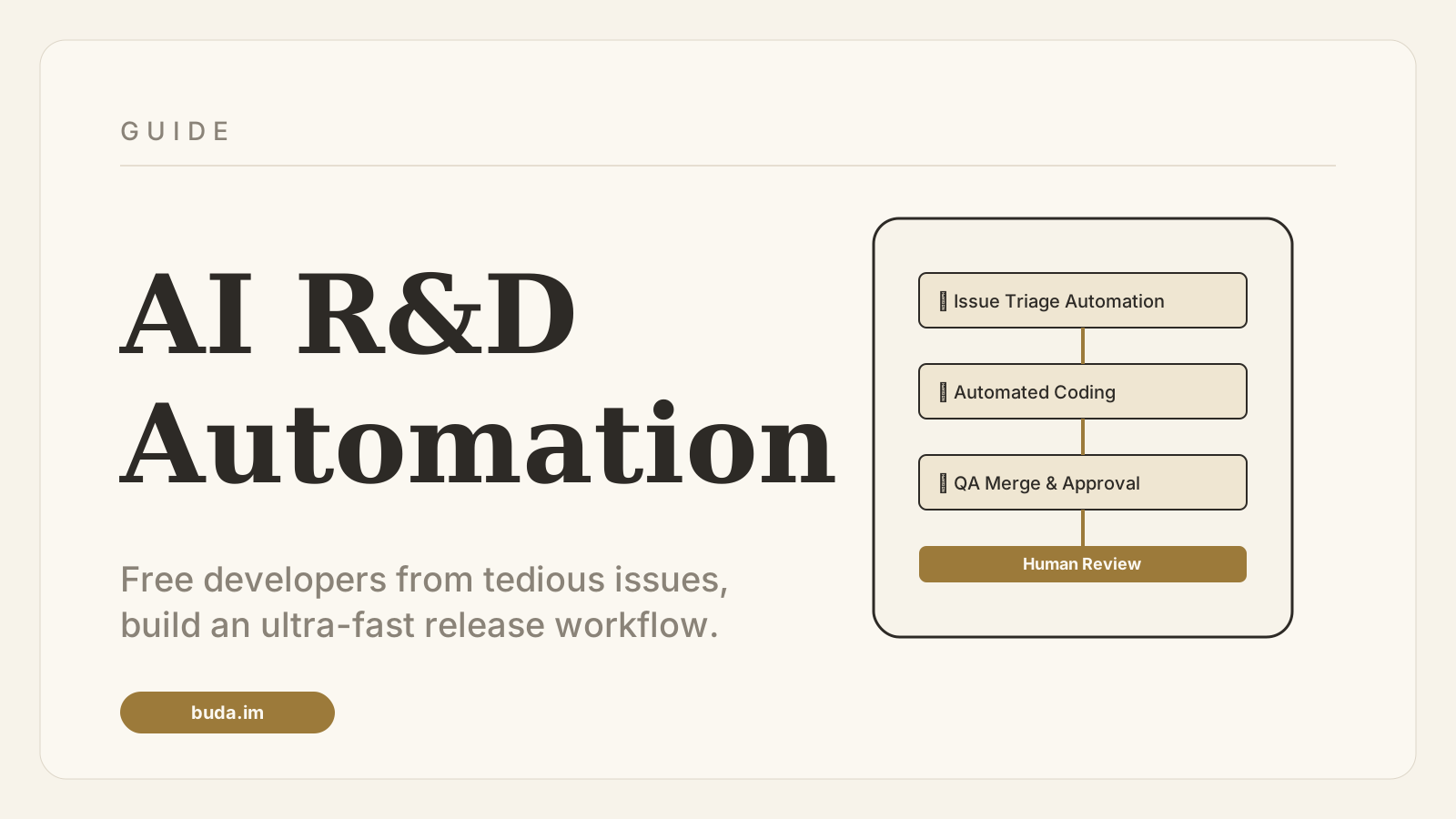
To completely solve the cumbersome collaboration process of "gathering requirements → creating issues → writing code → testing and acceptance," you can configure several specialized AI agents in your development group.
1. Feedback Turning into a Mess? Let the Agent Create Issues
Previously, when a client reported a bug, it required manual recording, relaying to the R&D team, and manual creation of Jira/GitHub Issues.
Now: You simply throw the client's text or voice feedback to the Project Manager Agent.

This agent immediately extracts key information, automatically filters out emotional or redundant expressions, and then generates a well-structured Issue with clear reproduction steps on the code repository.
2. Endless Scheduling for Bug Fixes? Let the Agent Code Directly
Previously, after an issue was created, we had to wait for programmers to have free time to fix the code.
Now: You can set up a dedicated "Issue Coder Agent."

As long as there is a new issue in the repository, it will automatically read the details, clone the code, and write the code itself to fix the problem. After writing, it automatically generates a PR (Pull Request) in the group, waiting for human acceptance.
3. Quality Control: Humans are the Final Gatekeepers
In this fully automated chain, what are humans doing?
QA engineers and senior developers now say the following words most often to this coding agent: "Continue" or "Approve."
The agent is responsible for locating files and writing code, while human engineers are responsible for reviewing: Is the architecture reasonable? Are we satisfied? Does it solve the client's problem? If the acceptance passes, they just click approve, and the code fixed by AI will be immediately merged into our main product.
Humans have thoroughly evolved from "code bricklayers" to "code reviewing architects."
Conclusion: From Monthly to Daily Deployments
Five years ago, R&D teams usually only dared to release a new version once a month.
Today, with this brand-new automated workflow, the development cycle from product initiation to market launch is dramatically shortened, enabling you to deploy updates every single day.
All of this relies on these tireless agents and automated flow mechanisms. In this era, what truly sets you apart is no longer your typing speed, but whether you can complete the mindset transformation from "doing the work yourself" to "commanding AI with your mouth." Hand over the tedious flow to the machine, and leave the smart brainpower for judgment.
If you also want to experience the R&D efficiency of daily deployments and hire a batch of tireless virtual engineers for your team, welcome to visit buda.im to start your agent building journey.