AirtableがCodexと出会う時:AIネイティブデータベースへの進化
自律型AIエージェントが、従来のスプレッドシートをどのように承認優先(Approval-First)のコラボレーティブなワークスペースに変えるのかを解説します。

Recently on Hacker News, a project called OpenKnowledge sparked a fascinating discussion. It showcased a Notion-like editor rebuilt from the ground up for the AI era—integrating Claude, Codex, Cursor, and MCP skills directly into the workspace. It wasn’t just a text editor; it was a canvas where AI agents and humans co-author knowledge.
If we extrapolate this trend from document editors to structured databases (like Airtable, Notion databases, or Vika), we are staring at a massive paradigm shift. When structural data platforms meet autonomous agents like OpenAI Codex, the traditional spreadsheet is no longer just a passive UI for humans to input data. It becomes the collaborative workbench for AI agents.
ノーコード時代のボトルネック
The previous generation of no-code databases solved a human problem: they made it incredibly easy for business teams to build their own systems without writing code. However, the actual work—collecting leads, reading emails, organizing customer feedback, and typing it into cells—still required heavy human execution. The software was passive. It waited for you to type.
エージェント時代: データオペレーターとしてのAI
With the rise of coding agents like Codex, we now have digital operators capable of fetching external APIs, reading unstructured PDFs, and parsing them into JSON. But how do we let these agents interact with our business data?
Giving an autonomous agent raw SQL credentials or unconstrained API write access to your production Airtable is a recipe for disaster. If the AI hallucinates, it could overwrite thousands of canonical records in seconds.
ミッシングリンク: 承認優先(Approval-First)ワークフロー
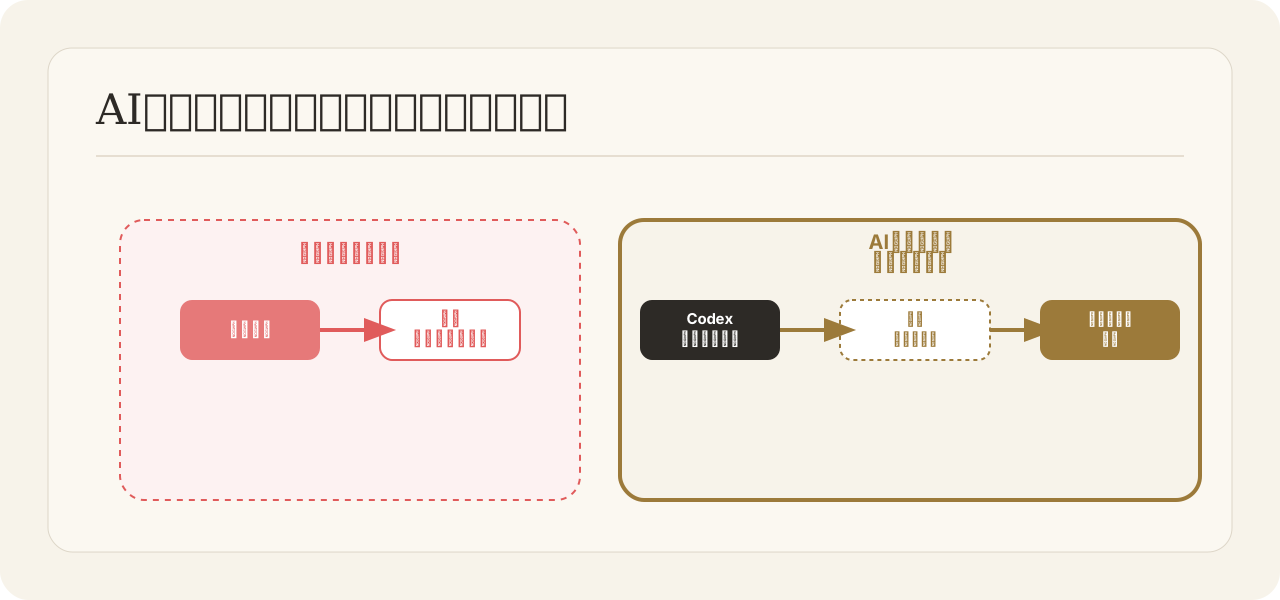
This is where the concept of an AI-Native Database comes into play. If the spreadsheet of the past was about human data entry, the spreadsheet of the future is about AI proposal and human governance.
When Airtable meets Codex, the database interface transforms into an inbox of pending agent actions. Instead of mutating the database directly, the agent acts as "The Claws," executing the heavy lifting of data formatting and submitting a Change Request. The human acts as "The Bunny," reviewing the structured proposal, modifying it if necessary, and clicking "Approve."
Budaの登場:AIネイティブなチームエージェントワークスペース
This underlying shift is exactly why Buda was created. Rather than bolting AI onto legacy spreadsheet software, Buda provides a complete Team Agent Workspace built from day one for human-AI collaboration.
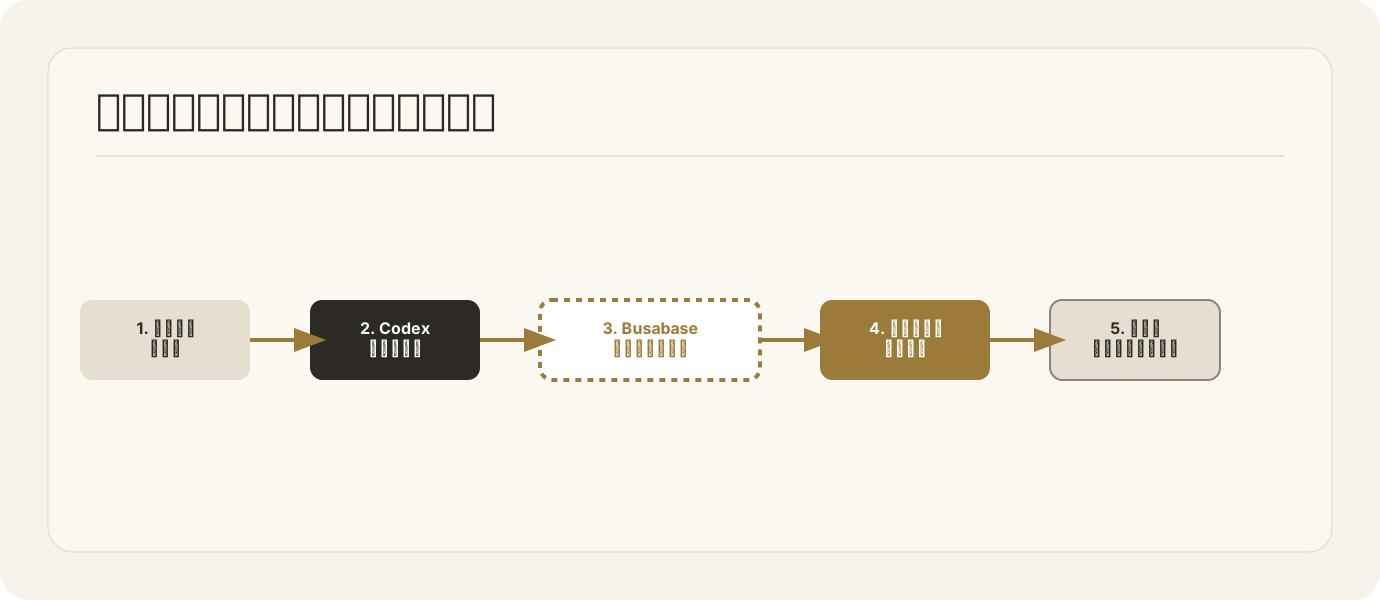
Budaワークスペース内でBusabaseのような「承認優先(Approval-First)」データベースに接続することで、エージェントはより安全にコンテンツ作成やデータ操作を行うことができます。Buda内のCodexエージェントがBusabaseに接続すると:
- It Reads: The agent accesses your local, secure schema to understand the business context.
- It Drafts: It processes external noise (e.g., parsing an unstructured meeting transcript).
- It Proposes: It submits the structured data as a Change Request into Busabase, keeping your canonical production data untouched.
- You Approve: The human manager (The Bunny) logs into the Buda Dashboard, reviews the visual diff of the agent's work, and securely merges the data.
まとめ
The true "AI moment" for spreadsheet software isn't just adding a "Generate Text" button to a cell. It requires fundamentally redesigning the workspace to safely orchestrate, audit, and approve the work of autonomous agents.
By marrying the execution power of Codex with the governance of Buda's Team Agent Workspace, enterprises can finally let AI safely manage their most critical data operations.
Ready to upgrade your team's workflow? 今すぐ Buda dashboard で Approval-First ワークスペースを構築しましょう。