Buda vs Factory Droid:Software Factoryか、部門横断Agent Workspaceか
Local対cloudではなく、software deliveryとcompany operationsのsystem of recordを選びます。

Factory Droid alternativeを探すと、最初の問いを間違えやすくなります。Factoryはローカル専用のcoding assistantではありません。公式製品はApp、terminal、IDE、browser、Slack、persistent Droid Computers、headless execution、multi-agent Missions、model routing、review、enterprise controlsまで広がっています。
有効な問いは「ローカルCoding Agentかcloud Agent workspaceか」ではありません。どのoperating systemが仕事を所有すべきかです。
Factoryはsoftware deliveryを中心に設計されています。Budaは会社の中で役割を持つpersistent Agentsを中心に設計されています。どちらもcloud execution、継続context、人によるcontrolを持ちますが、重心が違います。
結論
仕事がsoftware lifecycleの中で始まり、そこで終わるならFactoryが有力です。Repositoryを理解し、変更を計画し、codeを書き、testsを実行し、diffをreviewし、Missionを調整し、PRへ進めます。
長期的な単位がrepositoryではなくbusiness roleならBudaが自然です。Research Agent、Content Agent、Operations Agent、Finance Agent、Support Agentが、それぞれDrive、tools、instructions、Sessions、Automations、Channelsを持ちます。
Code mergeが中間地点にすぎないなら、両方を使えます。Factoryがimplementationとengineering acceptanceを担当し、Budaがrelease brief、support update、customer communication、operations checklist、recurring follow-upを担当します。
これはsystem handoffの設計であり、機能数の勝負ではありません。
Factory Droidはsoftware factoryであり、terminal featureではない
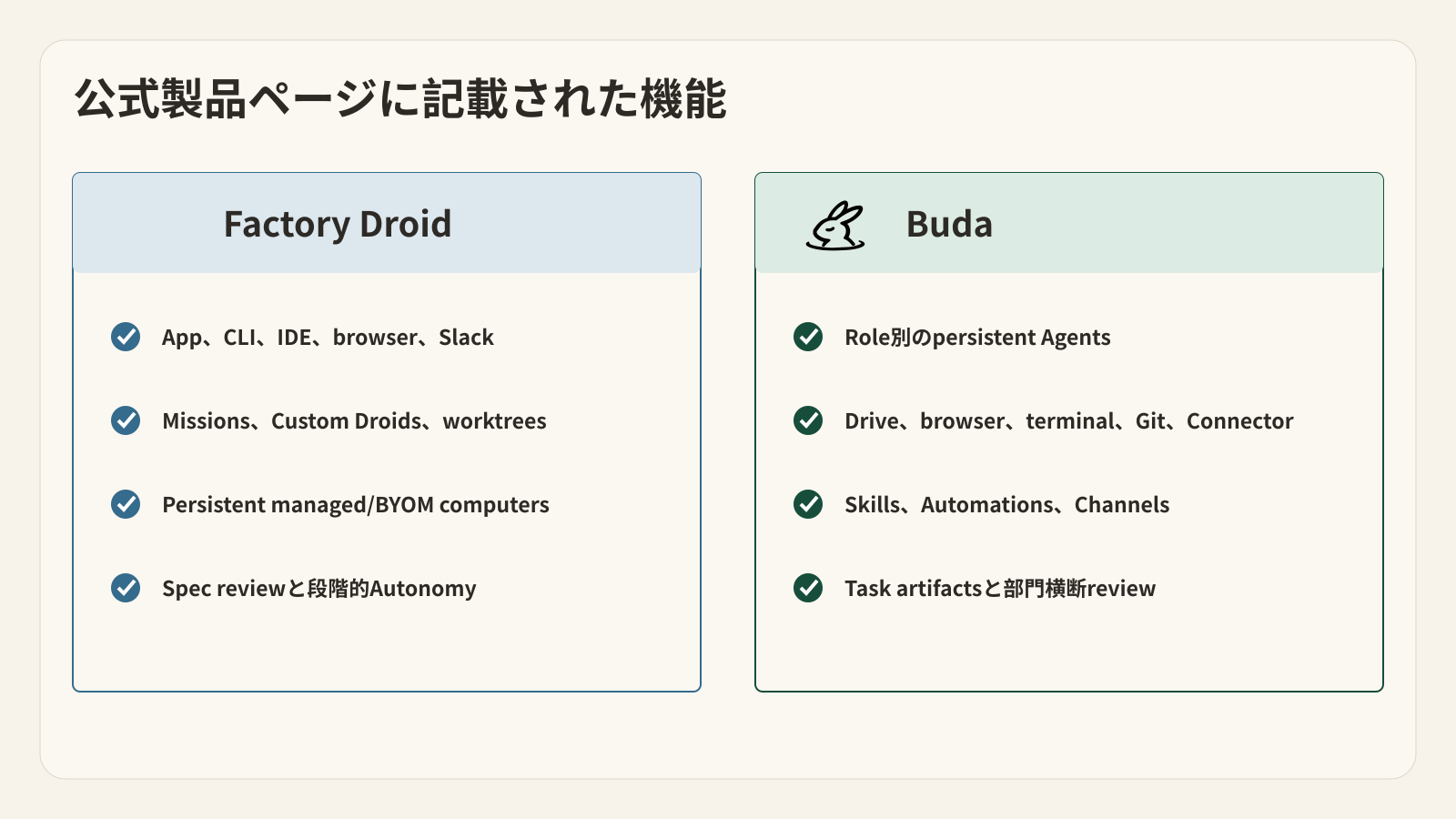
Factoryの公式ページはDroidsを、計画し、codeを書き、testし、shipするcoding Agentsと説明しています。Terminal、IDE、browser、Slack、Factory Appで動きます。CLIでも同じruntimeを利用でき、MCP、Hooks、Skills、Custom Droids、droid exec、Missionsを扱えます。
Missionsは、多機能で大規模な仕事にplanningとorchestrationを追加します。人がfeatures、milestones、success criteriaをDroidと定義し、planを承認した後、Mission Controlがworkersとvalidationを管理します。Factoryは、Missionsがfire-and-forgetではなく、信頼できる自動QAにはscriptableなrepositoryが必要だと明記しています。
Factoryはpersistent Droid Computersも提供します。Factory-managed machineだけでなく、workstation、VM、on-prem serverを登録できます。Packages、files、running services、configurationはSessionsをまたいで残ります。Factoryをlocal-only toolとして比較するのは現在の製品像と合いません。
Reviewとpermissionsも充実しています。Normal、Spec、Missionの各modeが作業形態を決め、Autonomy Levelが再確認なしで実行できるriskを決めます。Allowlist、denylist、blocklist、sandbox、Hooks、Droid Shieldもあります。
Budaが中心に置くのはAgent role
Buda Agentはidentity、instructions、private Drive、cloud computer、Skills、Channels、Sessionsを持ちます。一つのSpaceに、仕事もfilesも異なる複数のAgentsを配置できます。長期単位はrepositoryではなくroleです。
Engineering AgentはGitとterminalを使い、Research Agentはbrowserとsource filesを使い、Operations AgentはAutomationを動かしてChannelへdeliverできます。会社の仕事全体を一つの汎用Coding Agentに集める必要はありません。
Budaのcloud computerにもfiles、browser、terminal、Gitがあり、Connectorで既存computer environmentに入ることもできます。しかしBudaは専門software factoryではありません。Repository readiness、Missions、PR automation、engineering policyの深さではFactoryが優位です。Budaの価値は、一つの会社が複数のcross-functional Agent rolesを運用するときに現れます。
Feature listではなくoperating modelを比べる
| 判断軸 | Factory Droid | Buda |
|---|---|---|
| 主なsystem of record | Repository、project、diff、test、PR、engineering systems | Agent role、Drive files、task Sessions、Skills、Channels、reviewed artifacts |
| デフォルトの仕事 | Softwareのplan、implementation、test、review、delivery | Business functionsをまたぐone-off/recurring work |
| 実行surface | App、terminal、IDE、browser、Slack、headless exec、Droid Computers | Agent workspace、cloud computer、browser、terminal、Git、Connector、Channels |
| Parallel work | Missions、workers、validators、Custom Droids、worktrees | Role-based Agentsと独立Sessions |
| Durable context | Repository instructions、sessions、skills、machines、engineering systems | Agent instructions、private Drive、persistent computer、Skills、Automations、Channels |
| Human control | Spec approval、diff review、Autonomy、sandbox、command policy | Task review、tool permissions、visible Sessions、artifact review、role/Space boundaries |
| 最適領域 | Software development lifecycle | Cross-functional Agent operations |
重なる機能はありますが、同じではありません。Persistent computerだけでcompany operations systemにはならず、複数Agentだけでsoftware factoryにもなりません。
Scenario 1:複数repositoryのmigration
Platform teamが6つのserviceでauthentication libraryを交換し、testsを更新し、behaviorを維持し、review可能なPRを作るとします。
最初のpilotはFactoryが適しています。仕事はrepositoryで定義され、engineering validationがacceptance barです。Spec Mode、Missions、worktrees、repository instructions、tests、diff、PR reviewがそのまま役立ちます。長時間taskにはscriptで再現できるQAが必要だという前提も明確です。
Budaでもterminalでcodeを変更できますが、このケースでFactory replacementとして選ぶと、Factoryの専門性を捨てることになります。
Scenario 2:週次competitor/product operations
5社を監視し、sourcesを保持し、weekly decision briefを書き、customer contentを作り、承認後にSlackやWeComへ配信するworkflowを考えます。
Repositoryは中心ではありません。長期的なobjectsはsources、decisions、drafts、schedules、distribution recordsです。Research、writing、review、deliveryのownersも異なります。
Budaの方が自然です。Research AgentがwatchlistとevidenceをDriveに保存し、Content Agentが承認済みの情報を各形式へ変え、Operations AgentがscheduleとChannel deliveryを担当します。公開判断は人が持ちます。
FactoryもSlackと接続し、documentsも作れます。しかしsoftware factoryをこのworkflowの永久的なbusiness systemにすると、repositoryに不要なbusiness stateを持たせる可能性があります。
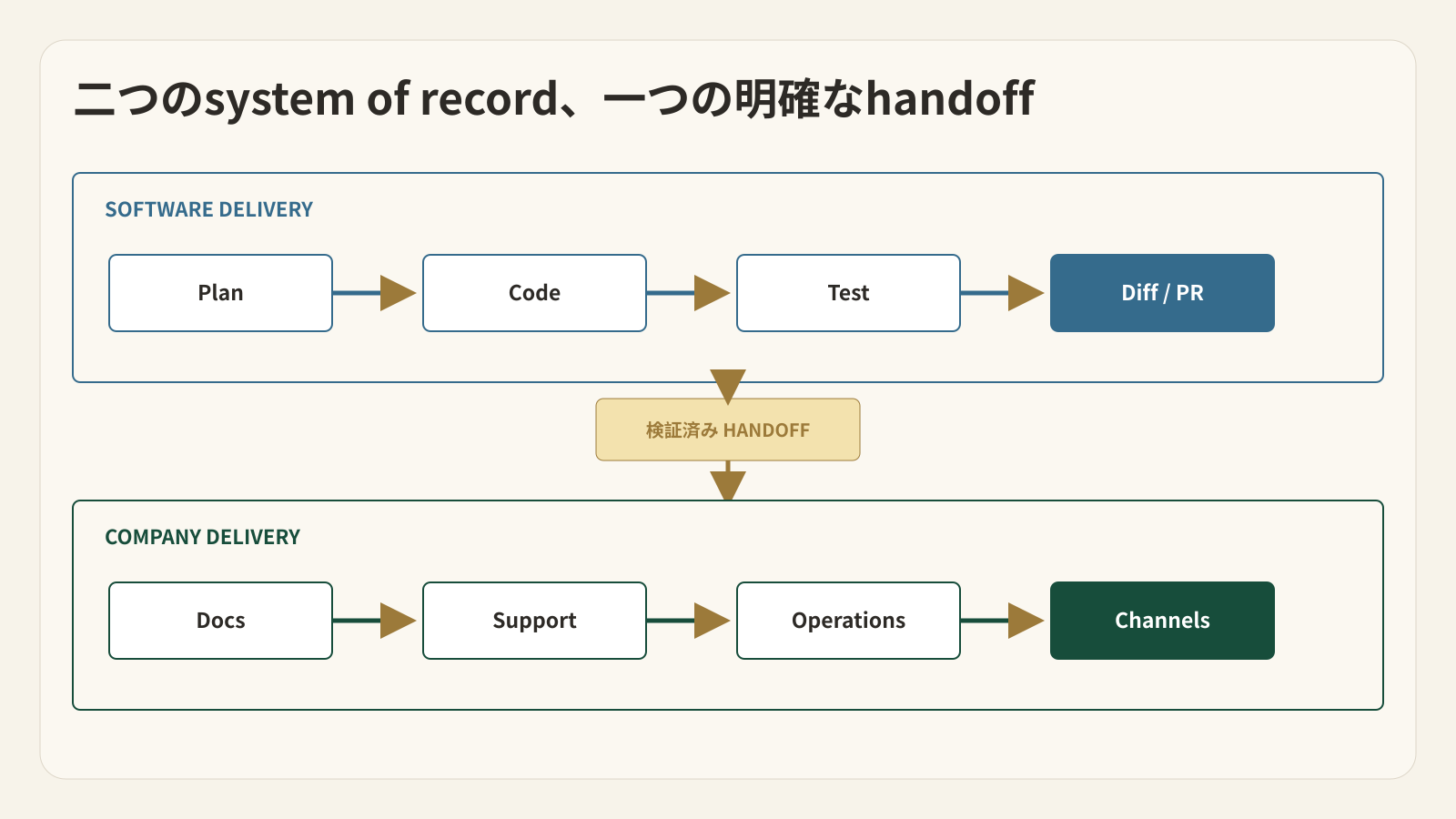
Scenario 3:software deliveryの後にcompany deliveryが続く
Featureはcodeが完成して終わりではありません。Docs、support guide、sales explanation、rollout checklist、monitoring、follow-upが必要です。
ここでは両方を使う価値があります。
Factoryがengineering truth、つまりplan、implementation、tests、diff、PRを所有します。Engineering checkpointを通過したら、verified factsを構造化してBudaへ渡します。Budaのrole-based Agentsがcross-functional artifactsを作り、人のreviewへ進めます。
境界は明示します。Budaは未検証のcode resultを「released」と解釈してはいけません。FactoryもPRが通っただけでcustomer communicationを公開してはいけません。Handoffにはevidence、owner、status、acceptance criteriaが必要です。
両方にhuman reviewがあるが、対象が違う
Factory reviewはsoftware changesに近いものです。Factory Appはdiffとgenerated artifactsをSession横に表示し、Spec Modeはedit前にplanをreviewできます。Autonomyとpolicyがpauseするactionを決め、Missionsがmilestonesとvalidationを見せます。
Buda reviewはAgent task outputとbusiness handoffに近いものです。人はSession、files、browser state、final artifactを確認できます。Agent/Channel permissionsでread-only supportとbroader executionを分け、roleごとのfilesとinstructionsも分離できます。
どちらもaccountabilityを消しません。Review対象がcode diffなのか、business artifactなのか、その両方なのかを決める必要があります。
Factoryが優れる場面
Buyerがengineering organizationで、outcomeがcode changes、tests、reviews、PR、QA、SDLC automationならFactoryが優れます。Developer toolsのcontextをつなぎ、反復的なengineering workをcontrolled automationへ変えるために設計されています。
Enterprise engineering policyが必須なら、command policy、sandbox、model controls、network rules、Hooks、data flow、managed/hybrid/air-gapped deploymentの公開資料も強みです。
Budaが優れる場面
Engineering外のpersistent Agentsを管理し、files、browser tasks、automations、messaging channelsをまたいで仕事を進めるならBudaが優れます。すべてをrepositoryやSDLCの枠へ押し込まず、company rolesとしてAgentsを配置できます。
これはBudaのcodingが深いという主張ではなく、cross-functional operating contextのownerを選ぶ話です。
公平なpilot
一行のcoding promptで比較しないでください。
本物のfeatureと、その後のhandoffを使います。Factoryにはplan、implementation、tests、code reviewを依頼し、accepted code、test evidence、tool calls、elapsed time、reviewer correctionsを測ります。
Verified release factsをBudaへ渡し、複数Agentにdocs update、support brief、rollout checklist、channel announcementを作らせます。Engineering factsが保持され、ownerが明記され、正しいapproval boundaryで止まるかを確認します。
このpilotなら、一つのsystemで足りるのか、二つのsystemのreliable handoffが必要かがわかります。
FAQ
BudaはFactory Droidの直接代替ですか?
通常は違います。Factoryはsoftware-development platform、Budaはbusiness functionsをまたぐpersistent role-based Agent workspaceです。Toolsとcloud executionは重なりますが、system of recordが異なります。
Factory Droidはlocal coding assistantだけですか?
いいえ。App、terminal、IDE、web/mobile review、Slack/issue delegation、persistent Droid Computers、headless execution、multi-agent Missionsを提供します。
Codingにはどちらが向いていますか?
Repository-centered software deliveryならFactoryが強い出発点です。Planning、implementation、tests、diff、worktrees、PR、SDLC automationに特化しています。
FactoryとBudaは一緒に使えますか?
使えます。Factoryがengineering executionとvalidation、Budaがengineering checkpoint後のcross-functional deliveryを担当します。未検証のsummaryではなく、evidenceとstatusを渡してください。