Buda vs Hermes Agent:学習ループを誰が所有するのか
Self-improving Agentとmanaged team workspaceを、再利用、shared context、permissions、reviewで比較します。

Buda vs Hermes Agent:学習ループを誰が所有するのか
Agentが最初のtaskを成功させた後、経験はどこへ行くのでしょうか。Agent自身がMemory/Skillに変えるのか、人がmethodをreviewし、Ownerを決め、team procedureへpromotionするのか。
Hermes AgentとBudaはどちらもpersistent context、tools、schedules、messaging、multi-agent形態を持ちます。判断はlocal対cloudではなく、learning loopのownerと、behaviorをaccepted team practiceにする方法です。
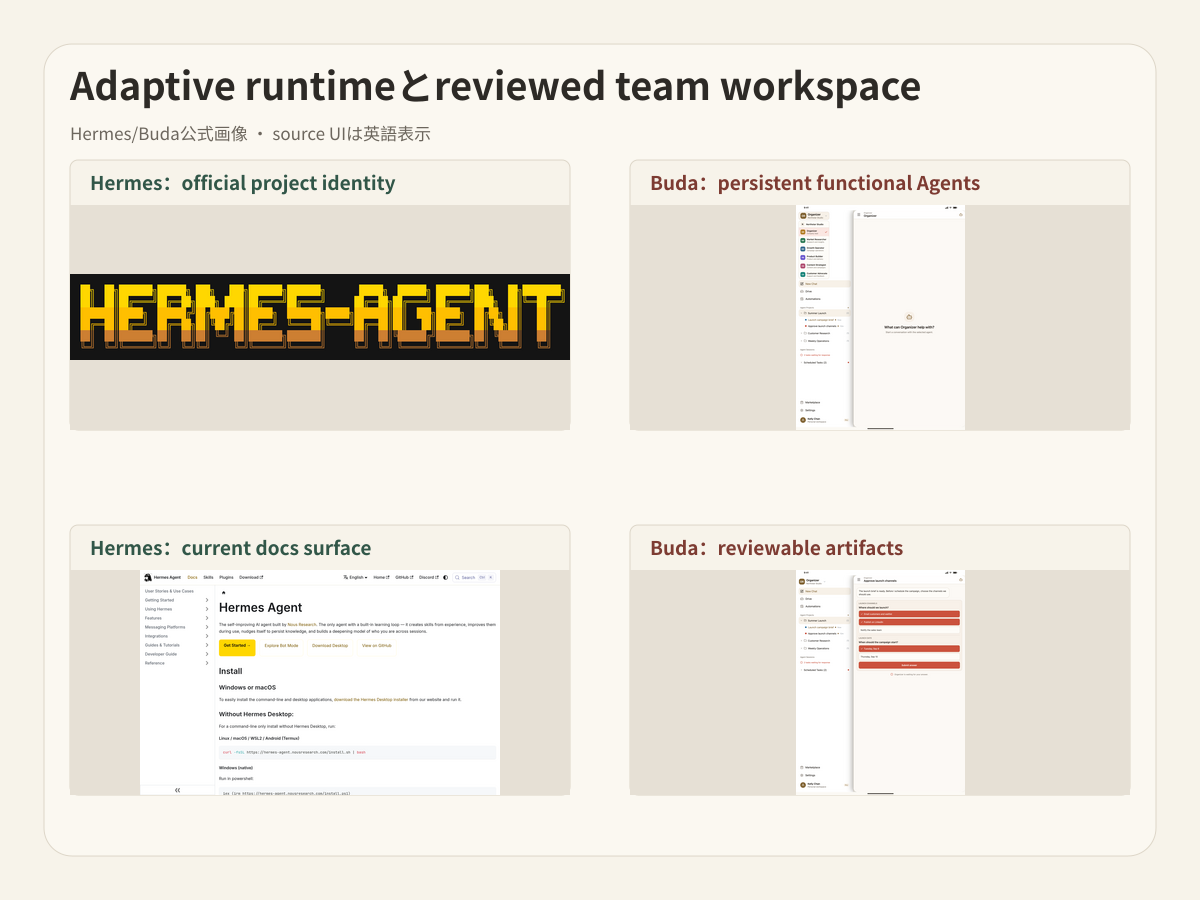
現在のHermes Agent
Hermes AgentはNous Researchのopen self-improving agentです。公式docsはagent-curated memory、knowledge persistence nudge、complex task後のautonomous skill creation、利用中のskill improvement、cross-session search、deepening user modelを説明しています。
Local、Docker、SSH、Singularity、Modal、Daytona、Vercel Sandbox、複数model provider、20以上のmessaging surface、cron、Bot Mode、subagents、MCP、portable Agent Skillsを持ちます。Terminal chatbotやlaptop-only toolではありません。
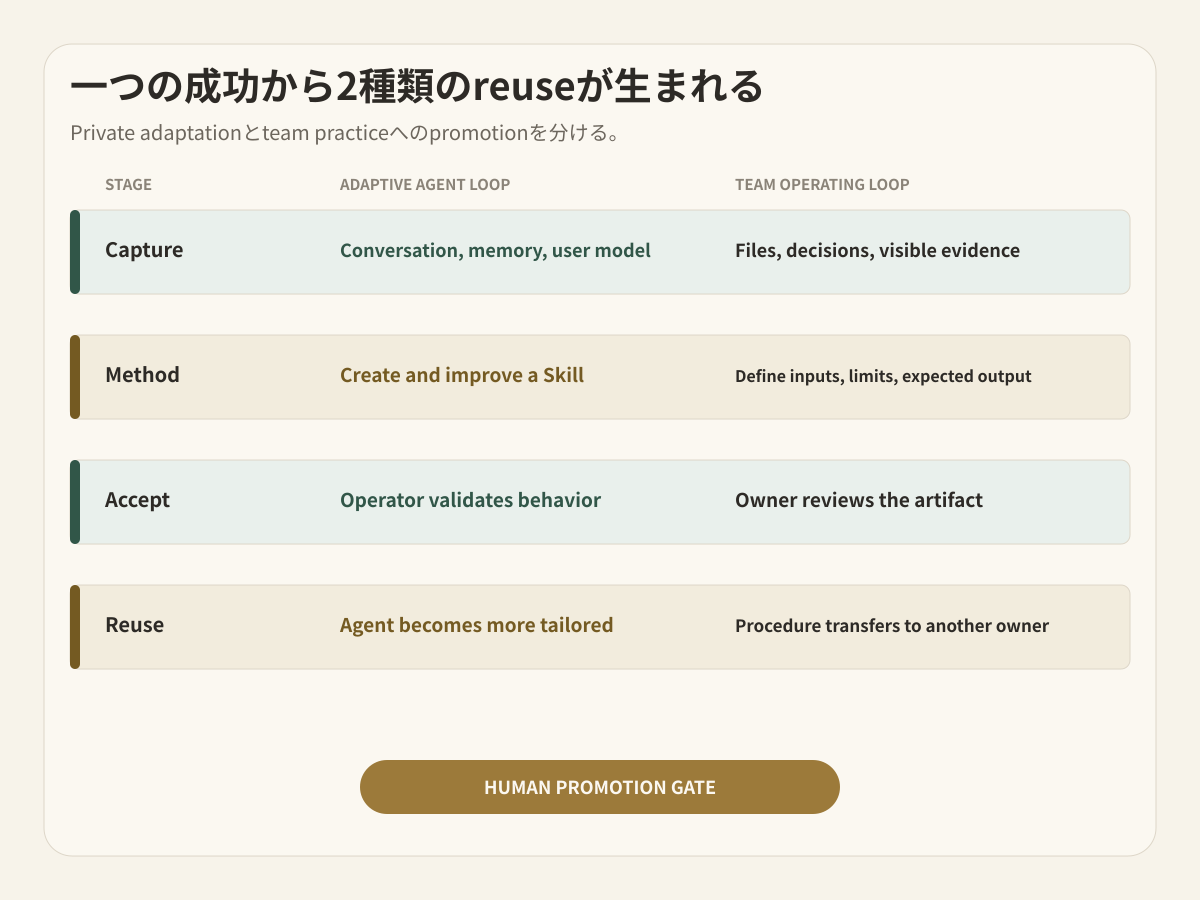
成功runは2種類の価値を作る
Adaptive continuityは一つのAgent environmentに価値を蓄積します。Preferencesを記憶し、Skillを作り、次回さらに改善します。
Organizational continuityはteamに価値を蓄積します。人がsourcesとmethodを受け入れ、Owner、inputs、review pointsを定義し、別のoperatorが安全に再利用します。
Hermesは前者を中心に設計されています。Budaはpersistent Agents、shared Drive、Skills、Automations、Channels、reviewable artifactsで後者を見える形にします。
Learning supply chain
Experience capture
Hermesはconversation、memory、user modelを保持します。Budaはfiles、outputs、decisions、sessions、Browser、Terminal、Git、artifactsをpersistent workspaceに置きます。
Procedure formation
HermesはSkillを自律作成し利用中に改善できます。Buda Skillsは人がinspect/install/maintainする明示的procedureで、毎回のautonomous rewriteを主張しません。
Execution ownership
Hermes operatorはruntime、provider、credentials、gateway、security、updatesを管理します。Budaはisolated cloud Agent workspaceを管理し、teamはhostを保守しません。
Team promotion
Personal Agentの成功behaviorはcompany policyではありません。Evidence、Owner、permissions、reviewer、accepted outputが必要です。Budaではbrief、report、draft、table、CRM update、PR noteがreview objectになります。
Bot ModeとTeam Workspace
Hermes Bot Modeはmodel、memory、skills、routines、chatsを持つnamed Botsを支援し、subagentsもparallel workを行います。Hermesをsingle-agentと説明するのは誤りです。
Hermesはoperator-owned runtimeでadaptive Botsを組み立てます。Budaはshared Spaceでpersistent functional Agents、team-visible files、sessions、artifactsを管理します。
4つの状況
Technical operatorのpersonal operating system
Model/backend/gatewayを管理し、Memory、self-created Skills、Shell、MCP、Cronを求めるならHermesがdirect fitです。
Messagingからpersistent Agentへ依頼
VPS/serverlessで稼働し、TelegramやSlackから受け付ける。Hermesはremote executionを持つため、cloud accessだけではBudaへの変更理由になりません。
Cross-functional recurring procedure
Research、Operations、Content、Sales、Supportをまたぎ、approved sourcesを共有し、Managerがartifactを受け入れるならBudaが自然です。
Experimentからstandardへ
Hermesでmethodを試し、人がevidenceをacceptした後、inputs、constraints、output、ownerを定義してBudaにteam procedureを別実装します。Private memoryをcompany processへ自動promotionしてはいけません。
| Decision | Hermes Agent | Buda |
|---|---|---|
| Reuse | Memory + self-improving Skills | Explicit Skills + Files + Automations |
| Runtime | Operator-managed multi-backend | Managed isolated cloud workspace |
| Multi-agent | Bot Mode + subagents | Functional Agents in shared Space |
| Context owner | Operator/Hermes runtime | Team Space/Agent sessions/Drive |
| Review | Commands、behavior、result | Visible artifact |
Security controlとartifact review
Hermesにはcommand approval、authorization、container isolation、pairingがあります。これらはexecution riskを制御します。Teamはさらにresultをacceptできるか判断します。Budaはその判断をartifact reviewとして見える形にします。
Learning model FAQ
Hermesはlocalだけですか?
いいえ。Local、Docker、SSH、Singularity、Modal、Daytona、Vercel Sandboxがあります。
Single-agentですか?
いいえ。Bot Modeとsubagentsがあります。
Budaもautonomous self-improvementをしますか?
その主張ではありません。PeopleがSkills、Automations、reviewを通じてreuseを管理します。
Second owner test
一つのworkflowを同じoperatorが数回実行し、accepted procedure/source packetを別のresponsible ownerに渡します。Context reconstruction、inspectability、permission transfer、artifact acceptanceを測定します。
Buda AI Agent Workspace、Featured Agents、Skills Marketplace、Buda Docsを確認してください。