ChatGPT Alternative:Projectではなく反復Team Operationが必要なとき
ChatGPT Projectsは共同作業のcontextを保ちます。専用Agent、schedule、tools、reviewable outputが必要な反復operationではBudaがalternativeになります。

ChatGPT Alternative:Projectではなく反復Team Operationが必要なとき
ChatGPT Projectsは、files、instructions、tools、memory、shared contextをまとめる便利な方法です。Teamが一つのtopicについて考え、researchし、draftし、共同作業することが中心なら、Projectで十分な場合があります。
要件がcontextの維持からoperationの実行へ変わると、Budaがより適切なChatGPT alternativeになります。Dedicated agents、persistent workspaces、recurring schedules、team channels、execution tools、visible artifacts、defined human reviewを必要とする場面です。
Weekly market briefで差が見える
毎週月曜日にcompetitor changes、source links、implications、unanswered questions、recommended actionsを含むmarket-intelligence briefが必要だとします。
Conversational Projectでは、人が資料を集め、analysisを求め、回答を調整し、contextを残せます。これは有用です。一方、trigger、sequence、failure handling、accepted briefの保存場所は、まだ人が管理します。
Operating workflowにはさらに次が必要です。
- Promptを作り直さずscheduleで実行する。
- Collection、verification、synthesisを別Agentへ割り当てる。
- Downloaded evidenceとintermediate filesを残す。
- Source failureを隠さず表示する。
- Completed briefをReviewerへ渡す。
- Accepted artifactを翌週の比較に使う。
ChatGPT Projectsがすでに解決すること
Projectsはchats、uploaded files、project instructions、memory、toolsをまとめます。Shared projectsは共同contextも提供します。人が対話的に進めるongoing research、writing、planningに適しています。
Budaの価値を「ChatGPTは毎回すべて忘れる」「fileを扱えない」という古い説明に置くべきではありません。分岐点は、豊かなconversation containerが必要なのか、named operatorsとrepeatable lifecycleが必要なのかです。
Briefをoperationへ変える
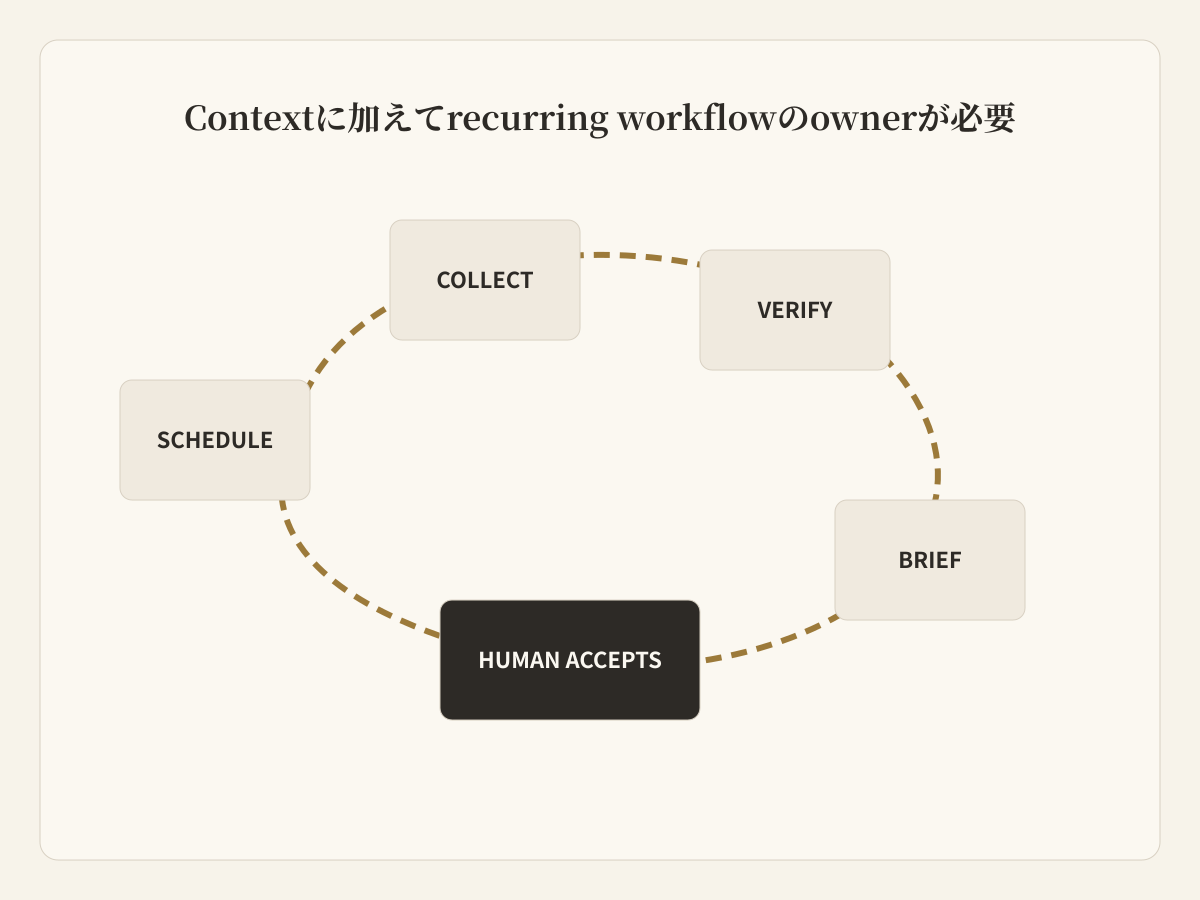
Budaでは同じmarket briefを専用Agentと明示的stageで構成できます。
- Monitoring Agentがapproved sourcesをscheduleで収集する。
- Verification Agentがdate、primary evidence、contradictionを確認する。
- Analyst Agentがcitation付きstructured draftを作る。
- Humanがconclusionとrequested actionをreviewする。
- Accepted reportをteam workspaceに残し、翌週比較する。
Browser、terminal、files、Git、Skills、Channels、Automationsがexecution environmentを構成します。Humanを外すのではなく、human judgmentを毎回taskを再起動する仕組みからacceptance stepへ移します。
三段階の選択
通常のChatGPT chat
Ad hoc question、exploration、rewrite、analysisの価値がconversation内で完了する場合。
ChatGPT Project
複数chatで同じfilesとinstructionsを使い、collaboratorsがshared contextを必要とし、人が継続して対話的に指示する場合。
Buda
Dedicated agents、persistent execution environment、scheduleまたはchannel trigger、reusable procedure、retained artifact、explicit reviewerが必要な場合。
これは一方が常に上位というmaturity ladderではなく、operating requirementの違いです。
False comparisonを防ぐ四つの質問
- 誰が開始するか。 人がconversationを開くのか、scheduleやchannel eventか。
- 未完成workはどこにあるか。 Chat context、shared Project、agent workspaceか。
- Completionとは何か。 Helpful answer、file、verified report、approved changeか。
- 誰がacceptするか。 Chatしている人、named reviewer、team workflowか。
Model listの比較より、この回答のほうが重要です。両方とも強いAIを利用できます。良いresponseを超えてworkを残すのはoperating modelです。
曖昧なprocessを自動化しない
Recurring executionは曖昧さを増幅します。Schedule前にapproved sources、failure behavior、output format、reviewer、confirmationなしで禁止するactionを定義します。Persistent Agentは責任を消すのではなく、accountabilityをinspectionしやすくすべきです。
最初のworkflow
Market brief、content review queue、support summary、release check、operations reportなど、毎週繰り返し具体的artifactを作るprocessを一つ選びます。一度manual runし、accepted stepsをSkillとしてdocumentし、inputとfailure ruleが明確な部分だけをscheduleします。
最適化するのは「AI activityの量」ではなく、人がreview、accept、reuseできるreliable artifactです。