Claude Opus 4.8 と Agent 管理:最強モデルだけではもう足りない
Claude Opus 4.8 は coding、agentic tasks、browser use、dynamic workflows を改善。重要なのは、モデル選択から Agent 管理への移行です。

Anthropic released Claude Opus 4.8. It is stronger across coding, agentic tasks, reasoning, browser use, and long-running workflows. It is also available at the same regular price as Opus 4.7, with a cheaper fast mode.
That is the model news.
The more interesting product signal is different: as models get stronger, the hard part shifts from choosing the best model to managing what agents do with it.
Claude Opus 4.8 is a good model release. But the long-term question is not only “is it the strongest model?”
The question is: when strong agents can run in parallel, how do humans manage the work?
What happened
Anthropic describes Opus 4.8 as a “modest but tangible improvement” over Opus 4.7. The phrasing is unusually grounded for an AI launch, and it matters.
The release includes several concrete updates:
- stronger performance across coding, agentic skills, reasoning, and practical knowledge work;
- improved honesty, with Anthropic saying Opus 4.8 is more likely to flag uncertainty and less likely to make unsupported claims;
- effort controls in claude.ai and Claude Cowork;
- Messages API support for system entries inside the messages array, allowing developers to update instructions mid-task;
- and Claude Code dynamic workflows, a research preview that lets Claude plan work, run many parallel subagents in one session, verify outputs, and report back.
The last item is the clearest signal.
Dynamic workflows are not just about one model answering better. They point toward a work pattern where one agent plans, many subagents execute, and the system verifies before returning to the human.
Why it matters
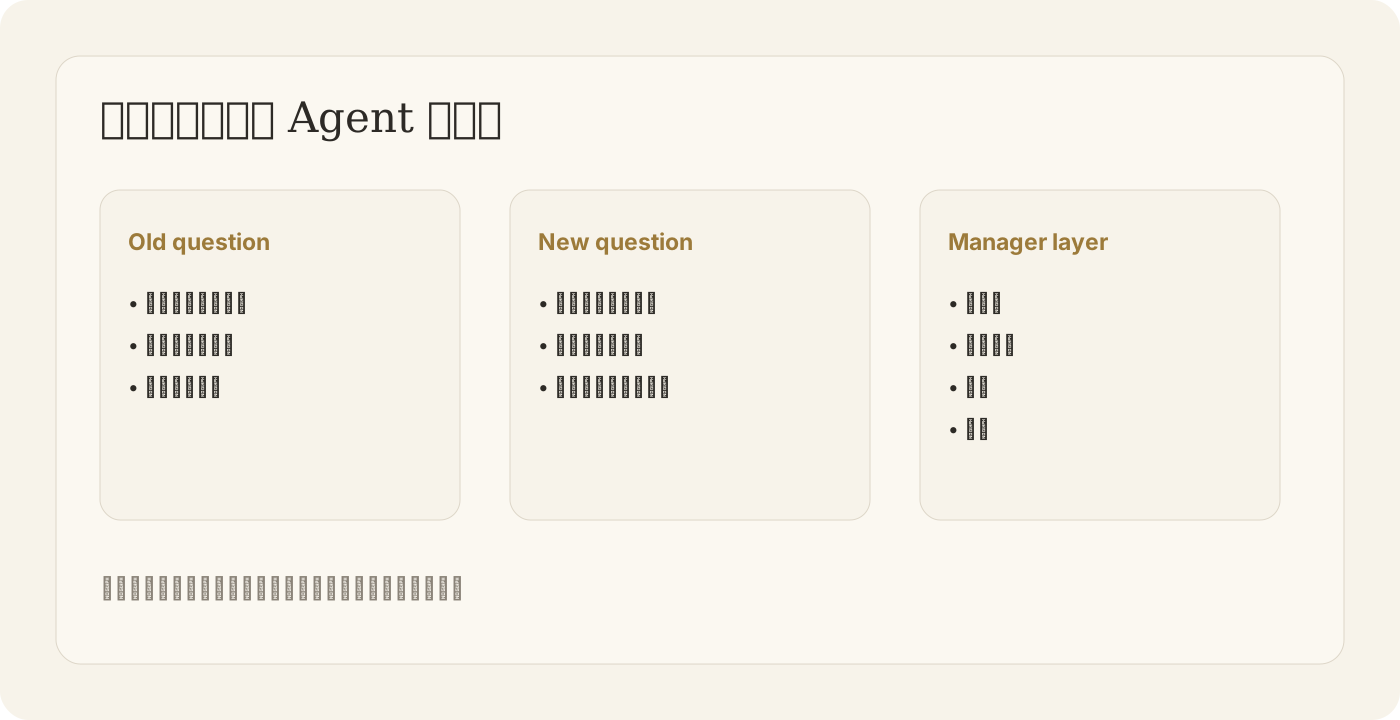
For the past few years, the main AI question was model selection.
Which model is best? Which one ranks highest? Which one writes code better? Which one is cheaper?
Those questions still matter. But they are becoming less complete.
Once many models cross a useful threshold, the competitive edge shifts. It moves toward workflow design, context management, tool access, review quality, and the user interface for supervising multiple tasks.
A stronger model does not remove management. It creates more work that needs to be managed.
If one agent can finish a task, five agents can finish five tasks. That sounds like a productivity win. It is also a review problem.
The bottleneck moves.
The review bottleneck
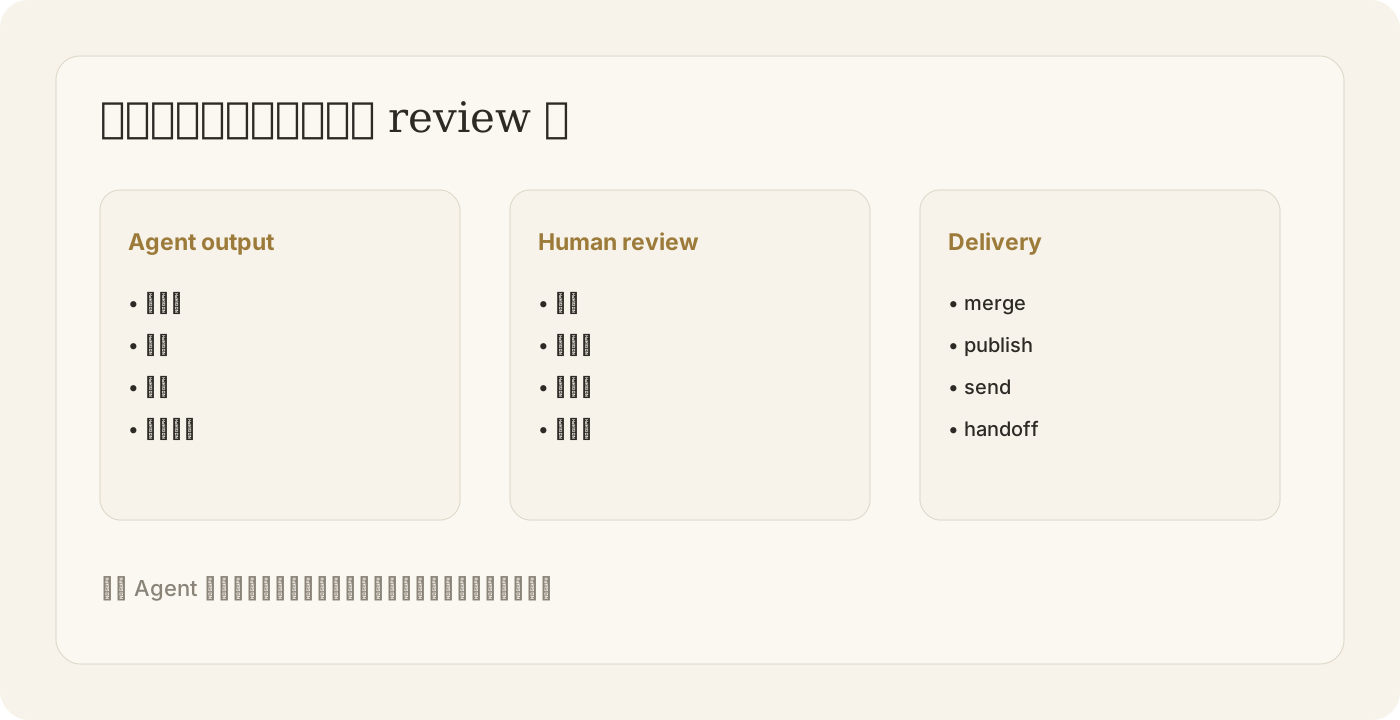
When AI execution was slow and unreliable, the scarce resource was generation. People waited for the model to produce something usable.
When AI execution becomes fast and parallel, the scarce resource becomes judgment.
Can you review the code? Can you verify the research? Can you detect hallucinations? Can you decide whether five outputs fit into one deliverable? Can your teammate take over the session and understand what happened?
This is the under-discussed cost of stronger agents.
Execution gets cheaper. Acceptance gets more expensive.
What teams should do next
1. Stop treating model choice as the whole strategy
A strong model is necessary, but it is not the operating system for work.
Teams need to decide how tasks are created, split, monitored, reviewed, and handed off. The model is one part of that system.
2. Define acceptance criteria before running agents
The faster agents work, the more important acceptance criteria become.
Before launching a coding agent, define the tests, diff boundaries, migration plan, and rollback path. Before launching a research agent, define sources, confidence standards, and what counts as unsupported.
3. Build a management layer for parallel work
Parallel agents need visibility. Humans need to know who is doing what, what context each agent has, what outputs were produced, and where review is required.
Without that layer, teams get a pile of outputs instead of a finished deliverable.
How this connects to Buda
Buda is built for the management layer of agent work.
The Agent Workspace gives humans a place to supervise sessions, files, terminal work, browser work, and artifacts. Drive stores context. Skills package reusable methods. Sandboxed execution gives agents room to work without taking over the human machine. Channels bring results and review requests back to the places where teams already communicate.
The goal is not to hide the agent.
The goal is to make agent work visible, reviewable, and manageable.
Claude Opus 4.8 is also available in Buda, so teams can try the new model inside a managed agent workspace instead of treating it as another isolated chat window.
Claude Opus 4.8 shows that the strongest models are still getting stronger. But the product question is moving. The next advantage is not only who has the smartest model. It is who can organize strong agents into reliable work.
Build your first managed agent workflow at buda.im, or read more about the Buda Agent Workspace.