Hugging Face Agent 用語集:Agent 時代に共有言語が必要な理由
Hugging Face が AI Agent 用語集を公開。重要なのは、曖昧な自律性ではなく精密な共有言語が必要になったことです。

Hugging Face published “Harness, Scaffold, and the AI Agent Terms Worth Getting Right” on May 25, 2026. It is framed as a glossary, but the more important signal is cultural.
The AI agent field is growing fast enough that teams now need shared language.
That may sound small. It is not.
When people use the same word to mean different things, product discussions get blurry. Architecture reviews slow down. Teams argue about “agents” while actually talking about models, tools, runtime loops, memory, permissions, or evaluation.
A glossary is not just educational content. In a maturing category, vocabulary becomes infrastructure.
What happened
The Hugging Face post defines terms that are often mixed together in agent conversations: model, scaffolding, harness, agent, context engineering, policy, tool use, skills, sub-agents, RL environment, trainer, rollout, and reward.
The piece is careful not to claim final authority. It says many definitions are not universally accepted yet. That is exactly the point.
Agent products are still young. The language is still settling.
But the direction is clear: people are moving away from vague claims like “autonomous AI” and toward more specific system parts. A model is not an agent. A tool is not a skill. A harness is not the same thing as a prompt. Context engineering is not just “paste more files into the chat.”
Why shared language matters
Agent work is collaborative. It involves product managers, engineers, operators, security teams, and reviewers.
If each group defines “agent” differently, the system becomes hard to manage.
For example:
- If “agent” only means “model,” teams underestimate execution risk.
- If “memory” means “chat history,” teams miss long-term knowledge design.
- If “tool use” and “skill” are treated as the same thing, teams cannot separate one action from a reusable method.
- If “autonomy” has no boundary, nobody knows where human review belongs.
Better words do not solve all of this. But they give teams handles.
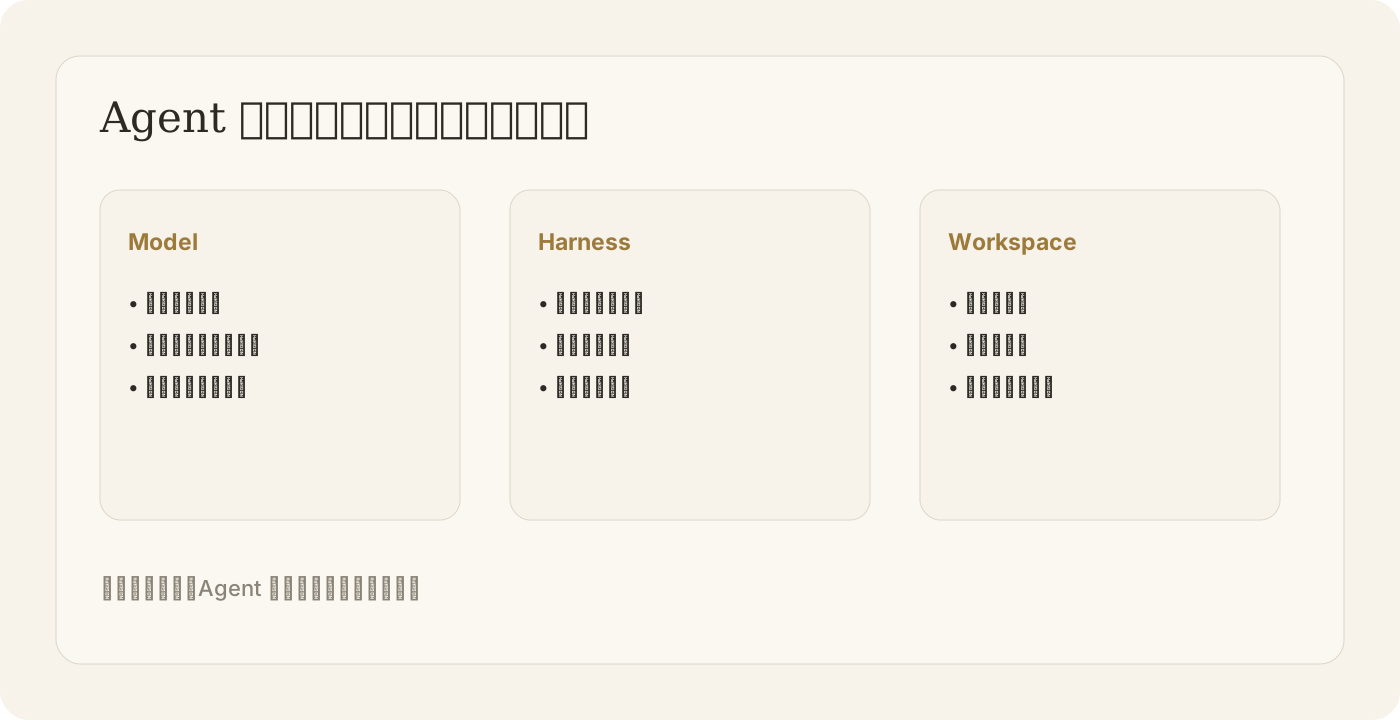
A precise vocabulary lets a team say: this belongs in the model, this belongs in the harness, this belongs in the workspace, and this must stay with the human reviewer.
What teams should do next
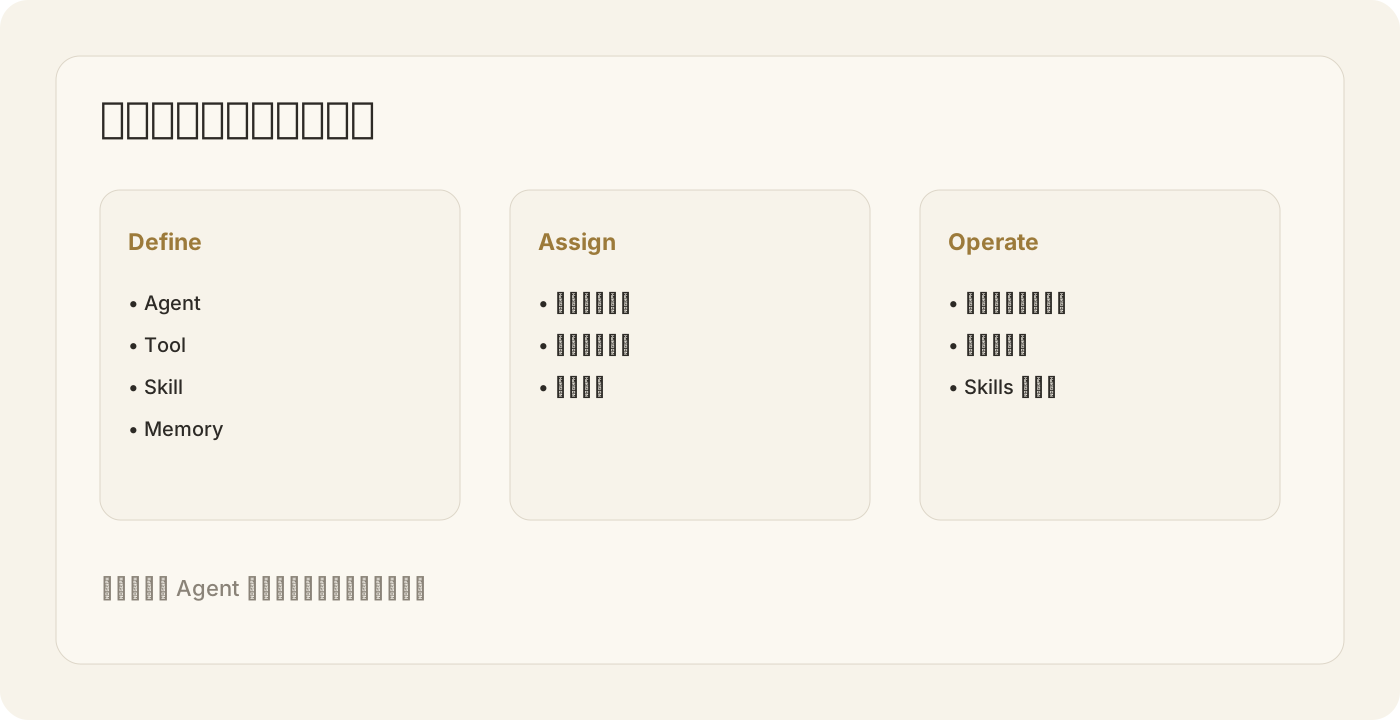
1. Define the words before defining the roadmap
Before a team says “we need agents,” it should define what it means by agent.
Is the team buying a model? Building a harness? Creating skills? Connecting tools? Managing memory? Adding a review layer?
Those are different projects.
2. Separate model quality from system quality
A better model can improve the experience. But agent reliability often comes from the system around the model: the harness, context management, tool routing, permissions, sandboxing, and review loops.
This distinction matters because most failures in real agent work are not simply model failures. They are handoff failures, context failures, execution failures, or review failures.
3. Turn terms into operating rules
A glossary becomes useful when it changes how work is managed.
Teams should translate terms into rules:
- What counts as a skill?
- Which tools can an agent call without approval?
- What context is persistent?
- Who can update memory?
- When does a sub-agent need human review?
- What evidence must be kept after execution?
How this connects to Buda
Buda is built around the practical side of these terms.
Drive is not just storage; it is persistent context. Skills are not just prompts; they are reusable methods for multi-step work. The sandbox is not a detail; it is the execution boundary. Sessions are not just chat logs; they are task history. Channels are not just notifications; they are where human review and handoff happen.
This is why shared language matters. It lets teams manage agents instead of mystifying them.
The future of AI work is not a single magic model. It is a system where humans define goals, agents execute tasks, tools are governed, context is managed, and review happens at the right moment.
Good vocabulary does not make the work automatic.
It makes the work manageable.
Build your first managed agent workflow at buda.im, or read more about the Buda Agent Workspace.