Microsoft CEO Satya Nadella の AI 警告:企業は二度支払っているかもしれない
Microsoft CEO Satya Nadella は、企業が AI に money で支払い、さらに proprietary knowledge でも支払っている可能性を指摘しました。問題は prompts、tool use、corrections、approvals から生まれる AI data exhaust です。

多くの企業は、AI の見える cost を理解しています。Tokens、API calls、seats、model subscriptions です。
Microsoft CEO Satya Nadella の warning は、もう一つの cost についてです。
TechCrunch が報じた内容によると、Microsoft CEO Satya Nadella は AI users が intelligence に二度支払っている可能性を指摘しました。一度目は money。二度目は、その intelligence を useful にするために明かす proprietary knowledge です。
この二度目の payment は invoice には出ません。Prompts、tool calls、employee corrections、approval decisions、そして team が毎日 AI を使う中で生まれる business judgment に現れます。
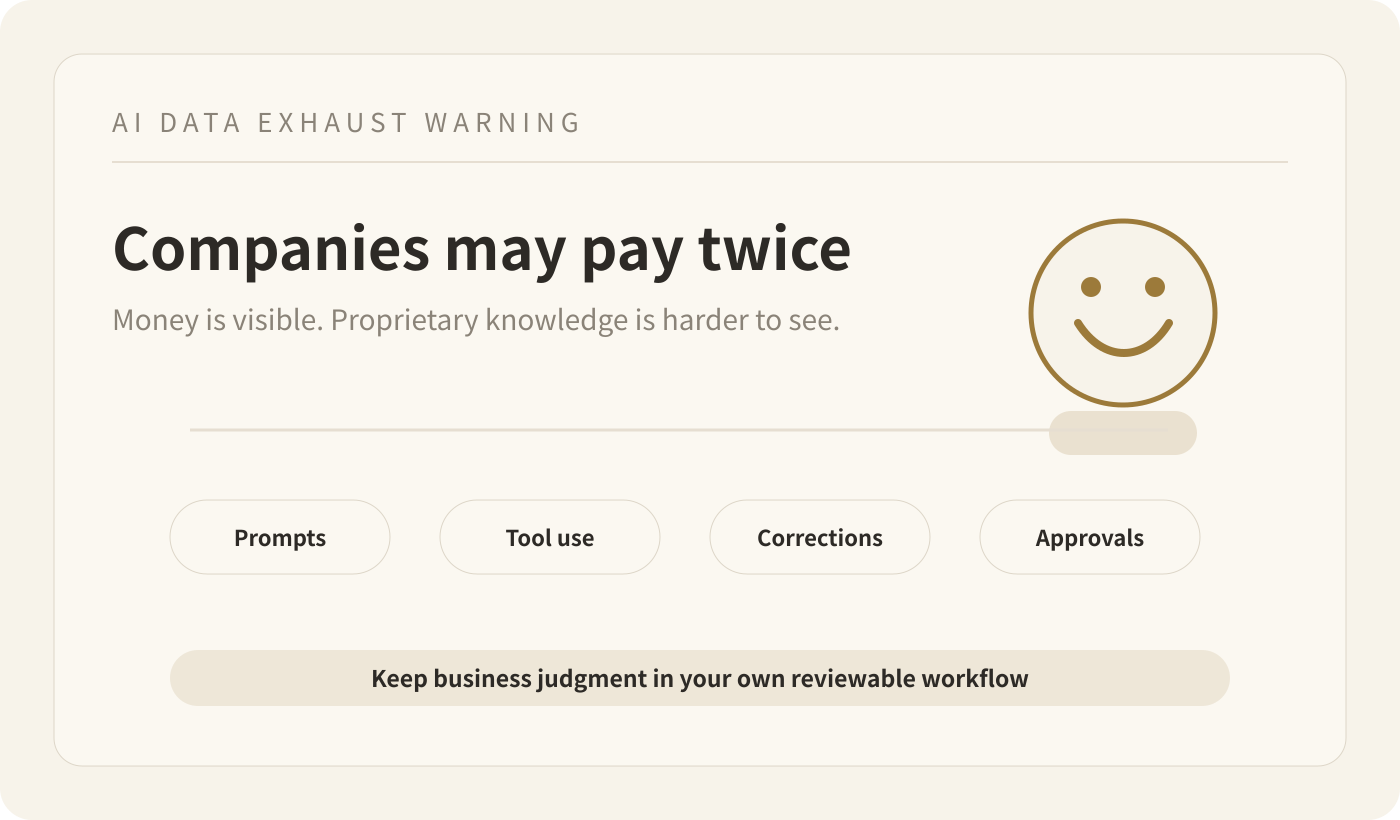
AI Data Exhaust とは何か
AI data exhaust は、企業が AI を使う過程で残す trail です。
含まれるものは次のようなものです。
- customers、workflows、pricing logic、product constraints、internal context を説明する prompts;
- agent が呼び出した tools と触れた systems;
- model が間違えたときの employee corrections;
- business rules を示す approvals、rejections、edits;
- company が何を good、risky、urgent、wrong と判断するかの repeated patterns。
最も価値があるのは prompt そのものではなく correction であることが多い。
Salesperson が AI に「この lead は qualified ではない」と伝えるなら、それは business judgment です。Finance manager が invoice exception を修正するなら、それは institutional knowledge です。Operator が customer note の tone を直すなら、company know-how が machine-readable feedback になっています。
Hidden Bill は Company Learning である
企業は AI を使うとき、intelligence を消費するだけではありません。Intelligence も作っています。
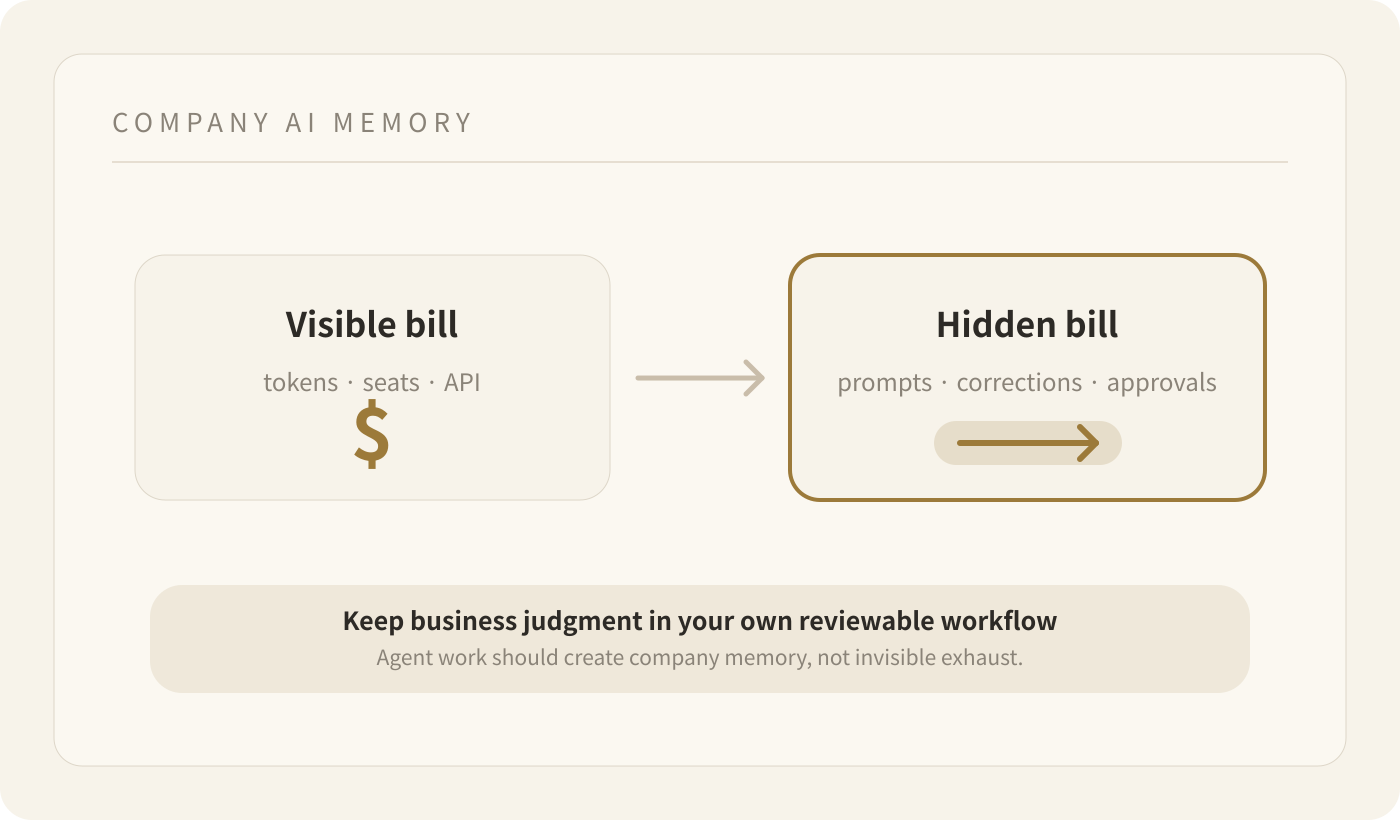
これが business issue の中心です。Prompts、corrections、approvals、tool traces が external model provider や scattered SaaS logs にしか残らないなら、企業は他社の system を学習させながら、自社の learning environment を作れていない可能性があります。
Risk は privacy だけではありません。Ownership です。
企業は AI access に支払い、AI を有用にする proprietary context を明かし、その corrections を自社の reusable memory に変える機会を失うかもしれません。
これは AI を使うなという話ではない
答えは、強い external models を使うのをやめることではありません。
実務的な答えは、company learning layer を company control の下に置くことです。
つまり次のことです。
- important business context を owned systems に残す;
- すべてを一つの provider に固定せず、models を route できるようにする;
- employee corrections と approvals を company records として保存する;
- AI-proposed changes が official systems に入る前に review する;
- agent actions を visible and auditable にする。
Models は変わります。Vendors も変わります。Company judgment layer は、他社の black box に消えるべきではありません。
Buda がこの問題に向いている理由
Buda は、context、execution、human review が同時に必要な agent work のために作られています。
AI Agent Workspace は chat surface だけであるべきではありません。Files、tools、sessions、channels、model routing、approvals、reusable Skills を管理できる場所であるべきです。Agent が records、drafts、reports、operational changes を準備するとき、その work は official になる前に visible である必要があります。
Microsoft CEO Satya Nadella の warning と直接つながるのはここです。問題は「どの model が賢いか」だけではありません。
AI task が終わったあと、prompt、correction、approval、final business decision はどこに残るのか。
Chat history に消えるなら、企業は learning を失います。Reviewable workflow records になるなら、企業は memory を作ります。
AI を広げる前に managers が問うべきこと
AI をより多くの workflows に入れる前に、managers は少なくとも四つの質問をすべきです。
- Employees はどの proprietary knowledge を AI systems に入れているか。
- Employee corrections は reusable knowledge として company に戻っているか。
- AI output が customer、finance、HR、product、knowledge systems に入る前に誰が review するか。
- Company は workflow memory を失わずに models や vendors を切り替えられるか。
これは哲学ではなく operations の問題です。
有用な AI strategy は model selection だけではありません。Data ownership、review design、model routing、workflow memory です。
Buda dashboard で managed agent workflows を始めるか、Buda Agent Workspace を読んでください。