OpenAI Codex Sites: Why AI Agents Are Moving from Code Generation to Workbench Creation
Codex Sites shows AI agents moving from code output to generated workspaces.

OpenAI updated Codex with a broader enterprise workflow direction: Codex for every role, tool, and workflow. Alongside role-specific plugins and annotation workflows, OpenAI also introduced Sites in preview for the Codex app.
This is easy to misread as an AI website builder.
It is more interesting than that.
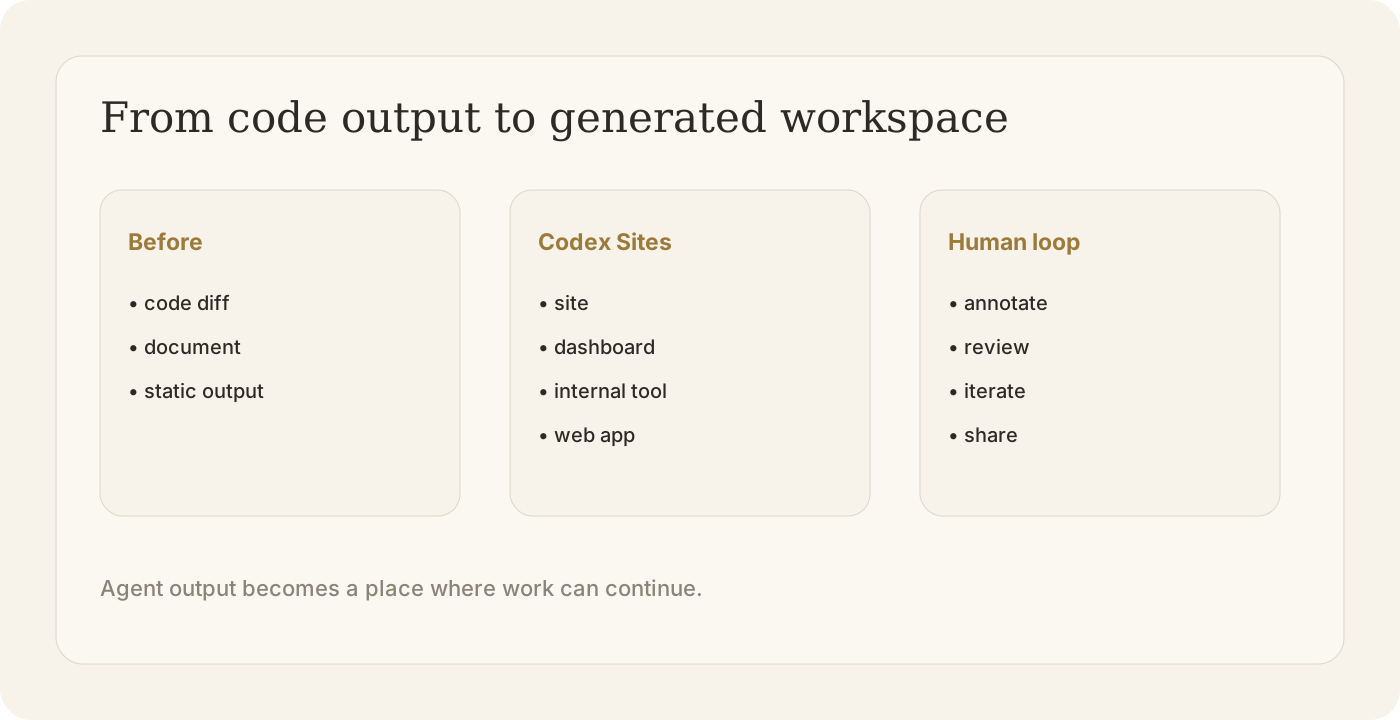
Codex Sites points to a future where AI agents do not only generate text, images, or code. They generate working spaces: dashboards, review hubs, planners, internal tools, web apps, and lightweight software surfaces that teams can share and iterate on.
In other words, AI output is becoming a workspace.
What OpenAI released
OpenAI’s Codex changelog describes Sites as a plugin for creating, saving, deploying, and inspecting websites, dashboards, internal tools, web apps, and games hosted by OpenAI.
The update also matters because of the surrounding pieces:
- role-specific plugins for enterprise workflows;
- Sites for shareable interactive work surfaces;
- annotations that let humans point at a page, document, spreadsheet, slide, or web UI and ask Codex to revise a specific area;
- hosted environment variables and secrets;
- default availability for ChatGPT Business workspaces;
- role-based access control for Enterprise administrators.
Taken together, this is not just “AI makes a webpage.”
It is a workflow pattern:
Plugins connect tools. Sites generate the workbench. Annotations let humans review and iterate.
Why Sites is not just website generation
The important word is not “site.”
The important word is “workbench.”
A team may need a customer review workspace, a financial scenario planner, a product launch hub, a project dashboard, a creative brief gallery, or a lightweight support tool. Historically, those needs were scattered across spreadsheets, docs, slides, dashboards, project management tools, and meetings.
People were not only doing the work. They were carrying context between tools.
Codex Sites suggests a different pattern: for a specific task, an agent can generate a just-enough interface where the work can continue.
A customer review becomes a review workspace.
A launch plan becomes a launch hub.
A financial comparison becomes a scenario planner.
A project update becomes a project board.
This is not traditional website building. It is task-specific software generation.
Why this matters for SaaS
This does not mean mature SaaS products disappear.
Systems like Salesforce, Figma, Tableau, HubSpot, Slack, and Databricks have deep value in data, permissions, ecosystem, compliance, integrations, and organizational trust.
But a different layer is exposed.
Many lightweight, temporary, project-specific SaaS functions exist mostly because teams need a usable interface around a specific workflow. If an AI agent can read the context, connect to tools, generate the interface, accept annotations, and iterate, some of those needs may no longer require buying or configuring a long-term product.
They become closer to:
one task, one generated tool.
That does not make software worthless. It changes where the value is.
The moat moves away from shallow UI and fixed workflow templates. It moves toward data, permissions, workflow depth, compliance, ecosystem integration, and trust.
The new problem: too many AI workbenches
Generated workspaces sound useful. They also create a management problem.
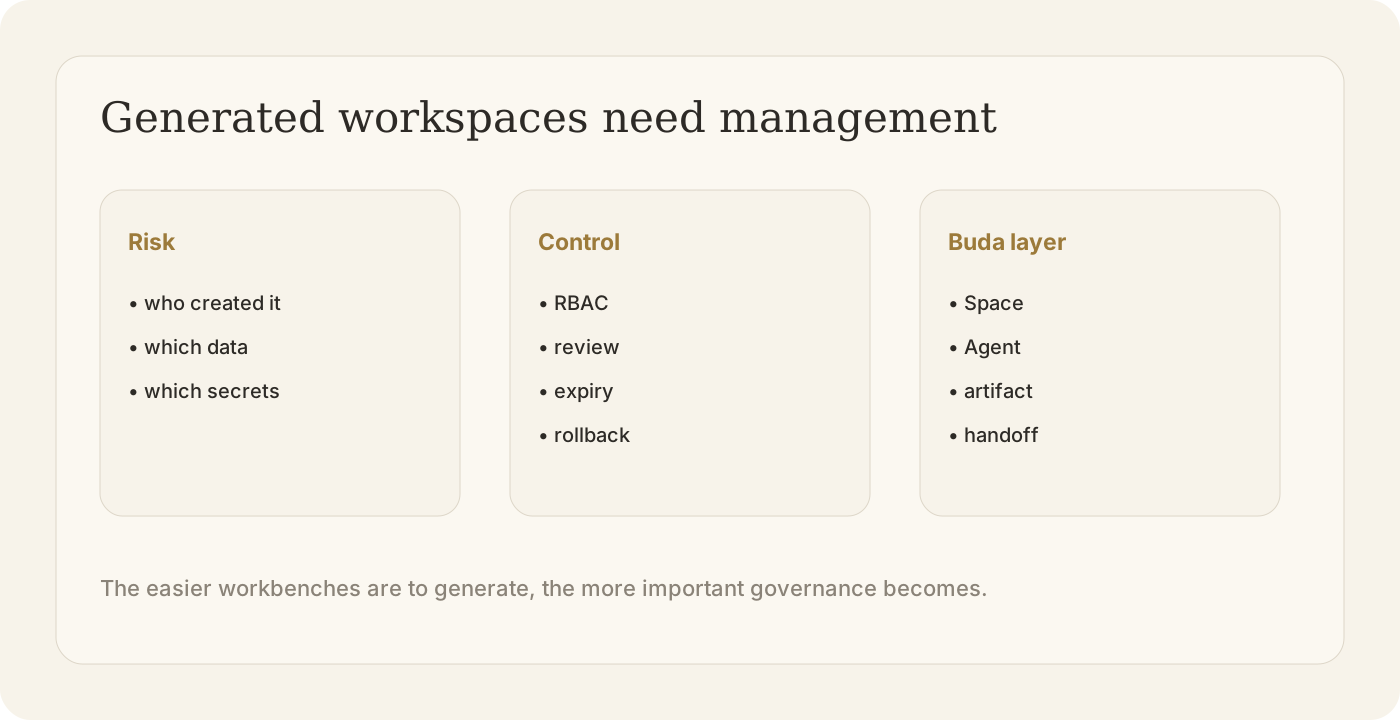
If every agent can create a new site, app, dashboard, workflow, or internal tool, companies will need answers to questions like:
- Who generated this workspace?
- Which data did it use?
- Which secrets or environment variables does it depend on?
- Who reviewed the output?
- Is the workspace still current?
- What happens when the project ends?
- Can another teammate or agent take over?
- How does the work return to the organization’s shared context?
Without answers, AI-generated workspaces become a new kind of information silo.
Traditional SaaS silos are at least relatively stable. Generated workspaces are fluid. They can appear, change, fork, and expire quickly.
That is why the management layer becomes more important as agents become more productive.
How this connects to Buda
Buda’s view is simple:
Codex Sites makes agent output deployable. Buda makes agent work manageable.
Codex is turning agents into software builders. Buda is focused on the organizational layer around agents: where they work, what context they use, how humans review their outputs, and how multiple agents collaborate inside a shared workspace.
Buda is not trying to be another fixed SaaS interface that every team must adapt to.
Buda is built for an AI-native organization where:
- a Space contains teams, projects, files, and agents;
- agents can execute tasks, generate files, operate browsers, use terminals, and produce artifacts;
- humans can review, annotate, approve, and take over;
- outputs are not lost as scattered links;
- work returns to a shared organizational context.
The future of enterprise collaboration may not be “buy one more SaaS tool.”
It may be: generate the right work surface for the task, then manage it inside a human-led agent workspace.
OpenAI Codex Sites shows the first part: workbenches can be generated.
Buda is building for the second part: generated agent work must be governed, reviewed, and connected back to human intent.
Start building human-led agent workflows at buda.im, or learn more about the Buda Agent Workspace.