A Ascensão da Empresa Agêntica: Por Que Agentes SaaS em Silos Precisam de um Workspace Unificado
Enquanto ServiceNow e Salesforce lançam seus próprios agentes de IA, as empresas enfrentam uma nova crise: Silos de Agentes. Descubra por que a Empresa Agêntica exige um Team Agent Workspace unificado.

The enterprise software landscape is undergoing a massive tectonic shift. Recently, ServiceNow expanded its vision for the "Agentic Enterprise," announcing that its AI platform will govern and execute autonomous workflows not just within its own ecosystem, but across AWS, Azure, SAP, Oracle, and Workday.
This announcement highlights a critical reality: We are moving from the era of "Copilots" to the era of autonomous execution. But it also exposes the next great enterprise IT crisis—Agent Silos.
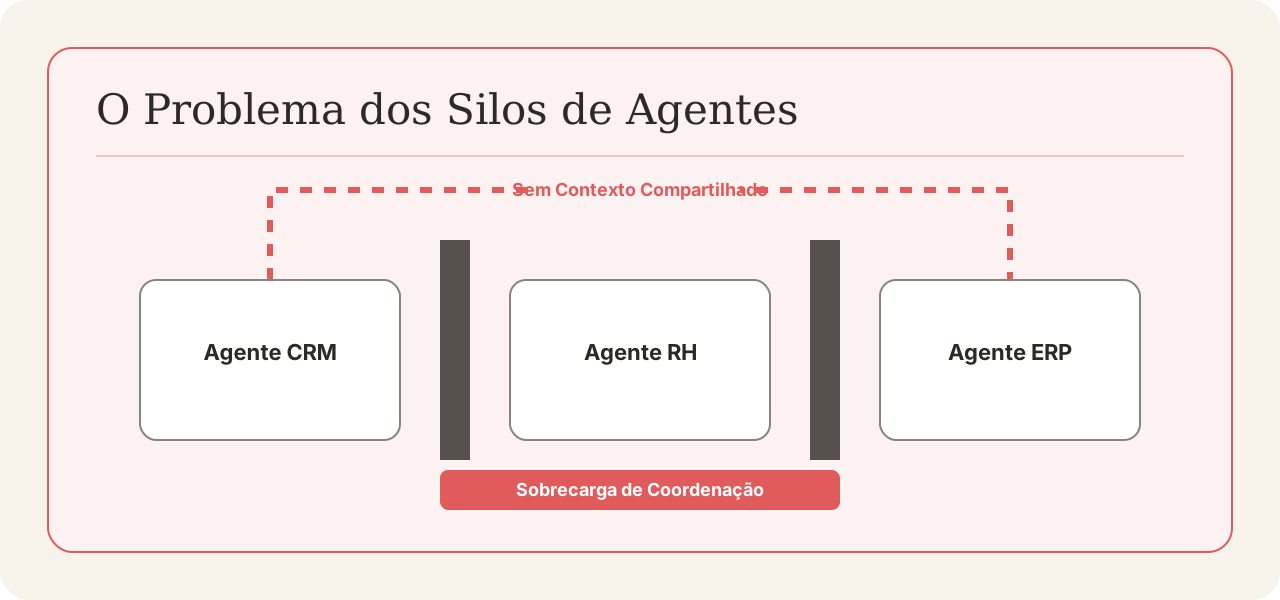
O que é um Silo de Agentes?
Right now, every major SaaS provider is building their own AI agent. Salesforce has Agentforce for CRM, Workday is building AI for HR, and SAP has Joule for ERP.
While these domain-specific agents are powerful within their own walled gardens, real enterprise workflows are rarely confined to a single app. If a human manager says, "Onboard our new vendor, update their billing details, and set up their IT access," that requires coordinating across Procurement, Finance, and IT systems.
If your SAP Agent cannot talk to your ServiceNow Agent, and neither shares context with your Slack Agent, your human workforce is left doing the exact same manual coordination they did before AI—except now they are copy-pasting between different AI chat windows. This is the Agent Silo problem.
A Necessidade de um "Team Agent Workspace"
The solution to Agent Silos is not to build one omnipotent AI that replaces all SaaS vendors. That is technically impossible and a data governance nightmare.
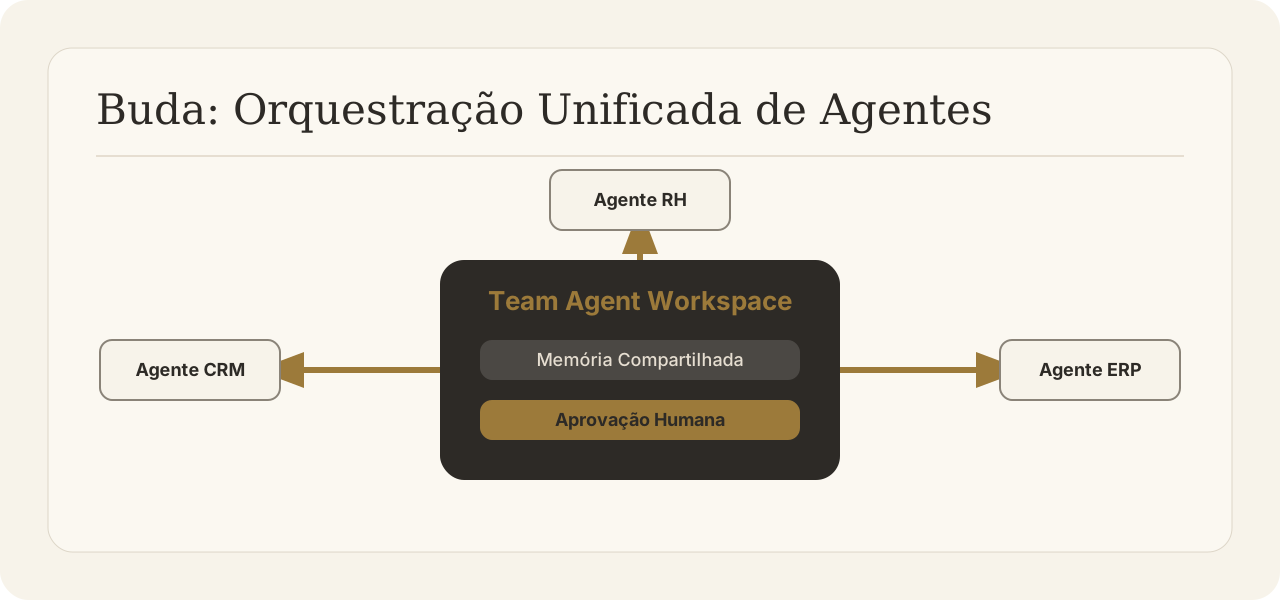
The solution is an overarching orchestration layer—a Team Agent Workspace.
As organizations scale their AI usage, they need a central hub where:
- Agents can collaborate: A workspace where a multi-model agent can pull context from Jira, trigger an action in Workday, and report back in Slack, bridging the gaps between SaaS domains.
- Humans retain judgment (The Bunny and The Claws): In a complex cross-system workflow, you need a unified dashboard to review and approve actions. You cannot log into 5 different SaaS portals just to approve 5 different AI steps.
- Cost and Security Governance: If 10 different SaaS agents are burning AI tokens and executing database changes autonomously, the CFO and CISO need a single control plane for observability and budget tracking.
Como o Buda Viabiliza a Empresa Agêntica
Buda is designed exactly for this unified future. Instead of competing with domain-specific SaaS agents, Buda serves as the collaborative operational plane.
By treating AI skills and API integrations as standardized tools within a secure sandboxed environment, Buda allows enterprises to build workflows that span across any system. It provides the shared memory, the execution sandbox, and the human-in-the-loop approval mechanism necessary to turn isolated AI scripts into a cohesive Agentic Enterprise.
The future of work is not just human-to-human or human-to-AI. It is Human-to-Multi-Agent collaboration.
Ready to break down your AI silos and orchestrate your autonomous workforce? Explore o Buda dashboard para configurar seu Team Agent Workspace unificado hoje.