Buda vs Qwen Code:開放開發者 Agent,還是託管公司工作空間?
選擇誰來擁有 runtime、model provider,以及跨職能 Agent 的長期脈絡。

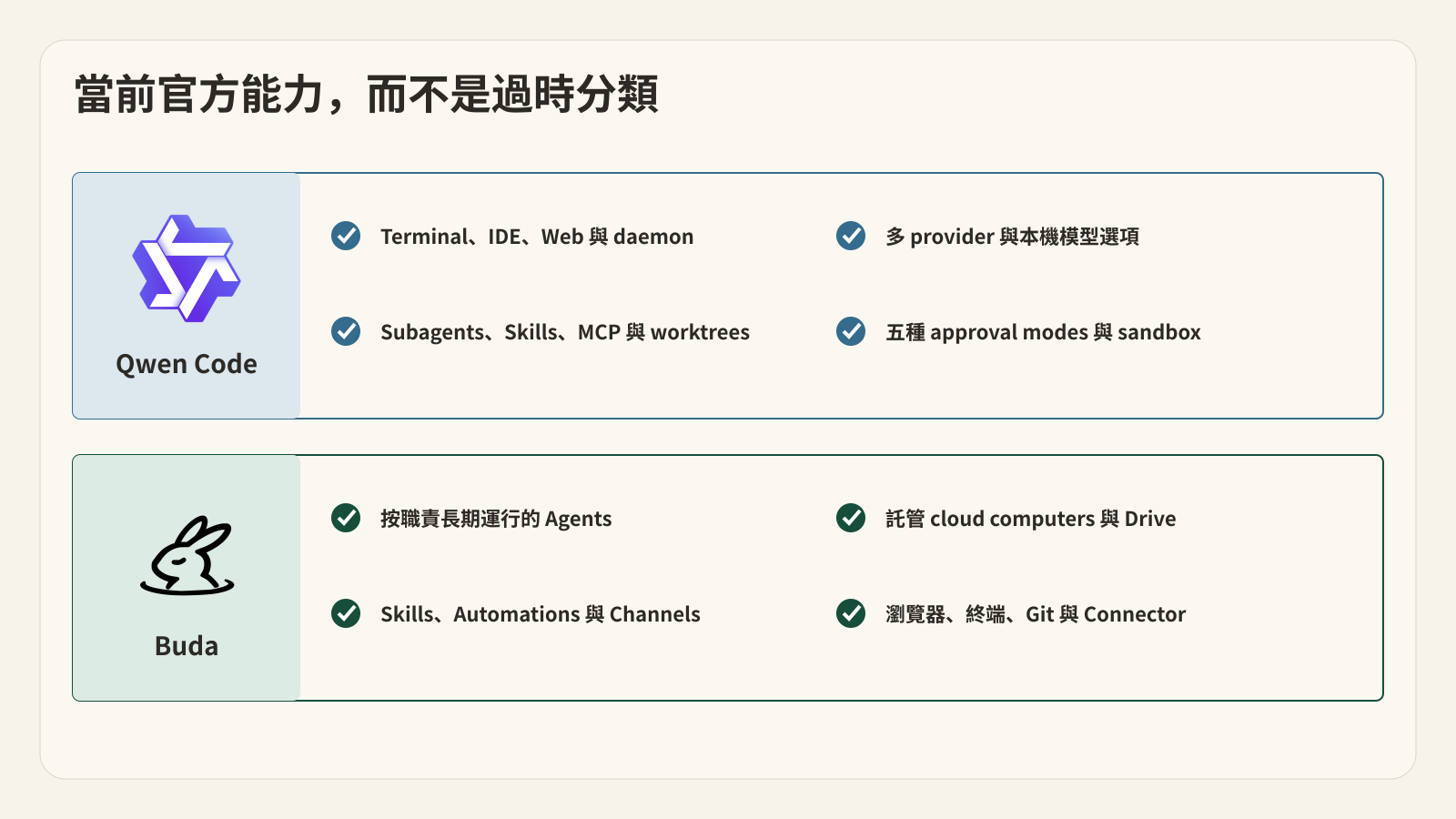
搜尋 Qwen Code alternative,很容易從過時前提出發。Qwen Code 仍以 terminal 與 coding 為核心,但早已不只存在於單一 local shell。官方文件已涵蓋 VS Code、Zed、JetBrains、Web、daemon mode、聊天 Channels、Subagents、Agent Skills、MCP、scheduled tasks、browser/computer use、multi-agent coordination 與 Git worktrees。
有用的比較不是「本機 Coding Assistant 對比雲端工作空間」,而是:開放、多 provider 的 developer Agent framework,對比按公司角色組織的 managed Agent workspace。
先給結論
如果你要貼近 repository、terminal、model provider 與 machine configuration 的 open-source Agent framework,優先選 Qwen Code。它適合想查看 source、自由選 provider、執行 local/remote models、自訂 harness,並以 software work 為中心的 builder。
如果你要 managed company workspace,讓 research、content、support、finance、operations 與 engineering Agents 各自保留 instructions、Drive、computer、Sessions、Skills、Automations 與 Channels,優先選 Buda。
如果 Qwen Code 負責 developer execution,Buda 負責圍繞 code result 展開的 cross-functional work,也可以一起用。Handoff 必須帶 verified facts 與 artifacts,而不是模型自行宣稱已完成。
Qwen Code 比名字暗示的更廣
Qwen Code 官方 overview 把它稱為在 terminal 裡運行的 agentic coding tool。它能理解 codebase、實作功能、debug、修改 files、執行 commands、建立 commits,也能跑在 CI。
但同一套文件給出更廣的產品面。
它支援 VS Code、Zed、JetBrains;qwen serve 提供 Web/daemon;Channels 連接 Telegram、WeChat、DingTalk、WeCom、Feishu、QQ、GitHub、GitLab;MCP 接入 tools、databases、APIs;Skills 封裝 reusable instructions/scripts;Subagents 用自己的 prompt、tools、model 承接專門任務;worktrees 隔離平行工作。
Qwen Code 也支援 multi-provider。當前專案支援 Qwen/Alibaba ModelStudio、third-party providers、OpenAI-compatible endpoints、Anthropic、Gemini 與 local serving。這對想控制 model choice、cost、data path 或 self-hosting 的團隊很重要。
把它寫成「只在本機寫 code 的小助手」既不公平,也不準確。
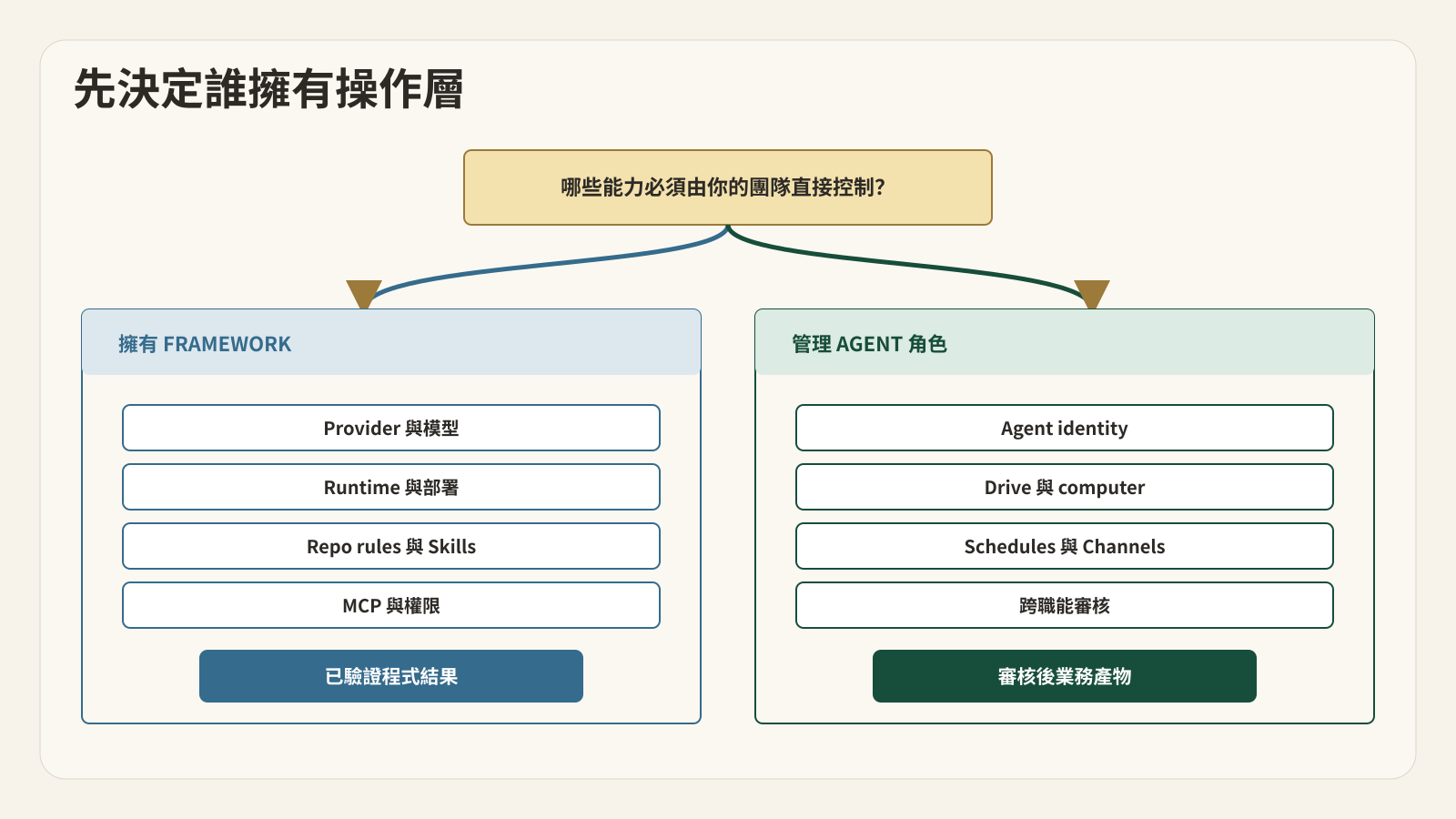
Ownership test 從 runtime 開始
Qwen Code 給 builder 一套 framework。團隊決定在哪裡執行、呼叫哪個 model provider、信任哪些 MCP servers、QWEN.md 寫什麼 project rules、哪些 Skills 進 repository、採用哪個 approval mode。
這種彈性是優勢,也是一份營運責任。需要有人維護 provider credentials、local/remote runtime、trusted folders、sandbox、MCP、channel setup、extension versions 與 project rules。
Buda 給團隊 managed Agent workspace。每個 Agent 有 cloud computer 與 private Drive;browser、terminal、Git、files、Sessions、Skills、Automations、Channels 已是 workspace 的一部分。團隊主要配置 roles 與 boundaries,而不是從 open components 組裝 runtime。
這不表示 Buda 普遍更好。它吸收更多 infrastructure decisions,也放棄部分 Qwen Code 能提供的 low-level control。
決定採購的四層架構
| 決策面 | Qwen Code | Buda |
|---|---|---|
| 主要單位 | Developer Session 與 project/repository context | Company Space 裡的 persistent Agent role |
| 預設工作 | Code 理解、editing、commands、tests、Git、developer automation | 跨 business functions 的 one-off/recurring work |
| Runtime 所有權 | 團隊選擇 machine、deployment、provider 與 configuration | Buda 管理 Agent cloud computer;Connector 可連既有電腦 |
| Model choice | Multi-provider、BYOK、compatible endpoints、local models | Buda model catalog 與 plan policy |
| Reusable behavior | QWEN.md、Rules、Skills、Commands、Hooks、Plugins | Agent instructions、Drive knowledge、Skills、Automations |
| Parallel work | Subagents、Agent Arena、multi-agent、worktrees、多 Sessions | Role-based Agents 與獨立 Sessions |
| Channels | Developer-configured channel plugins/adapters | Managed Channels bound to Agents |
| Review | Plan、Ask Permissions、Auto-Edit、Auto、YOLO;sandbox/trust | Session/artifact review、Agent/Channel permissions、role/Space boundaries |
兩邊都很完整。真正要選的是願意把 operational effort 放在哪裡,以及半年後什麼 object 還應持續存在。
五個問題可以定下選擇
Qwen Code 文件列出五種 approval modes。Plan 是 read-only;Ask Permissions 在 file change/shell command 前要求批准;Auto-Edit 自動批准 edits 但保留 command confirmation;Auto 用 classifier 評估;YOLO 自動批准所有 tool calls,只適合 trusted controlled environments。
它也支援 sandbox 隔離 commands 與 file modifications。MCP 對 trust 與 ambiguous write replay 採保守規則。Project Skills 還可註冊 deterministic Hooks 做強制 enforcement。
Buda 同樣需要 boundaries。Customer-service Agent 可限制成 read-only tools;Channel 可暴露比 Agent 其他入口更窄的 tool set;不同 Agents 隔離 files 與 responsibilities。
真正差異不是「Qwen 有 autonomy,Buda 有 review」。兩邊都有。Review object 不同:Qwen 靠近 files、commands、code、developer harness;Buda 靠近 task Sessions、role-owned files、business artifacts、cross-functional handoffs。
1. 你是否必須擁有 harness?
團隊要 open-source Coding Agent,在既有環境執行,走自己的 OpenAI-compatible gateway,把 project Skills 放 Git,用 MCP 連 internal tools,並在 terminal/editor 間切換。
Qwen Code 更適合第一輪 pilot。它暴露團隊關心的 runtime/configuration surfaces。Repository instructions 與 code 可一起 version,open-source implementation 可審查,provider/deployment 可自行選擇,每個 Session 的 autonomy 可控制。
Buda 能執行 engineering work,但對明確想擁有 harness 的團隊來說,managed model 並非主要價值。
2. Context 應跟著 role,還是 repository?
Founder 想讓一個 Agent 研究客戶、一個維護內容、一個 triage support、一個產出 weekly operating report。Teammates 應在同一 Space review,任務可由 schedule 或 messaging channel 進入。
Buda 更自然。主要問題不是 provider flexibility 或 repository control,而是管理 roles、files、schedules、Sessions、delivery channels,同時不讓 founder 成為 Agent framework maintainer。
Qwen Code 也能接 Channels,也能做 non-coding work。官方 showcase 甚至有 desktop organization、data analysis、writing、learning。重點不是它做不到,而是團隊是否願意把它配置成 company system。
3. Verified developer work 接著去哪裡?
Coding Agent 實作 feature、跑 tests、準備 commit。Verified result 接著要變成 release docs、customer copy、support guidance、rollout checklist 與 scheduled post-release report。
這是一個合理的 two-system design。
Qwen Code 擁有 repository 與 developer loop。Buda 接收 structured handoff:changed behavior、test evidence、limitations、owner、release state。不同 Buda Agents 再產生並 review downstream artifacts。
Handoff 必須 evidence-based。Commit message 不是 deployment proof;passing unit test 也不是 update customers 的批准。Business workflow 應從團隊真正信任的 checkpoint 開始。
4. 哪一種 flexibility 不能妥協?
當 openness、provider choice、local/self-managed deployment、developer customization 是 hard requirements,Qwen Code 更強。它提供 large repository-native surface,同時保持 scriptable、extensible。
當團隊希望 Agent behavior 與 code 一起 version 時,它也有吸引力:QWEN.md、.qwen/skills、project MCP、Rules、Hooks、Commands 都可隨 repository 移動。
5. 誰來維護每個 functional Agent?
當買方要 managed environment 與清楚的 Agent roster,用於不同 company jobs,Buda 更強。每個 Agent 有自己的 Drive/computer,同一 role 可由 dashboard、Automation、Channel 接收 tasks。
Buda 減少為每個 functional role 配 model provider 與 harness 的工作。Tradeoff 是對 underlying framework 的 low-level control 少於 Qwen Code。
選擇前先測試三種失敗方式
第一種失敗,是繼續套用 local-versus-cloud。Qwen Code 現在有 Web、daemon、Channels、scheduled tasks 與 remote integrations;Buda 也能透過 Connector 進入既有電腦。Deployment location 已不能直接決定採購。
第二種失敗,是只比 feature checkboxes。兩邊都能列出 tools、Skills、multiple agents、Channels 與 review。但勾選無法回答誰維護 runtime、durable context 放在哪裡,也無法說明 reviewer 在批准什麼。
第三種失敗,是沒有 evidence 的 handoff。如果上一個 system 只說「完成了」,下一個 system 就把它變成 customer-facing output,workflow 會用機器速度發布虛構事實。交接必須包含 verified artifact、owner、status 與 acceptance criteria。
執行一次 total-operating-cost Pilot
不要比較 chat answers。比較 accepted work 與 maintenance burden。
對 Qwen Code,選需要 exploration、multi-file edit、tests、command、review 的 repository task。記錄 setup time、provider config、tool calls、accepted diff、test evidence、reviewer corrections,以及保持 environment reusable 的維護。
對 Buda,選 cross-functional recurring task,需要 source files、browser research、structured artifact、schedule、delivery channel。記錄 Agent setup、context reuse、artifact accuracy、review corrections,以及下一次 scheduled run 是否從正確 state 開始。
最後測試 handoff:verified engineering facts 能否從 Qwen Code 進 Buda workflow,而不被改寫、遺失或過早發布。
答案可能是一套 platform,也可能是一條清楚 division of labor。
FAQ
Qwen Code 必須使用 Qwen model 嗎?
不必。官方專案記錄 Alibaba ModelStudio、third-party providers、OpenAI-compatible endpoints、Anthropic、Gemini 與 local serving。具體 data/pricing terms 取決於你配置的 provider。
Qwen Code 能離開 terminal 工作嗎?
可以。它仍 terminal-first,但官方產品已包含 IDE integrations、Web/daemon、聊天 Channels、browser/computer use 與 worktrees。
Buda 提供同樣的 open-source 與 provider-level control 嗎?
不提供。Buda 提供 managed Agent workspace 與自己的 model catalog。需要修改 framework 或擁有每條 provider route 的團隊,應先評估 Qwen Code。
Qwen Code 交給 Buda 時最少要帶什麼?
至少要有 verified artifact 或 diff、test/source evidence、owner、current release status、known limitations 與下一步 acceptance criteria。只交一句「已完成」不夠。